Corporate Blueprint Logic Model
Brief
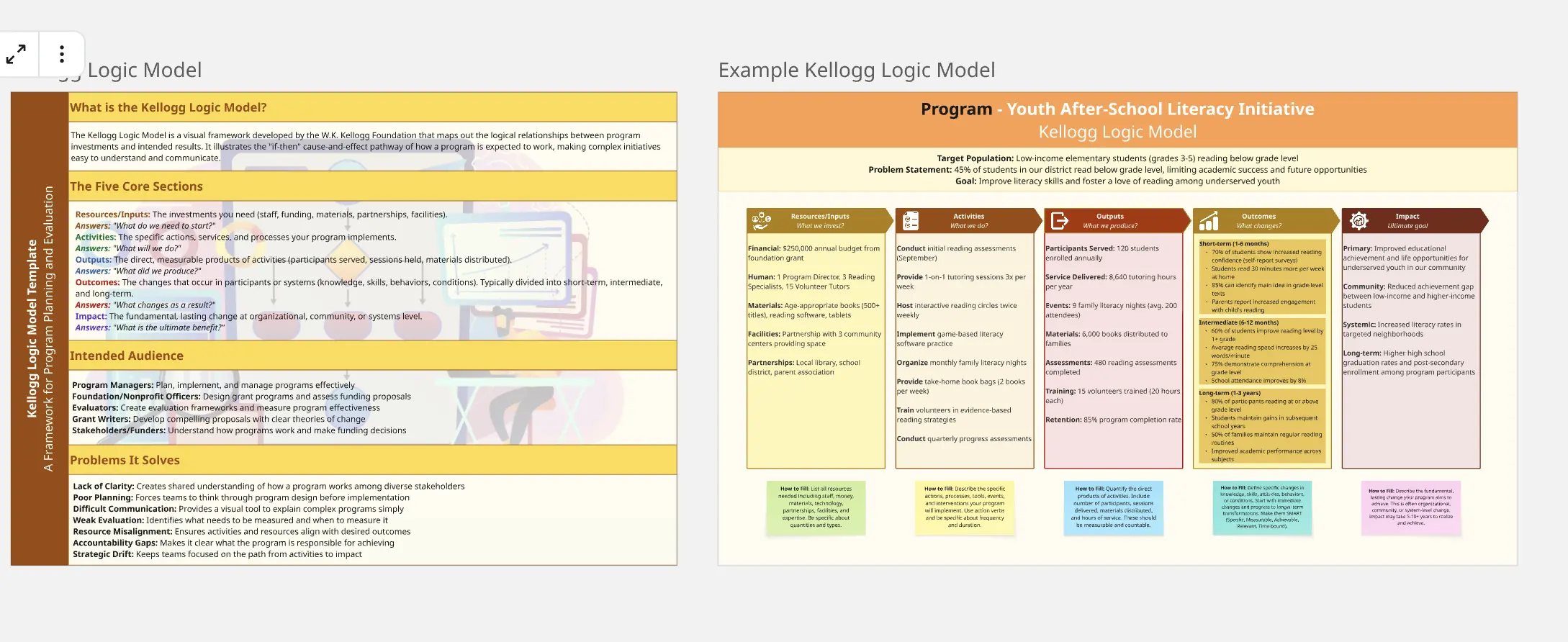
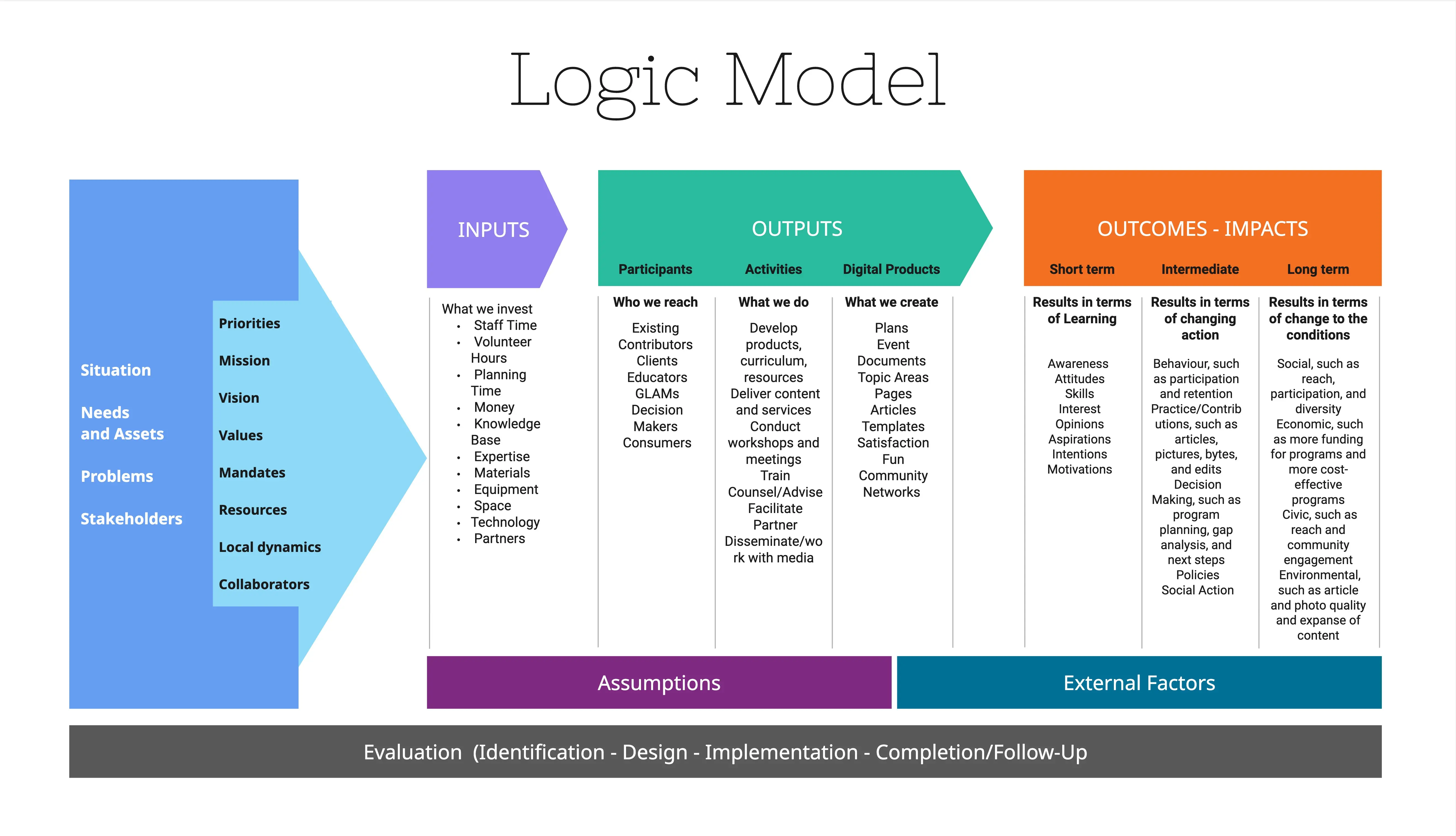
A Logic Model is a visual framework that maps the causal chain between what an organization invests and the lasting change it aims to create. This template structures thinking into five sequential stages — Inputs, Activities, Outputs, Outcomes, and Impact — connected by directional arrows that make the cause-and-effect logic explicit.
Who Can Use It
Program managers, strategy leads, nonprofit directors, grant writers, corporate social responsibility teams, and anyone who needs to articulate how resources translate into results. It works equally well for a new initiative seeking funding approval, an existing program undergoing evaluation, or a cross-functional team aligning on shared goals.
How to Use It
Start from the left. In Inputs, list the resources you are committing (staff, budget, tools, partnerships). Move to Activities and describe what you will do with those resources. In Outputs, capture the direct, countable deliverables your activities produce. Outcomes record the short- and medium-term changes you expect to observe. Impact captures the long-term transformation. Below the main chain, document your KPIs or success metrics, the assumptions your logic depends on, and any external factors outside your control. Revisit and update as the program evolves.
About the Example
The included example illustrates a Youth Digital Skills Bootcamp. It shows how a $45,000 grant, donated laptops, trainers, and mentors (Inputs) feed an 8-week coding bootcamp with career workshops and a demo day (Activities), producing 120 trained youth, 90 portfolio projects, and a career fair (Outputs). Observed changes include an 85% completion rate and 38% job placement within six months (Outcomes), ultimately building a sustainable local tech talent pipeline with employers recruiting directly from the program (Impact). The KPI bar and assumptions section show how to anchor the model in measurable targets and honest preconditions.
Cheers!
Khawaja Rizwan