Circuit Systems Map -
Logic Model
Overview
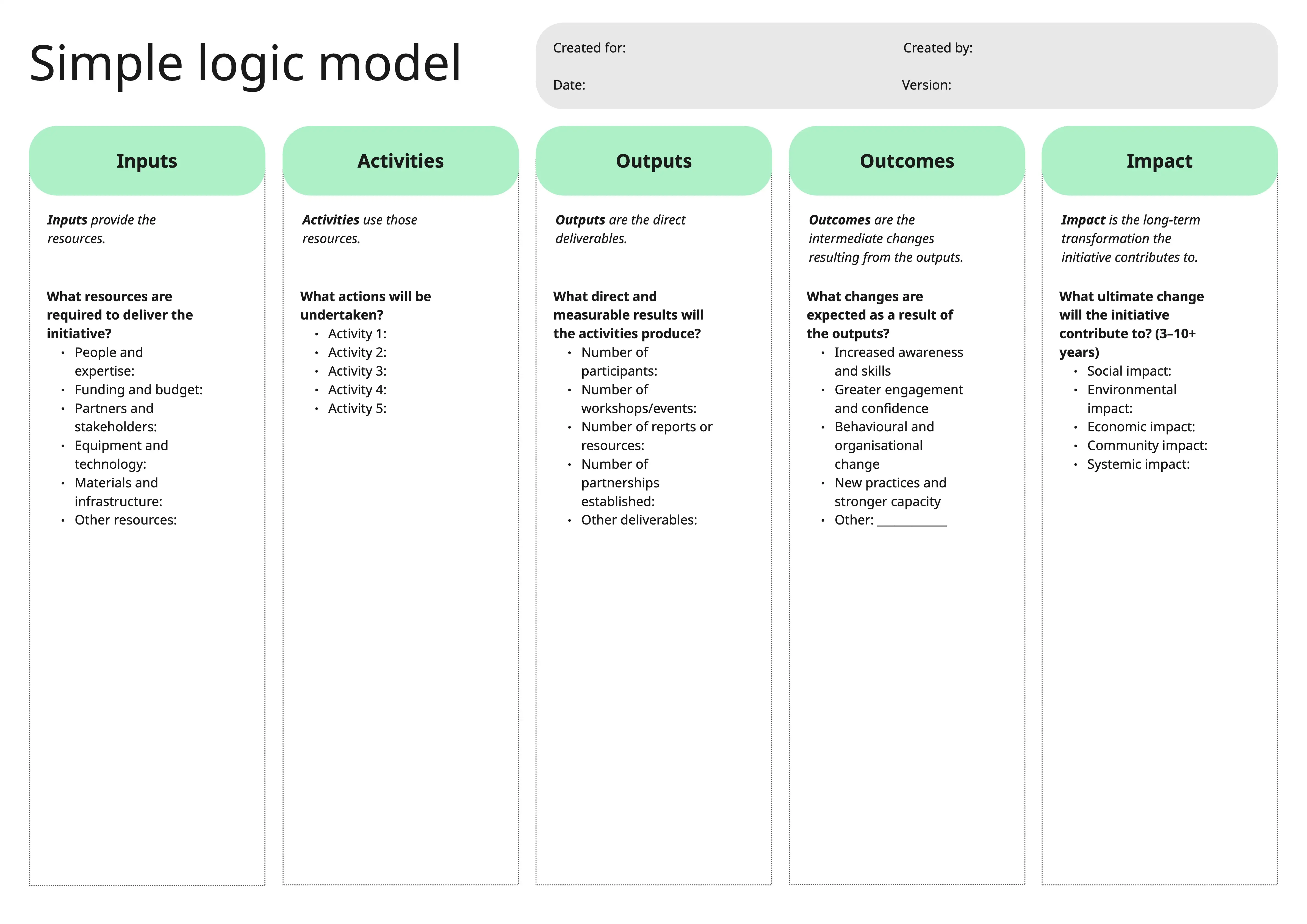
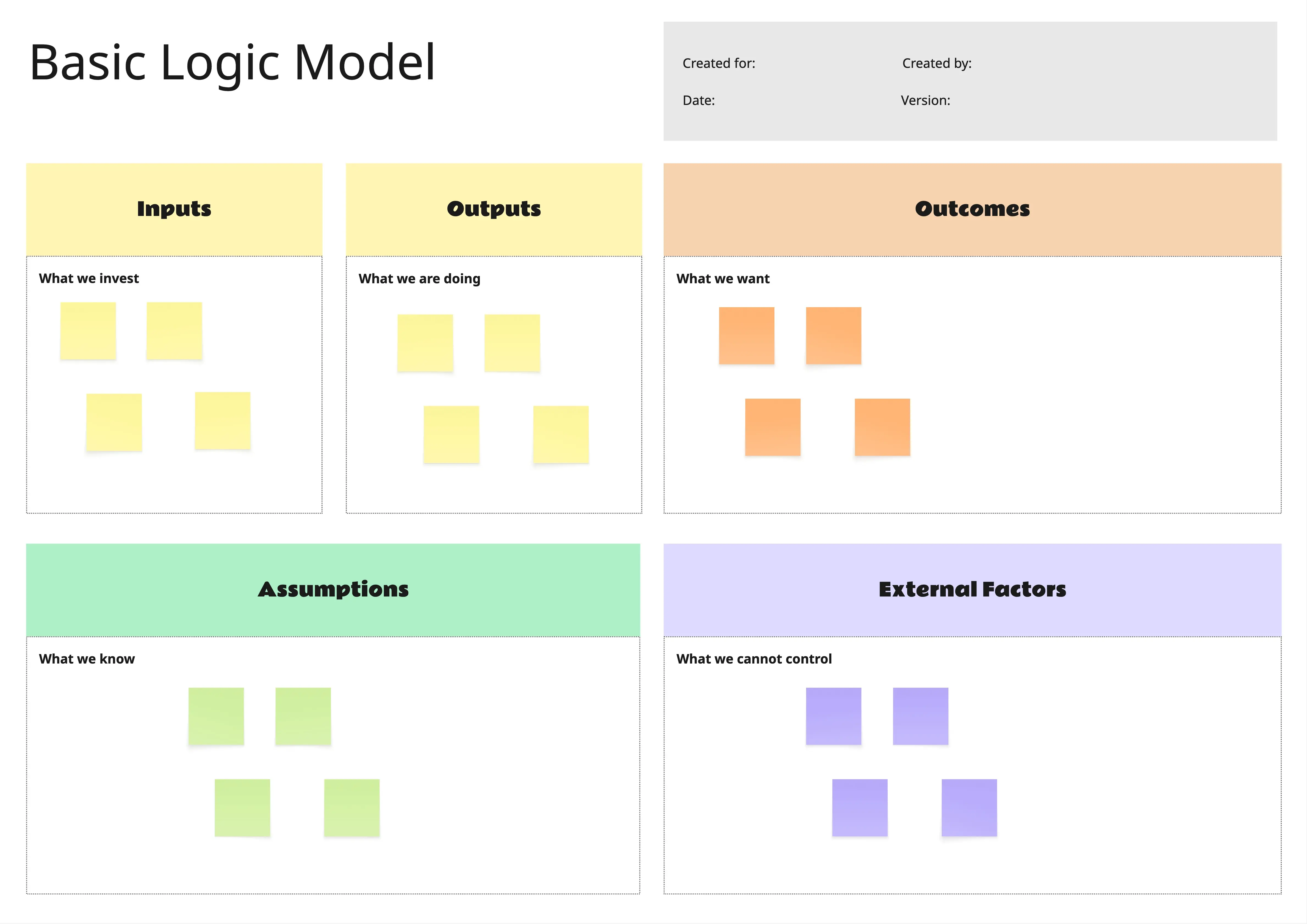
The Circuit Systems Map - Logic Model template transforms traditional program planning into a visual system architecture, using circuit-board and code-inspired design to map the causal chain from inputs through impact. This approach frames strategic planning as a live boot sequence, making cause-and-effect relationships feel operational and dynamic rather than static and theoretical.
Who Can Use It
This template serves program managers, nonprofit leaders, grant writers, educators, policy designers, evaluation teams, and social impact consultants who need to articulate how resources translate into measurable change. Whether you're planning a single initiative or mapping an entire portfolio, the circuit metaphor helps stakeholders immediately grasp how components connect and where dependencies exist. It's particularly effective when communicating with technical audiences or when you want to emphasize the systematic nature of your intervention logic.
How to Use It
Begin at the cyan-coded "01 · INPUTS" section and define your foundational resources: staff, budget, tools, and partnerships. Move sequentially through neon green "ACTIVITIES" (what your team does), hot pink "OUTPUTS" (what you produce), amber "OUTCOMES" (short- and medium-term changes), and purple "IMPACT" (long-term systemic shifts). The diagonal arrows connecting each stage reinforce the flow of causation. After completing the main sequence, document critical ASSUMPTIONS—conditions that must hold true for your logic to work—and EXTERNAL_FACTORS that could influence results but remain outside your control. The blank template frame on the left uses code-comment syntax for easy filling; duplicate it for additional programs and reference the completed example on the right.
About the Example
The pre-filled example demonstrates a Campus Cybersecurity Program logic model. Inputs include a 4-FTE IT Security team, $20,000 budget, phishing simulation license, and LMS integration. Activities encompass monthly phishing simulations, mandatory e-learning, departmental briefings, and incident response drills. Outputs quantify 3,000 students trained, 12 simulations run, 95% module completion, and 6 tabletop exercises. Outcomes show phishing click-rate dropping from 22% to 6%, incident reporting time reduced by 40%, and staff confidence at 4.2/5. Impact captures reduced breach attempts, embedded security culture, and lowered institutional cyber risk. Assumptions note staff complete mandatory training on schedule; external factors reference the evolving threat landscape and national cybersecurity policy.
Cheers!
Khawaja Rizwan