7likes
110uses
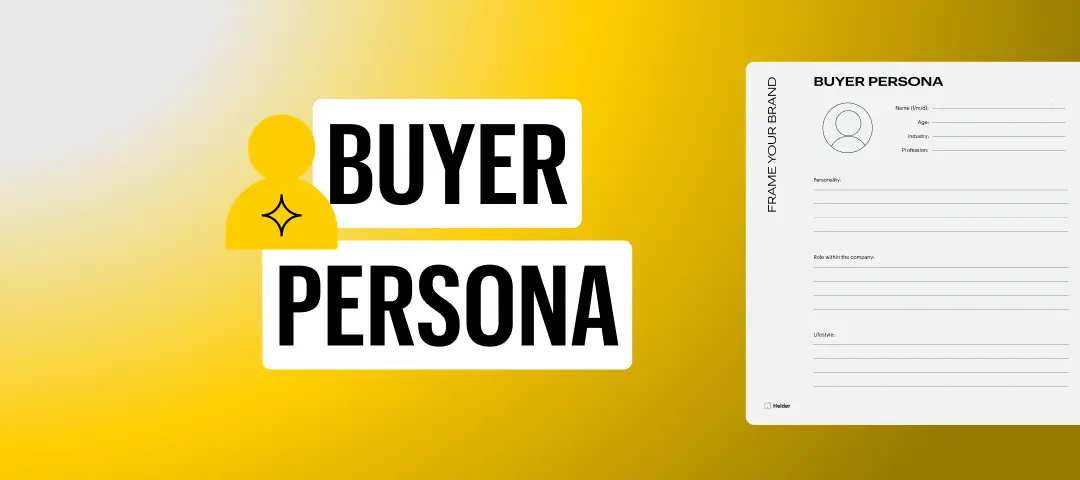
Discover what drives your buyers' decisions. This interactive workshop helps startup founders and product teams explore buyer motivations, concerns, beliefs, and competing priorities to create behavioral buyer personas that inform product strategy, marketing, and sales.
Why do buyers with similar roles, budgets, and business challenges make completely different purchasing decisions?
The Buyer Persona Mindset Map template helps startup founders and product software teams understand the motivations, concerns, and beliefs that shape purchasing behavior.
Traditional buyer personas often focus on who the customer is. This workshop explores how buyers think, what influences their choices, and what makes them confident or hesitant when evaluating a solution.
Through collaborative mindset mapping, decision tension exercises, and buyer-focused storytelling, participants investigate the psychological and practical factors behind purchasing decisions.
Instead of relying on demographics or assumptions, teams use customer research, sales conversations, and real buying experiences to develop a behavioral buyer persona grounded in customer insights.
Designed for small teams, this template works for both virtual and in-person workshops.
Startup founders looking to understand their buyers' motivations
Product managers aligning product decisions with buyer expectations
UX/UI designers exploring buyer needs and behavioral barriers
Marketing teams developing more relevant product messaging
Sales teams identifying objections and purchasing concerns
Customer success teams contributing insights about customer expectations
Workshop duration: 75 minutes
Recommended participants: 3–8
Facilitator: UX researcher, product strategist, product manager, or workshop facilitator
Introduce a realistic buyer persona and a purchasing scenario.
Describe the buyer's business goals, current challenges, decision-making responsibilities, and the circumstances driving their search for a solution.
Ask participants to independently identify what the buyer hopes to achieve and what might make the purchase difficult.
Share responses and compare them with available customer research.
Example: "An operations manager at a growing SaaS company needs a project management platform that improves visibility without disrupting existing workflows."
Output: A shared buyer scenario and a list of motivations, concerns, and research questions.
Use the four-quadrant mindset canvas to explore the factors shaping the buyer's decisions.
Wants: What outcomes, improvements, or benefits does the buyer hope to achieve?
Worries: What risks, frustrations, or potential losses concern the buyer?
Beliefs: What expectations, experiences, or assumptions shape how the buyer evaluates solutions?
Influences: Which people, information sources, business pressures, or external factors affect the buyer's choices?
Ask participants to add their observations independently before discussing the findings as a group.
Organize related ideas and identify patterns. Distinguish research-supported insights from assumptions requiring validation.
Output: A completed four-quadrant Buyer Mindset Map.
Examine the mindset map to identify competing priorities that could influence the buying decision.
Examples include:
Lower cost versus easier adoption
Advanced features versus simple workflows
Faster implementation versus careful evaluation
Innovation versus reliability
Flexibility versus standardization
Ask participants to identify situations where the buyer may struggle to choose between two desirable outcomes.
Discuss which tensions appear most significant and select two for further exploration.
Example: "The buyer wants powerful reporting capabilities but worries complex software will discourage employee adoption."
Output: Two prioritized decision tensions supported by available buyer evidence.
Ask participants to independently complete four statements from the buyer's perspective:
"I need..."
"I'm concerned about..."
"I need to believe..."
"I'll choose a solution when..."
Share the responses and discuss where perspectives align or differ.
Combine the strongest research-supported insights into a concise behavioral buyer persona describing the buyer's primary motivation, biggest concern, purchasing criteria, and confidence builders.
Treat the narrative as an interpretation of research, not a direct customer quote.
Example: "I need better visibility across projects, but I can't risk introducing another tool my team won't use. I'll choose a solution when I feel confident implementation will be straightforward."
Output: A behavioral buyer persona and decision narrative.
Review the completed mindset map and identify opportunities to address the buyer's motivations and concerns.
Ask participants to propose one product experience improvement and one messaging experiment.
Discuss how each idea connects to the buyer's decision-making process and what evidence is needed to validate it.
Assign an owner, target date, and measurable success indicator to each action.
Example: "Test a guided product demonstration focused on ease of adoption against a feature-focused demonstration to evaluate which resonates more strongly with prospective buyers."
Output: Two actionable experiments and a plan for validating buyer assumptions.
By completing this template, your team will have:
A shared understanding of a specific buyer's purchasing situation
A four-quadrant Buyer Mindset Map covering wants, worries, beliefs, and influences
Two identified decision tensions affecting purchasing behavior
A behavioral buyer persona describing motivations, concerns, and decision criteria
A buyer decision narrative that communicates what builds purchasing confidence
A list of unvalidated assumptions and research questions
Two product or messaging experiments with clear next steps and ownership
Start with a specific purchasing decision. Keep the workshop focused on one buyer role and one realistic buying situation rather than discussing customer behavior in broad terms.
Encourage independent thinking. Give participants time to document their observations before opening group discussions. This helps surface different perspectives and reduces groupthink.
Explore both sides of a decision. Buyers often want outcomes that compete with one another. Use the Decision Tension Map to understand potential trade-offs instead of assuming every buyer values the same benefits.
Challenge assumptions about emotions. Do not treat imagined fears, motivations, or beliefs as established facts. Connect findings to customer interviews, sales conversations, and actual purchasing experiences.
Focus on past buying behavior. When validating the mindset map, ask customers about purchases they have already made, what triggered their search, and what influenced their decisions.
Connect insights to action. Use the completed behavioral persona to improve product positioning, demonstrations, onboarding experiences, and sales conversations.
The goal isn't just to describe your buyer. It's to understand what influences their decisions and what gives them confidence to choose your product.

Deanne Watt
Product Strategy @ MiNDPOPGroup.com
My approach to product is to get to the heart of what drives a company. I am passionate about the entire end-to-end process and making it more efficient, collaborative as well as aligning teams and improving communication. We have built about 200 Miro boards so far that cover ideation, strategy, design, engineering, and even marketing promotion.