7likes
110uses
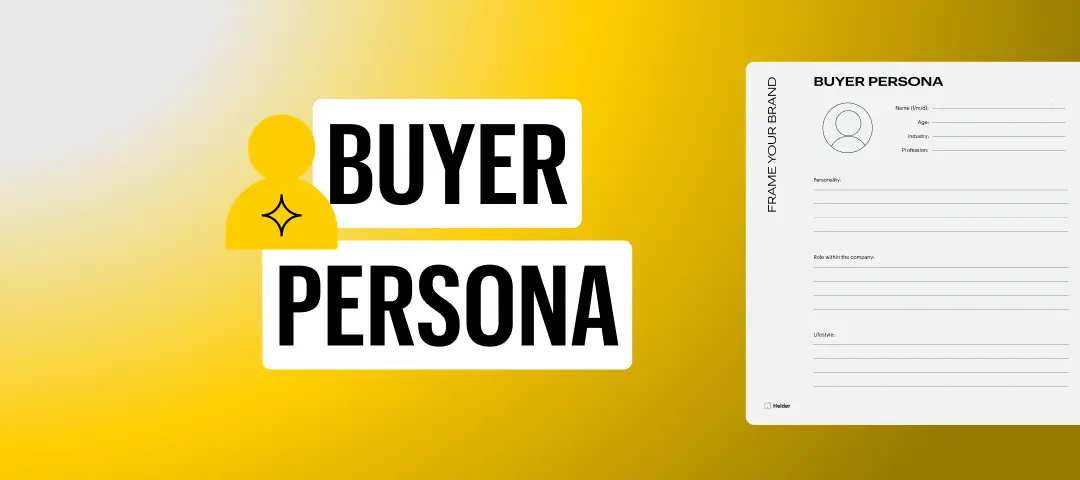
Discover why customers choose to buy, switch, or stay with their current solution. This collaborative workshop helps startup founders and product teams uncover purchase triggers, evaluate switching motivations and barriers, and build needs-based buyer personas using the Jobs-to-Be-Done framework.
What makes customers decide that their current solution is no longer good enough?
The Buyer Persona Jobs-to-Be-Done template helps startup founders and product software teams understand the circumstances, motivations, and challenges behind real purchasing decisions.
Traditional buyer personas often describe who customers are. This workshop explores why customers begin searching for alternatives, what progress they're trying to achieve, and what finally motivates them to make a change.
Using the Jobs-to-Be-Done (JTBD) framework, participants reconstruct customer switching stories, examine the forces that encourage or discourage change, and identify the outcomes buyers want to achieve.
Through a customer switching timeline, Four Forces Map, and structured scoring exercise, teams gain a clearer understanding of the factors shaping buying decisions.
Rather than creating a persona centered on demographics or job titles, participants develop a needs-based buyer persona focused on purchasing circumstances, desired progress, competing alternatives, and switching barriers.
Designed for small teams, this template works for both virtual and in-person workshops.
Startup founders exploring customer demand and purchasing motivations
Product managers identifying unmet customer needs
UX researchers investigating customer decision-making behavior
UX/UI designers developing experiences that support customer progress
Marketing teams refining product positioning and messaging
Sales teams understanding purchase triggers and objections
Customer success teams identifying adoption and switching challenges
Workshop duration: 75 minutes
Recommended participants: 3–8
Facilitator: UX researcher, product strategist, product manager, or workshop facilitator
Start with a real customer purchasing or switching experience.
Review customer interviews, sales conversations, or lost-deal research to identify the events that led to the buyer's decision.
Ask participants to independently identify five key moments:
First Friction — When did the buyer first recognize a problem?
Trigger — What event motivated them to actively seek a solution?
Exploration — Which alternatives did they investigate?
Decision — What influenced their final choice?
Outcome — What happened after the decision?
Arrange the events chronologically on the Customer Switching Timeline.
Discuss differences between participants' interpretations and connect each event to supporting customer evidence.
Example: A growing SaaS company experiences repeated project delays, investigates project management platforms, evaluates two alternatives, and selects a solution offering faster implementation.
Output: A customer switching timeline showing the events and decisions that led to a purchase or change.
Examine the customer's switching story to identify the competing forces affecting their decision.
Organize research observations into four categories:
Push — Pressure From the Current Situation
What problems, frustrations, or unmet needs make the existing approach difficult to maintain?
Pull — Attraction of a New Solution
What benefits, improvements, or desired outcomes make a new solution appealing?
Anxiety — Concerns About Switching
What risks, uncertainties, or potential losses make the buyer hesitant to change?
Habit — Attachment to the Current Approach
What familiar processes, routines, or existing investments encourage the buyer to stay?
Ask participants to capture each observation on a sticky note and place it in the appropriate category.
Discuss which forces appear strongest and identify observations supported by customer evidence.
Output: A completed Four Forces Map showing what encourages change and what creates resistance.
Review the switching timeline and Four Forces Map to identify the underlying progress the buyer wants to make.
Ask participants to complete the statement:
"When [situation], I want to [motivation], so I can [desired outcome]."
Encourage participants to focus on what the buyer is trying to accomplish rather than the features of a particular product.
Discuss the functional, emotional, and social dimensions of the customer's desired progress.
Agree on one concise Jobs-to-Be-Done statement.
Example: "When our team outgrows spreadsheets, I want a reliable way to coordinate work so I can deliver projects without constantly chasing updates."
Output: A shared Jobs-to-Be-Done statement describing the customer's desired progress.
Use the switching story, Four Forces Map, and Jobs-to-Be-Done statement to create a buyer persona grounded in purchasing circumstances.
Document the buyer's:
Buying situation and context
Primary job to be done
Desired progress and outcomes
Purchase triggers
Current solutions and alternatives
Switching motivations
Anxieties and barriers
Evaluation criteria
Measures of success
Compare multiple customer stories to identify recurring patterns.
Distinguish research-supported findings from assumptions that still need validation.
Example persona: "The Scaling Team Coordinator" — A buyer seeking reliable project coordination after company growth makes existing workflows difficult to maintain.
Output: A needs-based buyer persona showing why customers seek a solution and what influences their decision to switch.
Review the completed buyer persona and identify opportunities to help customers achieve their desired progress.
Ask participants to independently propose improvements that could strengthen the appeal of a new solution or reduce switching concerns.
Discuss the ideas and select two opportunities to investigate.
For each opportunity, document:
The customer problem or switching barrier
A proposed improvement
The assumption being tested
A validation method
A responsible team member
A target date
A measurable success indicator
Example: "Test whether a guided spreadsheet import helps new customers transition to the product with less perceived effort."
Output: Two prioritized experiments with clear ownership and validation plans.
Use this scoring exercise after completing the Four Forces Map to evaluate the relative strength of the buyer's motivations and barriers.
Score each force from 1 to 5:
1 — Very Weak: Little evidence that the force influences the decision.
2 — Weak: Minor influence on the decision.
3 — Moderate: Noticeable influence on the decision.
4 — Strong: Significant influence on the decision.
5 — Very Strong: Major influence on the decision.
Calculate the totals:
Change Drivers = Push + Pull
Change Barriers = Anxiety + Habit
Each total will range from 2 to 10.
2–4: Weak Motivation to Change
The buyer may not experience enough dissatisfaction or perceive sufficient value in a new solution.
Recommended action: Investigate unmet needs, emerging frustrations, and events that could create greater motivation to change.
5–7: Growing Interest in Change
The buyer recognizes problems or potential benefits, but their motivation to act may not be strong.
Recommended action: Clarify the value of solving the problem, investigate purchase triggers, and demonstrate meaningful improvements.
8–10: Strong Motivation to Change
The buyer experiences significant pressure from their current situation, sees attractive benefits in a new solution, or both.
Recommended action: Support the buyer's evaluation process, demonstrate value, and simplify the path toward adoption.
2–4: Limited Resistance to Change
The buyer perceives relatively few switching risks or has limited attachment to their existing approach.
Recommended action: Make evaluation and adoption straightforward, with clear next steps.
5–7: Noticeable Resistance to Change
The buyer has meaningful concerns about switching or values the familiarity of existing workflows.
Recommended action: Investigate the largest perceived risks and address them through demonstrations, transparent information, and practical onboarding support.
8–10: Strong Resistance to Change
Switching may feel risky, disruptive, or more difficult than maintaining the existing solution.
Recommended action: Investigate migration challenges, implementation costs, training concerns, and opportunities to reduce uncertainty.
Drivers Higher Than Barriers
Motivation toward change may outweigh perceived resistance.
Focus: Support product evaluation, clarify value, and reduce purchasing friction.
Drivers Equal to Barriers
Competing pressures may create hesitation or indecision.
Focus: Investigate what additional information, event, or reassurance could influence the decision.
Barriers Higher Than Drivers
Resistance may outweigh the perceived benefits of switching.
Focus: Reduce uncertainty, investigate stronger purchase triggers, and address the barriers preventing action.
Facilitator note: The scoring ranges are discussion aids, not scientifically validated predictions of purchasing behavior. Encourage participants to connect scores to customer research and review each individual force rather than relying only on combined totals.
By completing this template, your team will have:
A customer switching timeline documenting important purchasing events
A Four Forces Map showing motivations and barriers affecting change
A scored assessment of change drivers and change barriers
A Jobs-to-Be-Done statement describing the customer's desired progress
A needs-based buyer persona grounded in purchasing circumstances
A clearer understanding of competing solutions and customer switching concerns
Two prioritized product or go-to-market experiments
A customer validation plan with next steps and team ownership
Start with real purchasing experiences. Use interviews with recent buyers, customers who switched solutions, and prospects who decided not to purchase.
Investigate what happened before the purchase. The events leading to a decision often reveal more about customer motivation than the final product selection.
Look beyond direct competitors. Customers may rely on spreadsheets, manual processes, internal tools, or choose to make no change at all.
Keep the job separate from the solution. Focus on the progress customers want to achieve rather than specific software features.
Explore forces that encourage and discourage change. A compelling product may still struggle to attract buyers when migration concerns, existing investments, or familiar routines create resistance.
Use scores to guide discussion. Ask participants to explain their ratings using research findings. Treat unsupported ratings as hypotheses requiring validation.
Compare multiple switching stories. Recurring patterns across buyers provide a stronger foundation for a needs-based persona than a single purchasing experience.
Turn findings into experiments. Use the completed persona to identify ways to make customer progress easier, improve product positioning, or reduce switching effort.
The goal isn't just to understand what customers buy. It's to uncover why they decide to change and what helps them move forward.

Deanne Watt
Product Strategy @ MiNDPOPGroup.com
My approach to product is to get to the heart of what drives a company. I am passionate about the entire end-to-end process and making it more efficient, collaborative as well as aligning teams and improving communication. We have built about 200 Miro boards so far that cover ideation, strategy, design, engineering, and even marketing promotion.