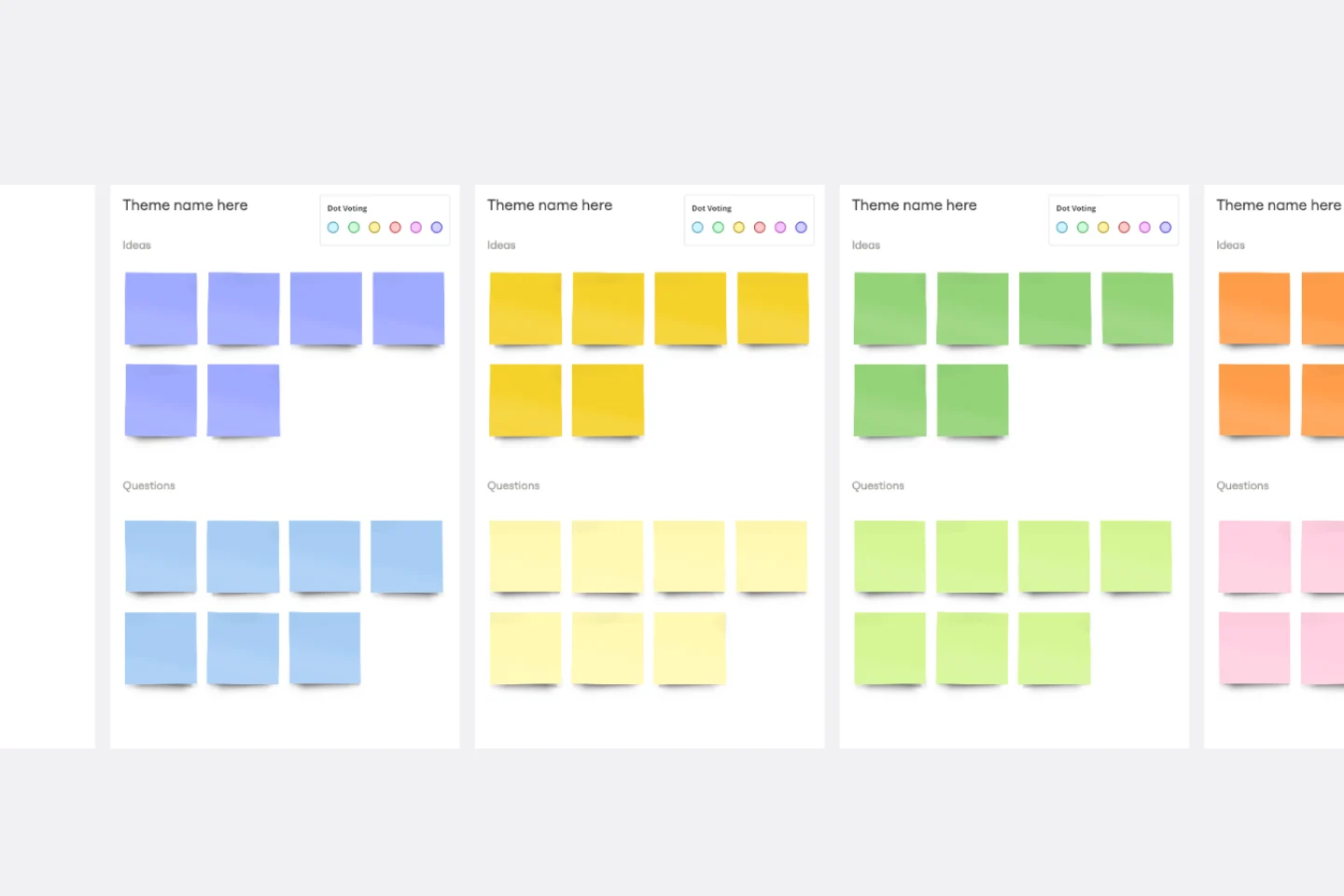
What it is for: Affinity grouping, also called an affinity diagram, is a way to turn many research notes into a few clear patterns. Your team leaves with a handful of named patterns, each one a clear statement backed by the original notes beneath it, and a shared view of which patterns matter most.
Who it helps: Research and project teams holding dozens or hundreds of notes from interviews or workshops, who need shared findings rather than a report.
When to use it
After a round of research, when you have dozens or hundreds of notes.
When several people did the research and each holds part of the picture.
When you want the team to agree on findings, not just read a report.
How to use it
Write one observation per note, with a short source tag, and keep interpretation off.
Put every note up unsorted and read the wall in silence for ten minutes.
Move related notes together, still silently, copying any note that belongs in two places.
Name each cluster with a statement of what the notes show.
Keep the source notes attached and mark the three to five patterns that matter most.
Tip: Write notes in full sentences. Fragments make sense to the writer and to nobody else.
Credits and sources: Original Tiremesù worksheet and wording. Method credit: Jiro Kawakita (KJ method). Further reading: 18F Methods https://github.com/18F/methods/tree/main/_methods
Full guide and film:https://www.tiremesu.com/guides/affinity-grouping