What is the 3-Level Concept Map Template?
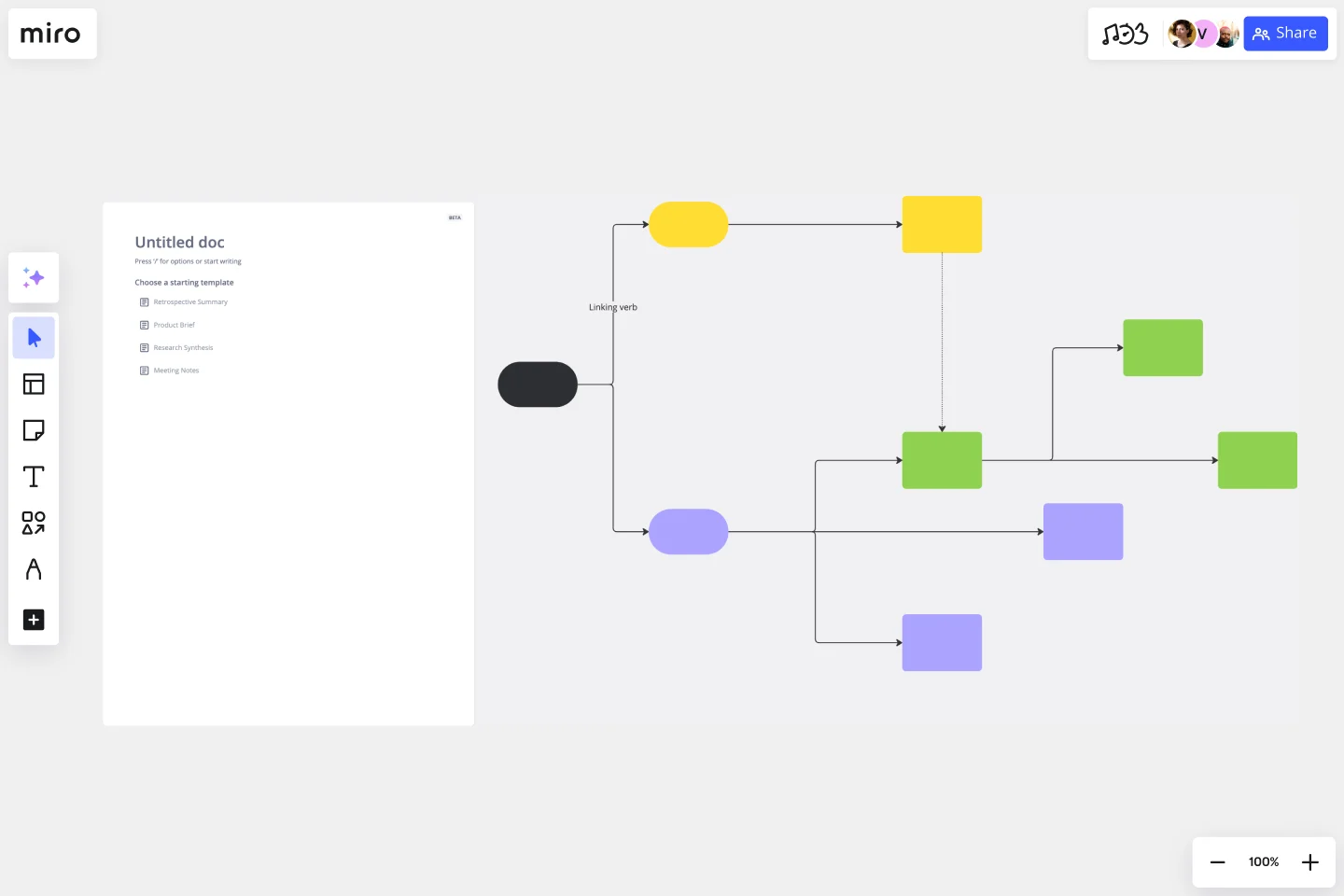
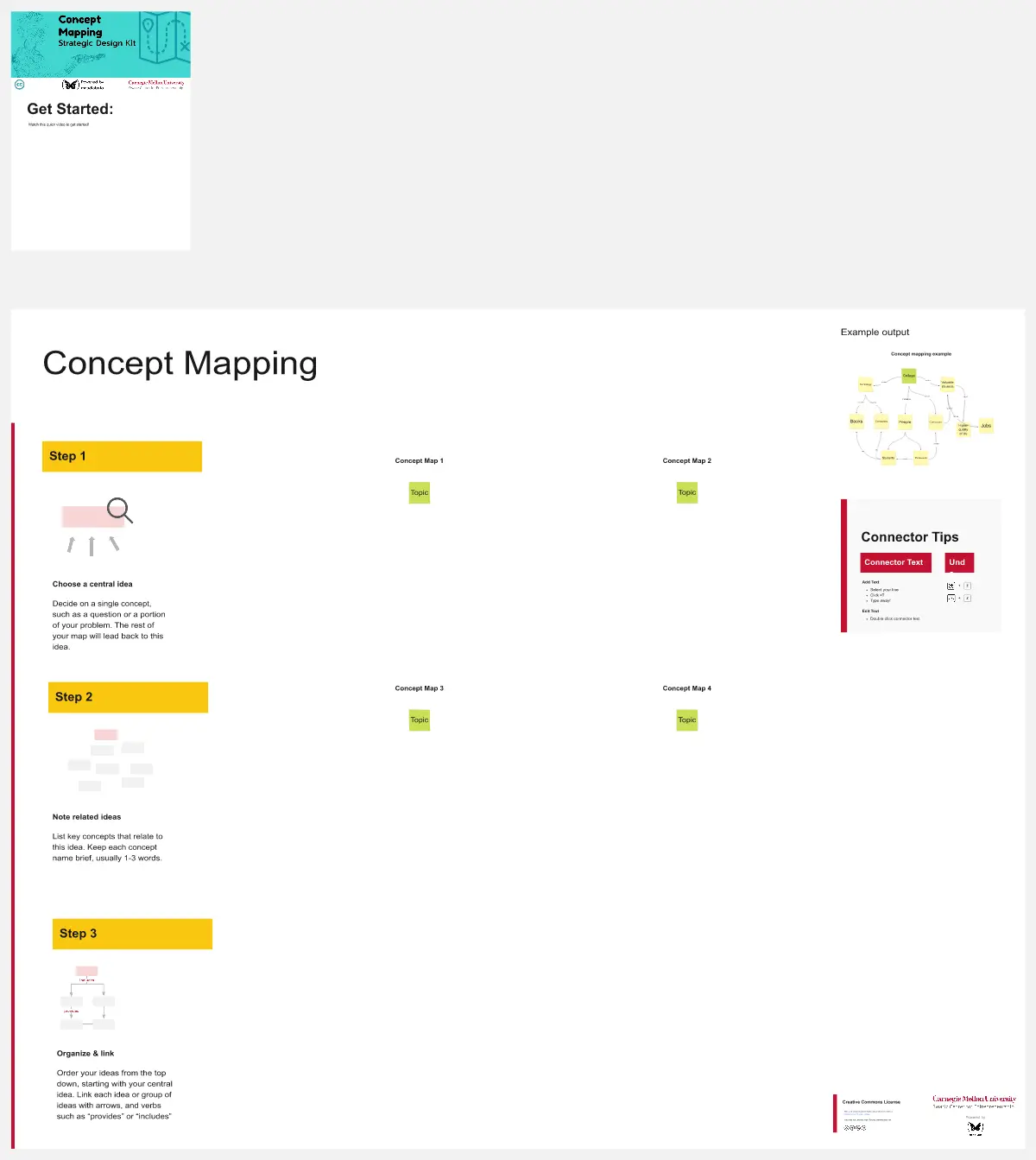
A visual mapping template that organizes one central concept into five main categories and fifteen supporting ideas. Teams can break down complex topics, show relationships, group information, and create a clear three-level hierarchy.
What problem does the 3-Level Concept Map Template solve?
Complex topics that lack structure
Scattered ideas
Unclear category relationships
Research that is difficult to present
Overloaded slides
Missing information hierarchy
How to use the 3-Level Concept Map Template
Add the main topic to the central shape.
Create five category branches.
Add three supporting ideas to each category.
Connect the center to each category.
Connect each category to its supporting ideas.
Use one color for each branch.
Review the map for gaps and repeated ideas.
Refine the labels for presentation.
Common pitfalls
Creating categories that overlap
Adding too much text
Placing ideas under the wrong branch
Using inconsistent connector directions
Adding more than three supporting ideas per category
Using color without a clear purpose
Ways to Avoid Mistakes
Give every category a distinct focus.
Keep labels brief.
Use one idea per shape.
Limit each category to three supporting ideas.
Apply one color family to each branch.
Review the map from the center outward.
Miro Features You Can Use
Shapes for each concept level
Connectors for relationships
Color coding for the five branches
Sticky notes for early brainstorming
Alignment tools for spacing
Comments for questions and feedback
Frames for presentation mode
FAQs
Q: Who can benefit from this template?
A: Founders, product teams, marketing teams, researchers, educators, consultants, and project groups.
Q: What are the three levels?
A: The first level is the central concept, the second level contains five categories, and the third level contains three supporting ideas for each category.
Q: How many ideas does the completed map contain?
A: The completed map includes one central topic, five categories, and fifteen supporting ideas.
Q: What topics can this template support?
A: Product strategies, customer journeys, business plans, learning topics, research findings, processes, and campaign plans.
Q: What makes this concept map unique?
A: It uses five balanced branches with three supporting ideas per branch, creating a clear and consistent three-level structure.
Q: What will participants leave with?
A: A completed three-level concept map with one central topic, five categories, fifteen supporting ideas, and clear visual relationships.