Table of contents
Table of contents
Unlock project alignment: Getting your communication plan and stakeholder engagement right
Summary
In this guide, you will learn:
- Differences between communication management and stakeholder engagement
- How stakeholder engagement involves building relationships, while communication management focuses on information delivery
- The role of stakeholder analysis and mapping in prioritizing stakeholders
- Key components of communication plans: frequency, format, and timing
- How engagement strategies aim to change stakeholder involvement
- Tools and best practices for managing communication and engagement throughout the project lifecycle
Collaborative AI Workflows
Join thousands of teams using Miro to build the right thing, faster.
Ever feel like you're herding cats on a project? You've got brilliant ideas, a talented team, maybe even decent coffee, but things just aren't clicking. Often, the hidden culprit lies in how we talk to people – or sometimes, how we don't. Misunderstandings snowball, key players feel ignored, and suddenly your perfectly planned project hits a wall of confusion or resistance. Getting clear on your communication strategy and how you manage stakeholder relationships isn't just project admin; it's the secret sauce for getting things done together, smoothly. We'll break down two critical concepts – the communication management plan and stakeholder engagement – clarifying exactly what they are, how they differ, and, crucially, how they work together to make your projects thrive. Let’s clear up the confusion and get everyone pulling in the same direction.
Decoding the blueprints: what is a communication management plan?
Think of your project like building a house; your communication management plan is a core part of the architectural drawings, specifically detailing how information flows. It answers the crucial questions: Who needs to know what? When do they need to know it? How will you tell them? And who is responsible for making sure the message gets delivered? It’s the tactical playbook for keeping everyone informed, from your core team to wider departments.
This plan typically outlines:
- Your communication goals: What do you want to achieve with each message? Simple awareness? Feedback? Formal approval?
- The information itself: What specific details need sharing? Think status updates, risk alerts, budget reports, or upcoming milestones.
- Your audience: Who are the distinct groups you need to communicate with? This might include the project team, department heads, clients, or end-users.
- Methods and channels: How will you reach them? This covers everything from daily stand-ups, weekly email digests, detailed reports, quick chats on Slack, or updates within a shared workspace like Miro.
- Timing and frequency: How often does each type of communication happen? Daily, weekly, bi-weekly, only at major milestones?
- Ownership: Who's hitting 'send' or leading that meeting? Assigning clear responsibility prevents things from falling through the cracks.
Essentially, a solid communication management plan for project management acts as your project's central nervous system, ensuring the right information reaches the right people at the right time, preventing information silos and keeping the project’s pulse steady.
Understanding the audience: what does stakeholder engagement involve?
Now, if the communication plan is how you talk, stakeholder engagement is about understanding who you're talking to and building relationships with them. Stakeholders are anyone – people, groups, or organizations – who can affect your project or might be affected by it. Think sponsors, team members, customers, department leads, even regulatory bodies. Stakeholder engagement isn't just about broadcasting information; it's a proactive process of identifying these key players, analyzing their needs and influence, and actively involving them throughout the project lifecycle.
Effective stakeholder engagement typically involves these key activities:
- Finding your people (Identification): First, you need to figure out who all your stakeholders actually are. This involves brainstorming everyone impacted or influential, both inside and outside your organization.
- Getting to know them (Analysis): Once identified, you need to understand them better. What are their interests in the project? How much influence do they have? What are their expectations? What are their biggest concerns? Techniques like stakeholder mapping are invaluable here (and yes, visual tools can make this much easier).
Crafting your approach (Planning): Based on your analysis, you strategize how best to engage with different stakeholder groups. Not everyone needs the same level of detail or involvement.
Some you might just keep informed, others you'll consult regularly, and some you might need to collaborate closely with.
- Making the connection (Engagement): This is where you put your plan into action – actively communicating, listening, gathering feedback, and involving stakeholders according to your strategy.
- Keeping your finger on the pulse (Monitoring): Stakeholder attitudes and project dynamics can change. Regularly checking in, gauging sentiment, and tracking interactions helps you adapt your engagement strategy as needed.
The ultimate goal here? To build trust, gain buy-in, proactively address concerns, gather crucial insights, and ensure your stakeholders feel like valued partners in the project's journey, not just bystanders.
The key distinction: communication management plan vs. stakeholder engagement plan
Okay, so you're probably seeing some overlap, and that's where the confusion often starts. Let’s clear it up: think of stakeholder engagement as the strategy for managing relationships, and the communication plan as the tactic for executing much of that strategy.
Here’s a simple breakdown of the difference between a communication management plan and stakeholder engagement plan (even though the latter is often more of a strategy than a single plan document):
- Primary Focus:Stakeholder Engagement: Focuses on identifying stakeholders, understanding their needs/influence, and building/maintaining positive relationships to gain support and manage expectations. It’s about the people and their connection to the project.
- Communication Management Plan: Focuses on the logistics of information flow – the what, when, how, and who of disseminating project information efficiently and effectively. It’s about the message delivery.
- Driving Force: Stakeholder analysis (understanding who needs what and why) drives how you tailor communication. The communication plan executes the communication aspects of your stakeholder engagement strategy.
Scope: Stakeholder engagement zeroes in specifically on people or groups with a vested interest in the
project's outcome. The communication management plan often has a broader scope, potentially including routine team communications, process updates, etc., that might not be part of direct stakeholder engagement, but still vital for project execution.
They aren't competing concepts; they're partners. You can't effectively engage stakeholders without a clear plan for how you'll communicate with them. And your communication plan will be far less effective if you haven't first done the work to understand who your stakeholders are and what they care about. The magic happens when you integrate them seamlessly.
Tailoring the message: stakeholder communication plan explained
So, where does the term "stakeholder communication plan" fit in? Often, people use this term to describe the specific part of your overall communication management plan that details how you'll communicate with your various stakeholders, based on your engagement strategy. It’s the tailored execution plan born from your stakeholder analysis.
Instead of a generic project update email sent to everyone, your stakeholder communication plan thinking might lead you to:
- Send a concise, high-level summary to your executive sponsor.
- Hold a detailed technical review meeting with the engineering team.
- Create a simple FAQ document for end-users impacted by a change.
- Schedule regular one-on-one check-ins with a critical department head.
This targeted approach, informed by your stakeholder engagement analysis, makes your communication far more relevant and impactful. It shows stakeholders you understand their specific needs and perspective, which goes a long way in building trust and keeping them positively engaged.
Handling shifts: the role of a change management communication plan
Let's be real: projects rarely go exactly as planned. Scope changes, deadlines shift, unexpected issues pop up. Change is pretty much the only constant. This is where having a plan specifically for communicating these shifts becomes crucial – enter the change management communication plan.
Think of this as a specialized module within your overall communication strategy. It leverages both your general communication plan framework (channels, frequencies) and your stakeholder analysis (Who is most impacted by this specific change? What are their likely concerns?) to navigate turbulence smoothly.
A good change management communication plan ensures:
- The right people (those affected by the change) get the information.
- They get the right information (clear explanation of the change, the reasons behind it, and the impact on them).
- They get it at the right time (proactively, not as an afterthought).
- They get it through the right channel (appropriate method for the sensitivity and complexity of the change).
Effectively communicating change helps manage reactions, address concerns head-on, maintain trust, and keep everyone aligned even when the path forward deviates from the original map. It prevents rumors and ensures transitions happen with minimal disruption.
Building your integrated strategy: creating an effective stakeholder engagement and communication plan
Ready to move from theory to action? Creating a cohesive strategy that blends stakeholder engagement with communication planning doesn't have to be overly complex. It’s about being intentional and following a logical process.
Here’s a step-by-step approach:
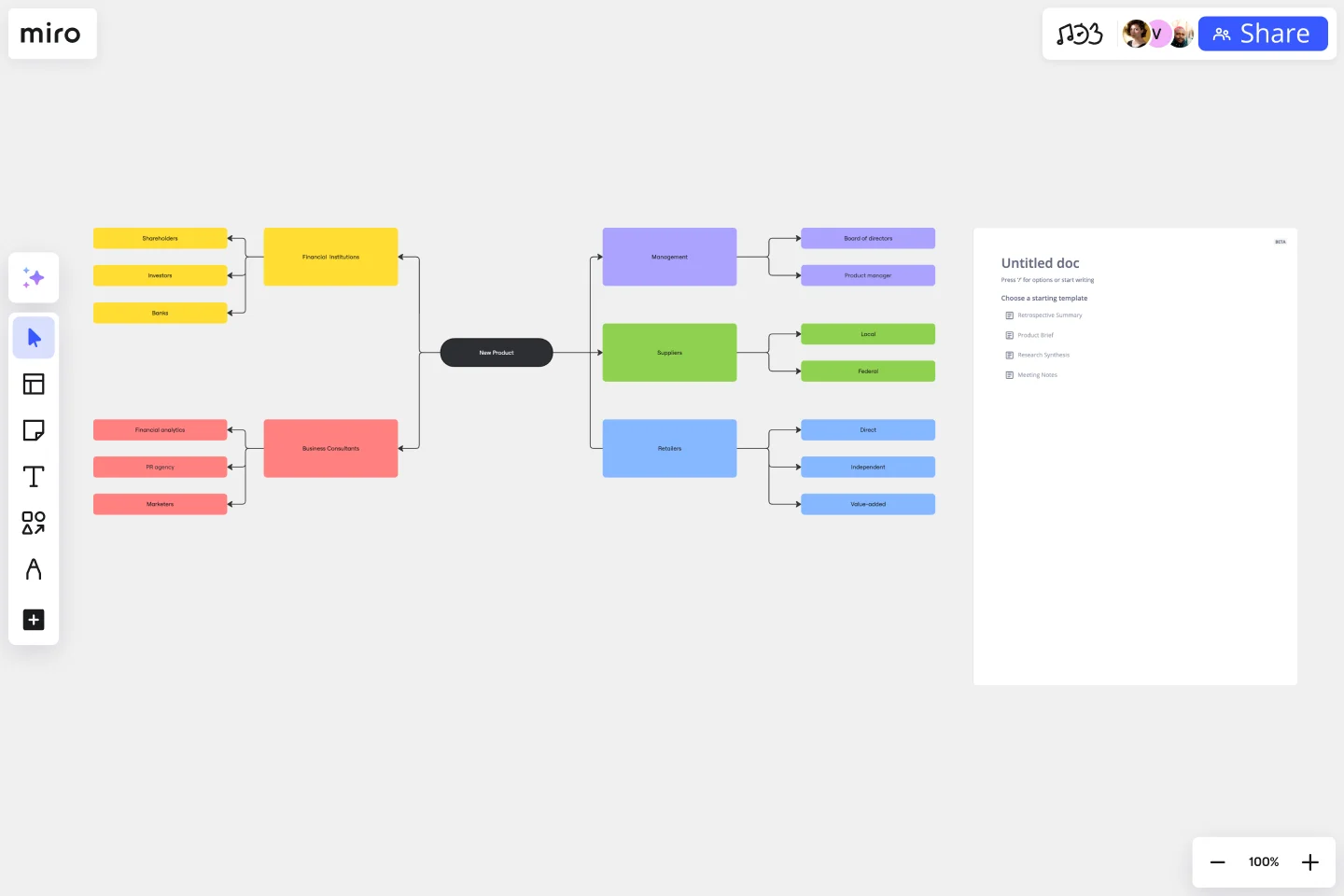
Map Your World (Identify & Analyze Stakeholders): Start by brainstorming everyone who has a stake in your project. Then, dig deeper. Use techniques like a Power/Interest Grid or stakeholder mapping to understand their influence, interest level, needs, and potential concerns. Don't just list names; try to understand their perspective.
- Miro Tip: You can visually brainstorm stakeholders on a board and then use one of the Stakeholder Map templates or the Stakeholder Map Basic template to plot them out clearly. This visual approach helps the whole team understand the landscape collaboratively, whether you're working together in real-time or asynchronously.
- Define Your Engagement Approach: Based on your analysis, decide how you need to engage each stakeholder or group. Do they just need to be kept informed? Do you need their input (consult)? Should they be active partners in decision-making (collaborate)? Tailor your approach.
- Set Clear Communication Goals: For each key stakeholder group, what do you need your communication to achieve? Is it simply awareness? Gaining feedback? Securing formal approval? Getting specific helps you craft the right messages.
- Develop Your Communication Plan: Now, build out the "how." Detail the specific information, frequency, channels (email, meeting, Miro board update, etc.), and owner for communicating with each group, aligning it with their engagement needs. A simple matrix or table often works well. You can build this visually in Miro using tables or even Mind Maps to outline different communication streams.
- Plan for Change: Anticipate that changes will happen. Outline a process for how you'll adapt your communication when they do. Who needs to be informed first about scope changes? How will you communicate delays? Integrating this change management communication plan thinking upfront saves headaches later.
- Execute and Listen: Put your plan into action! But remember, communication is a two-way street. Actively listen to feedback, monitor engagement levels (are people opening emails, attending meetings, commenting on shared boards?), and track sentiment.
- Iterate and Improve: Regularly review how your plan is working. Are stakeholders getting the information they need? Are they feeling engaged? Don't be afraid to tweak your approach based on feedback and results. An effective plan is a living document. Miro’s flexibility makes updating visual plans quick and easy for the whole team.
Visualize success: how Miro empowers your planning
Managing stakeholders and crafting communication plans involves juggling a lot of information and relationships. Doing this effectively, especially with distributed teams, requires clarity and collaboration – which is exactly where a visual innovation workspace like Miro shines.
Instead of static documents lost in email threads, Miro helps you:
- See the Whole Picture: Use the infinite canvas to brainstorm freely, map out complex stakeholder relationships visually using templates like the Stakeholder Map, and see connections you might otherwise miss.
- Plan Collaboratively: Co-create your communication plans and engagement strategies in real-time or async. Everyone can contribute ideas, add comments, and see the plan evolve directly on the board.
- Visualize the Flow: Use tools like Mind Maps to outline communication streams, flowcharts to map out change communication processes, or tables to create clear communication schedules.
- Centralize Everything: Keep your stakeholder analysis, communication plan, meeting notes, and feedback all in one accessible place. Miro acts as your single source of truth, reducing confusion and ensuring everyone is on the same page.
- Track Progress: Use elements like cards or Kanban boards directly on your planning board to track communication tasks or stakeholder actions.
By bringing these planning processes into a shared, visual space, Miro makes them more dynamic, collaborative, and ultimately, more effective.
Harmonizing communication and engagement for project wins
So, communication plan vs. stakeholder engagement? It's not an either/or situation. They are distinct but deeply interconnected pillars supporting project success. Stakeholder engagement helps you understand who you need to connect with and why, while your communication management plan provides the roadmap for how you'll make those connections effectively.
Nailing both means fewer misunderstandings, stronger buy-in, smoother navigation through changes, and ultimately, a much higher chance of reaching your project goals with everyone feeling heard and valued. It transforms potential roadblocks into engaged partners. Ready to stop herding cats and start conducting a symphony?
Take the first step towards clearer stakeholder relationships and communication. Try Miro's Stakeholder Map templates today and visualize your path to project success!
Author: Miro Team
Last update: October 22, 2025
Read more
Join our 100M+ users today


