




Andrey
See collaborative AI in action — straight from the Canvas 26 keynote.
Jeff

Process mapping for insurance claims teams

Map every handoff - from first notice of loss to final settlement. Skip the blank canvas: Miro's AI drafts your claims workflow in seconds.

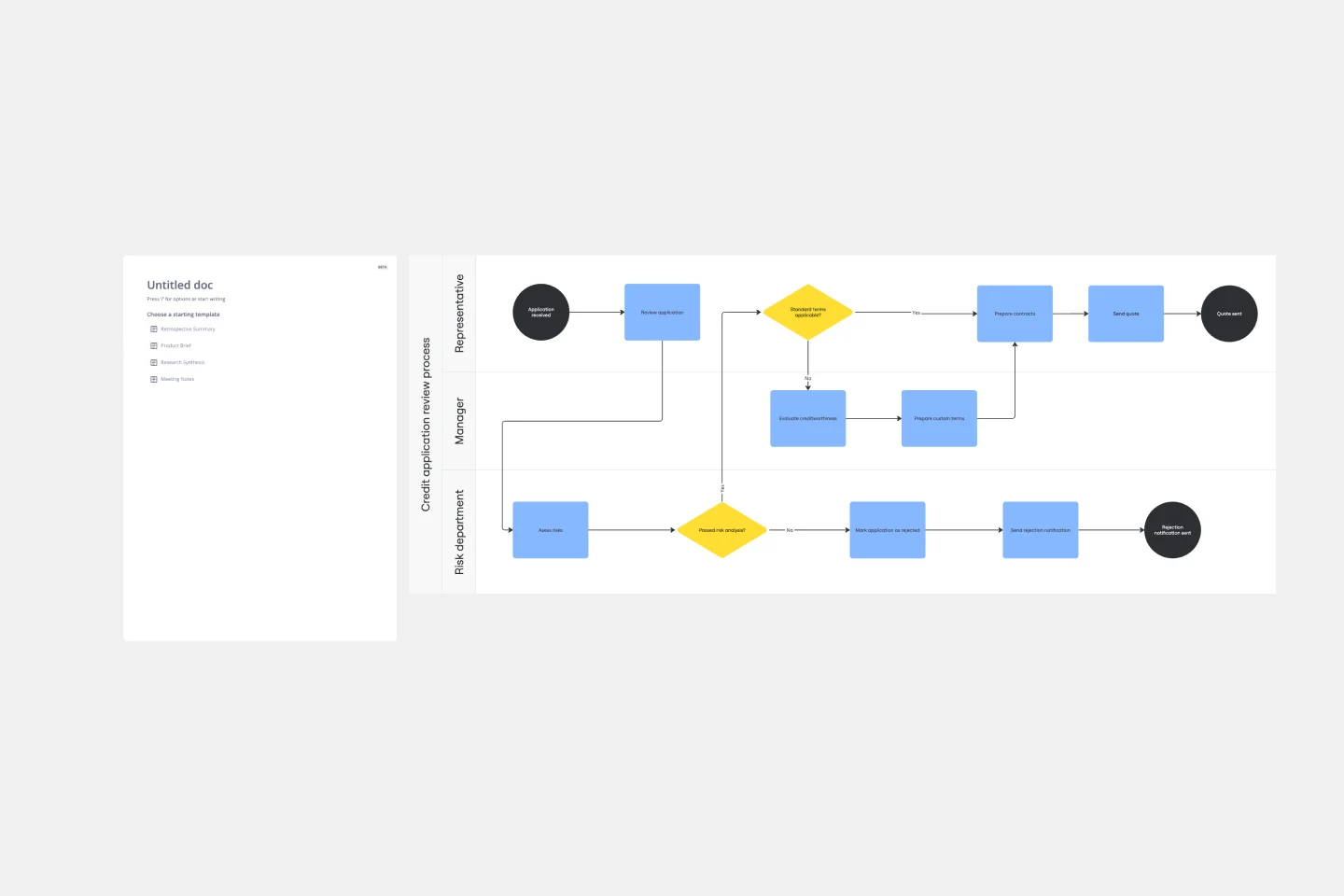
Miro board displaying a swimlane flowchart titled 'Credit application review process' with three horizontal lanes for Representative, Manager, and Risk department, featuring blue rectangular process steps, yellow diamond decision nodes, and black circular start/end terminators connected by arrows.

What experts say

  • Organizations that adopt visual process mapping report significant improvements in workflow optimization and resource allocation.

    Systems and Teams

    Research source · Systems and Teams

  • Process mapping allows businesses to identify dependencies and touchpoints between different processes and departments.

    VisionEdge Marketing Team

    Marketing Analysts · VisionEdge Marketing

    Keynote Speaker

The research on process mapping

  • 30%

    Customer journey mapping reduced returned claims for missing information by over 30% through improved process identification and task sequencing

    Source: SQM Group

  • 50%

    Process mapping facilitated reducing paperwork by 50%

    Source: Hospital Material Management Quarterly (Savory & Olson)

See process mapping in action

Related templates for insurance claims teams

We have 168 templates in our library for Process Mapping.

Why insurance claims teams love mapping processes in Miro

  • From first notice of loss to file closure, visible in one map

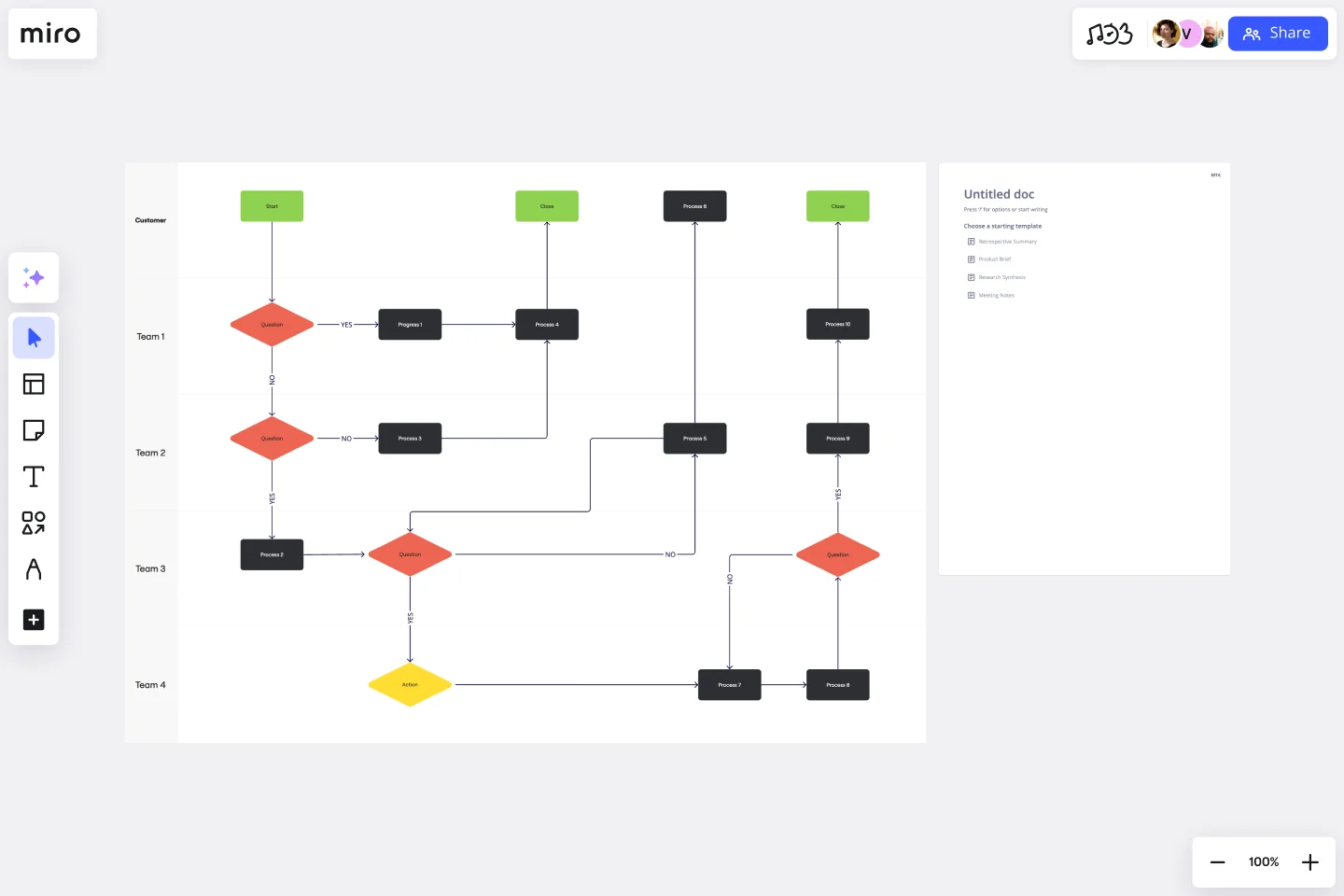
    Adjudication workflows touch intake coordinators, field adjusters, legal reviewers, and finance approvers before a single check goes out. Separate files make handoffs invisible. That's where delays hide. Miro's swimlane layouts put every role in their own lane on one shared canvas, so ownership is explicit at every step.
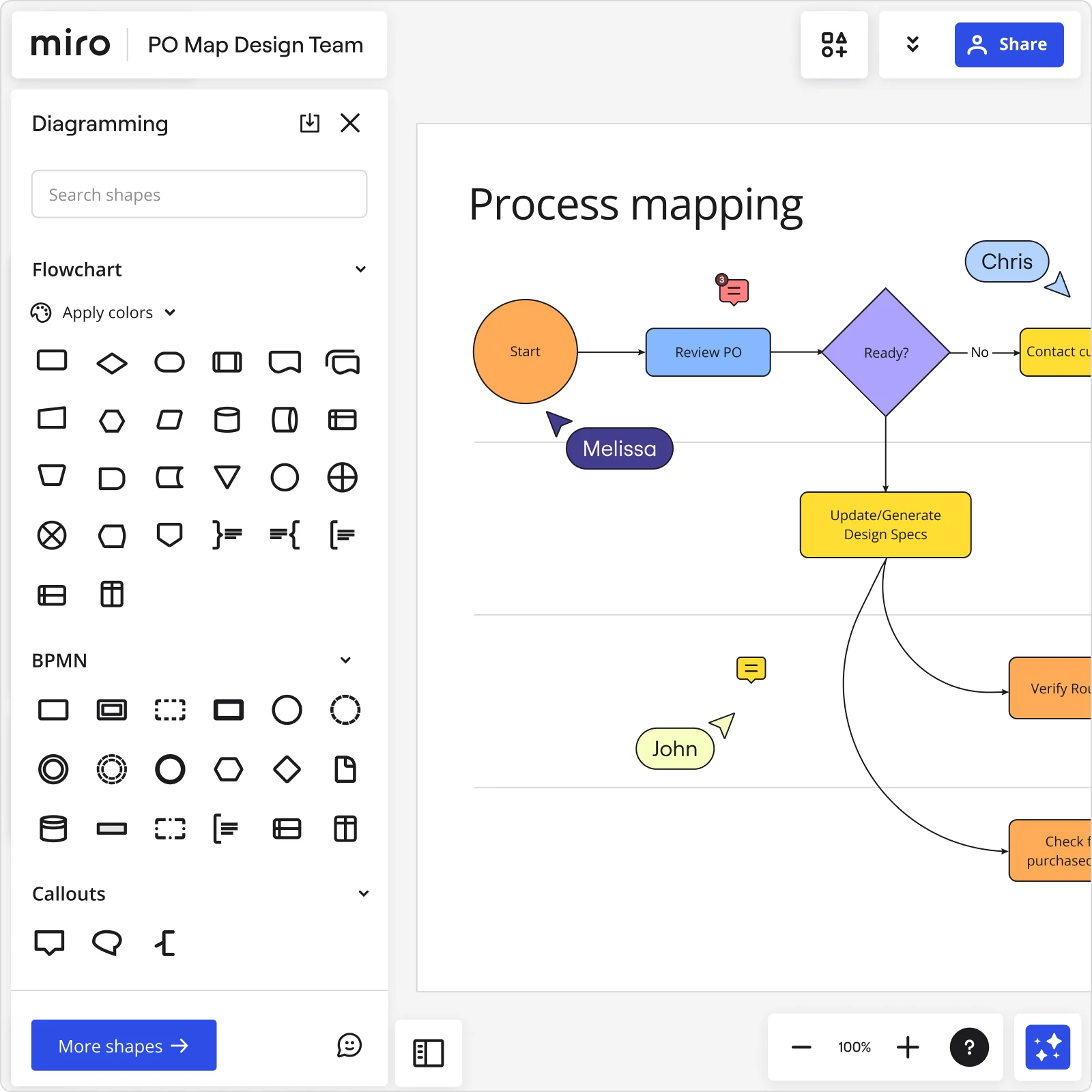
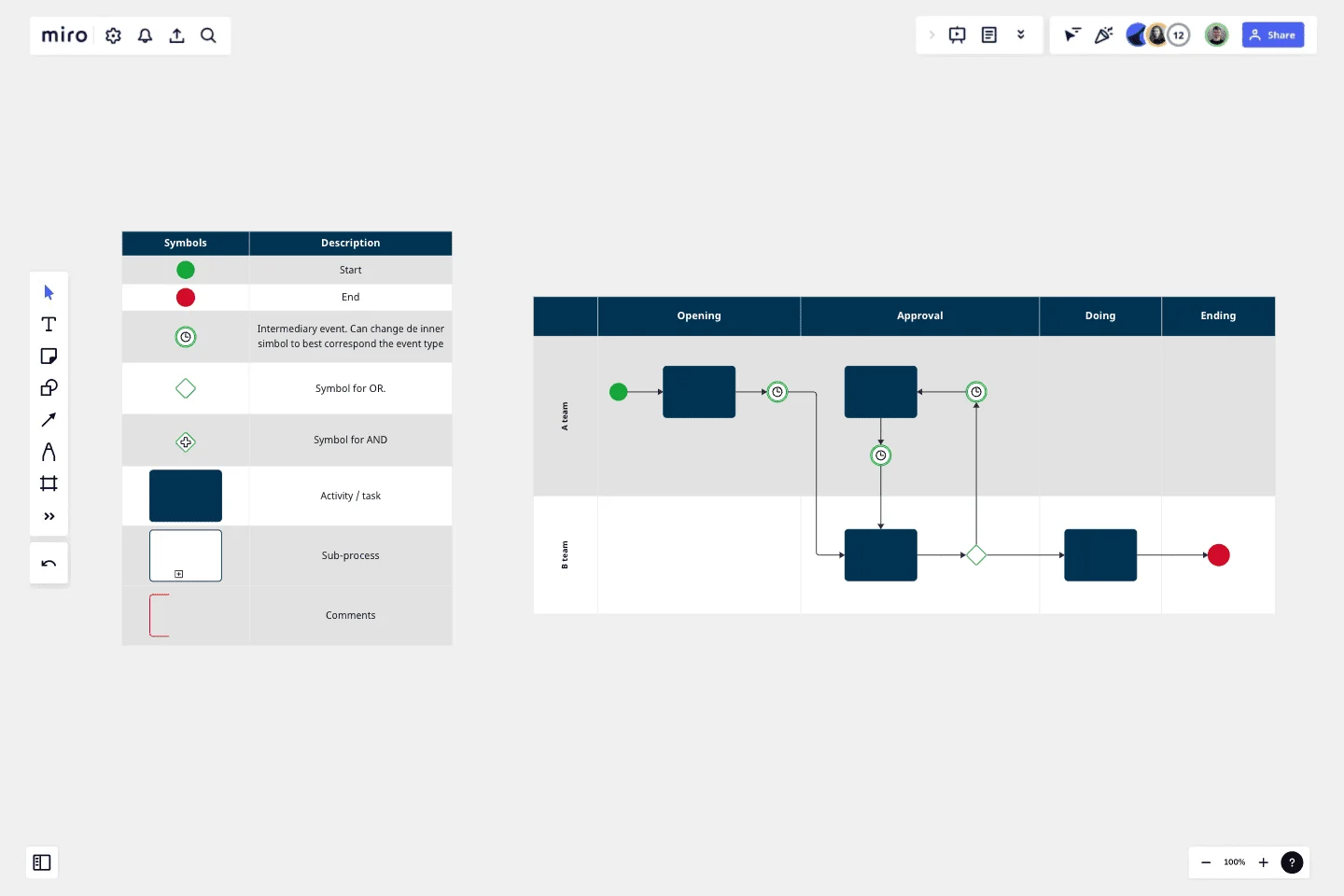
    Process mapping flowchart in Miro with diagramming shapes panel showing Start, Review PO, and decision nodes with team cursors
  • When a regulatory update rewrites your claims procedure

    A new state-mandated disclosure requirement lands mid-quarter and your diagram is buried in a shared drive as "Claims_Process_v14_FINAL.docx." Miro's Synced Copies push a single edit on the master map to every downstream board in seconds. No version drift. No missed locations.

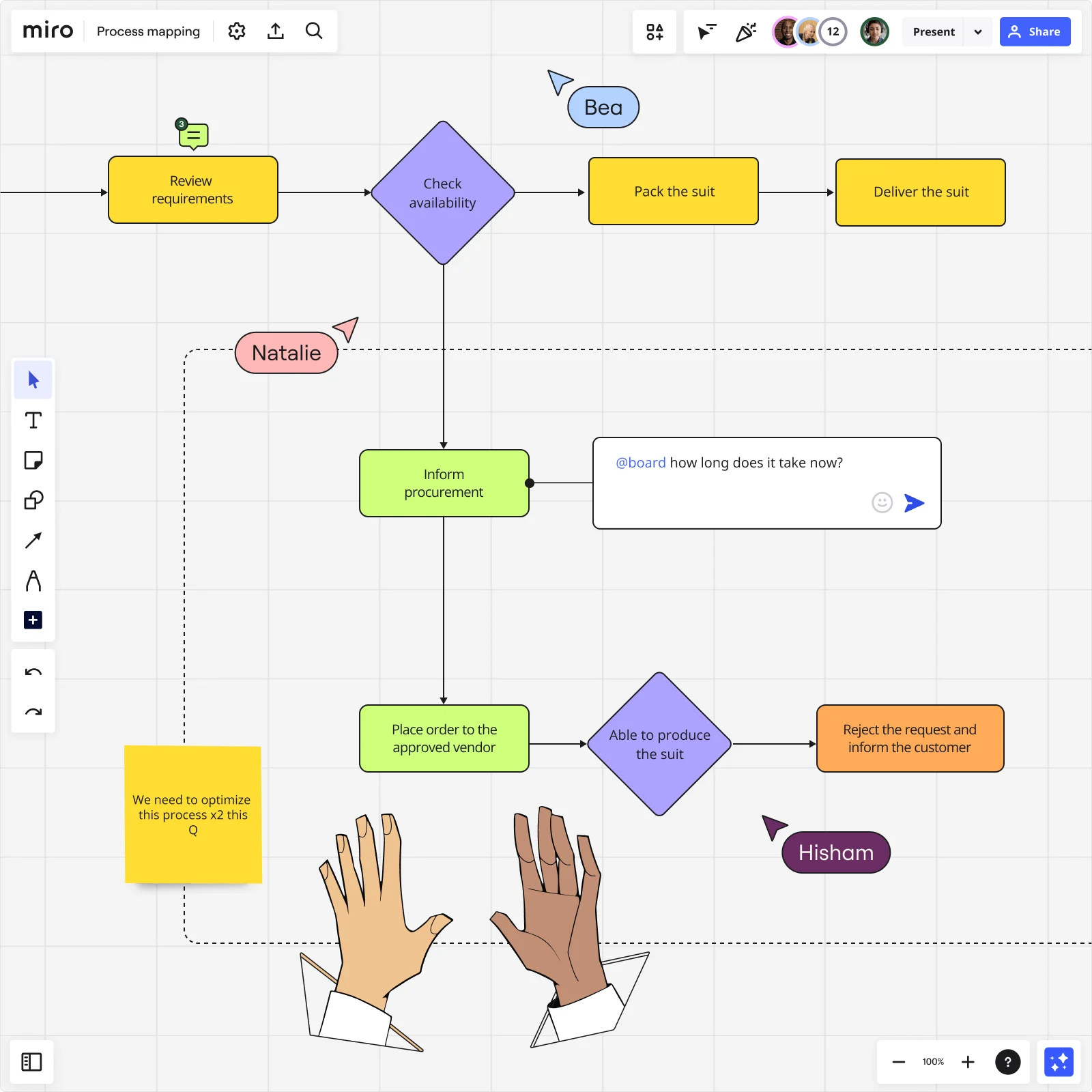
    Miro process mapping board showing a flowchart with review requirements check availability and procurement steps with collaborator cursors and comments
  • Stop rebuilding the same compliance audit map every cycle

    Every audit prep forces claims supervisors to reconstruct the same FNOL-to-payment workflow from scratch. Miro's Process Documentation Blueprint packages current-state, exception-handling, and improvement-tracking boards into one reusable Space. Start from a pre-wired structure, not a blank canvas.

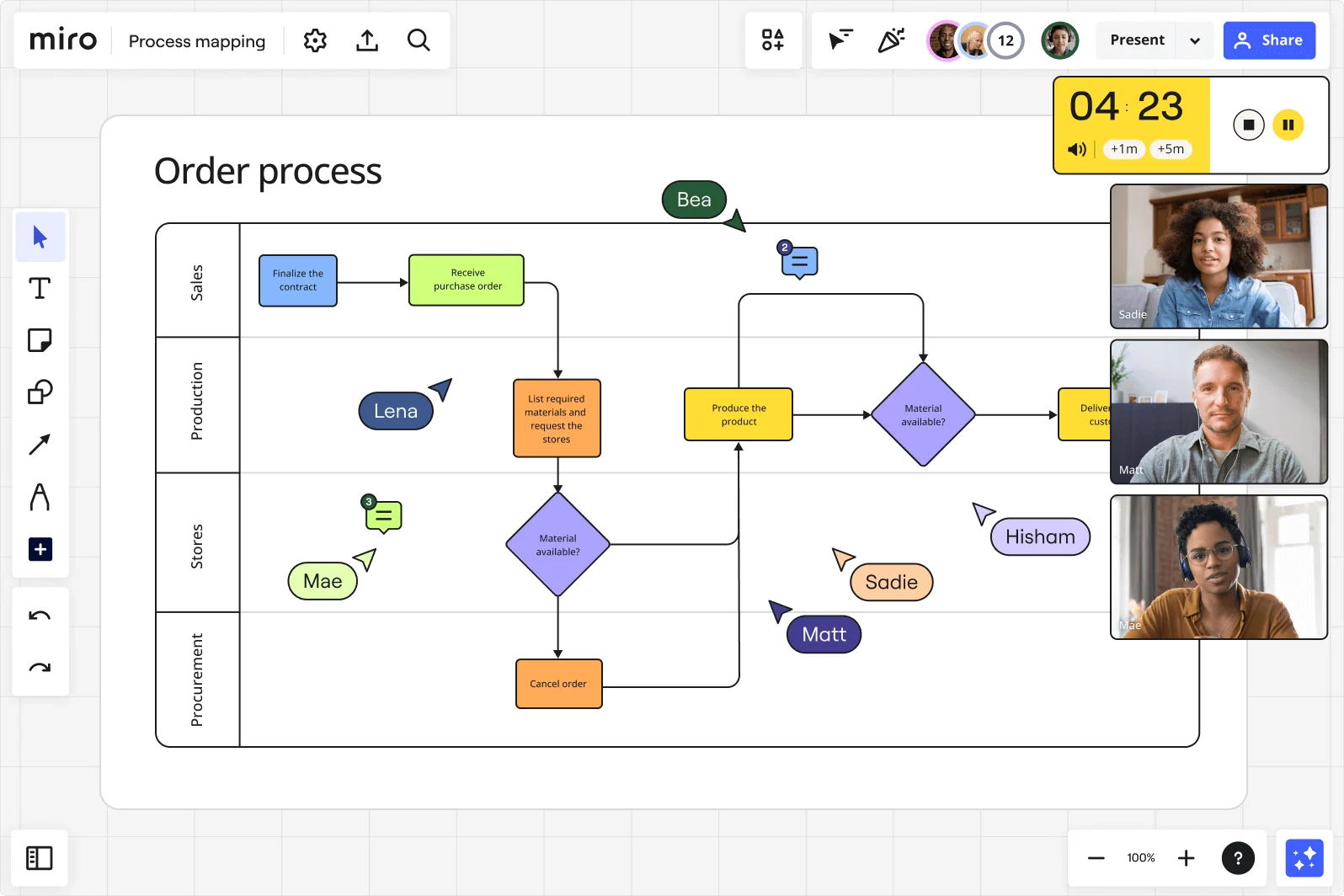
    Miro process mapping board showing an order process swimlane diagram with Sales Production Stores and Procurement lanes with video call participants and timer
  • SOP documentation next to the diagram that drives it

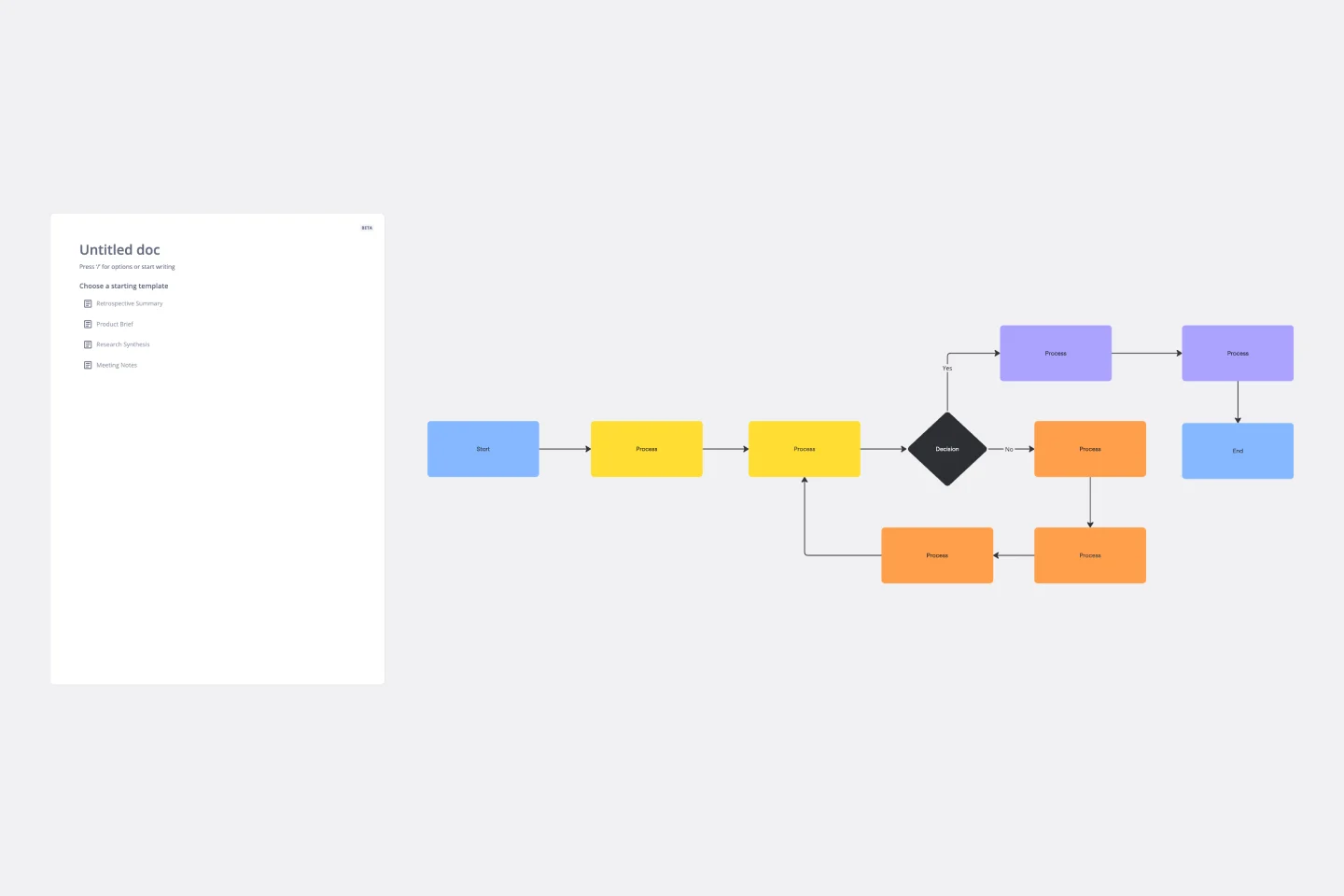
    The adjudication flowchart lives in Visio. The SOP lives in Word. When one changes, the other lags. Miro Docs lets adjusters and compliance leads build the SOP runbook directly alongside the process map, with inline AI rewriting and one-click PDF export for auditor handoff.

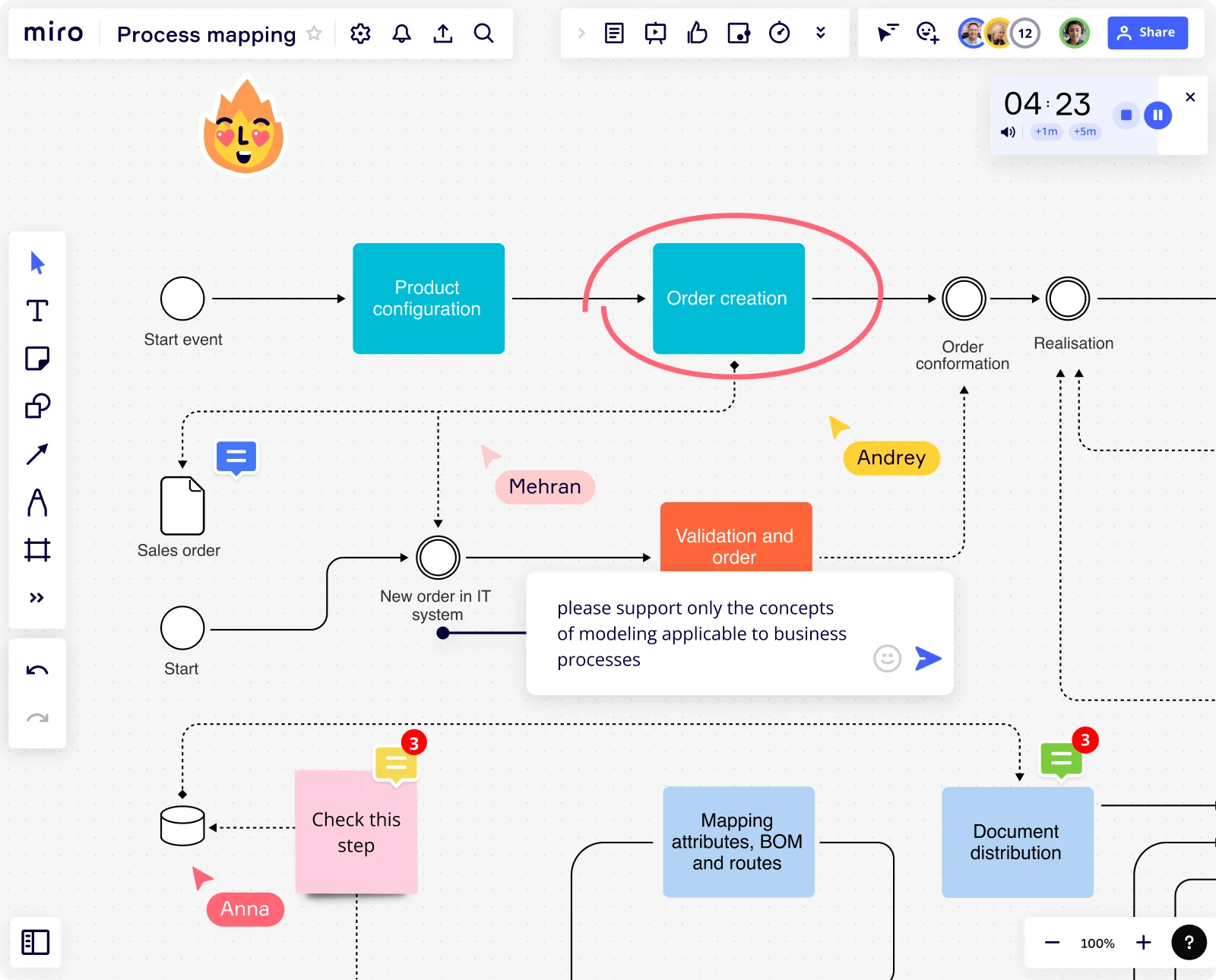
    Miro board showing business process mapping with flowchart nodes for product configuration, order creation, validation, and document distribution with collaborator cursors
  • Turn severity-scoring workshops into real decisions

    Miro Engage Scales captures pain-point severity per process step. The Ranking activity produces a calculated priority order, not a noisy vote count. Front-line workers and remote examiners join by scanning a QR code. No Miro account needed.

    A Miro board showing a credit application review process map with three swimlanes (Representative, Manager, Risk department) containing a BPMN-style flowchart with blue process rectangles, yellow decision diamonds, and dark terminal circles, alongside a partially visible document template panel on the left.

How insurance claims teams get started with Process Mapping in Miro

  • Map your first claims intake flow

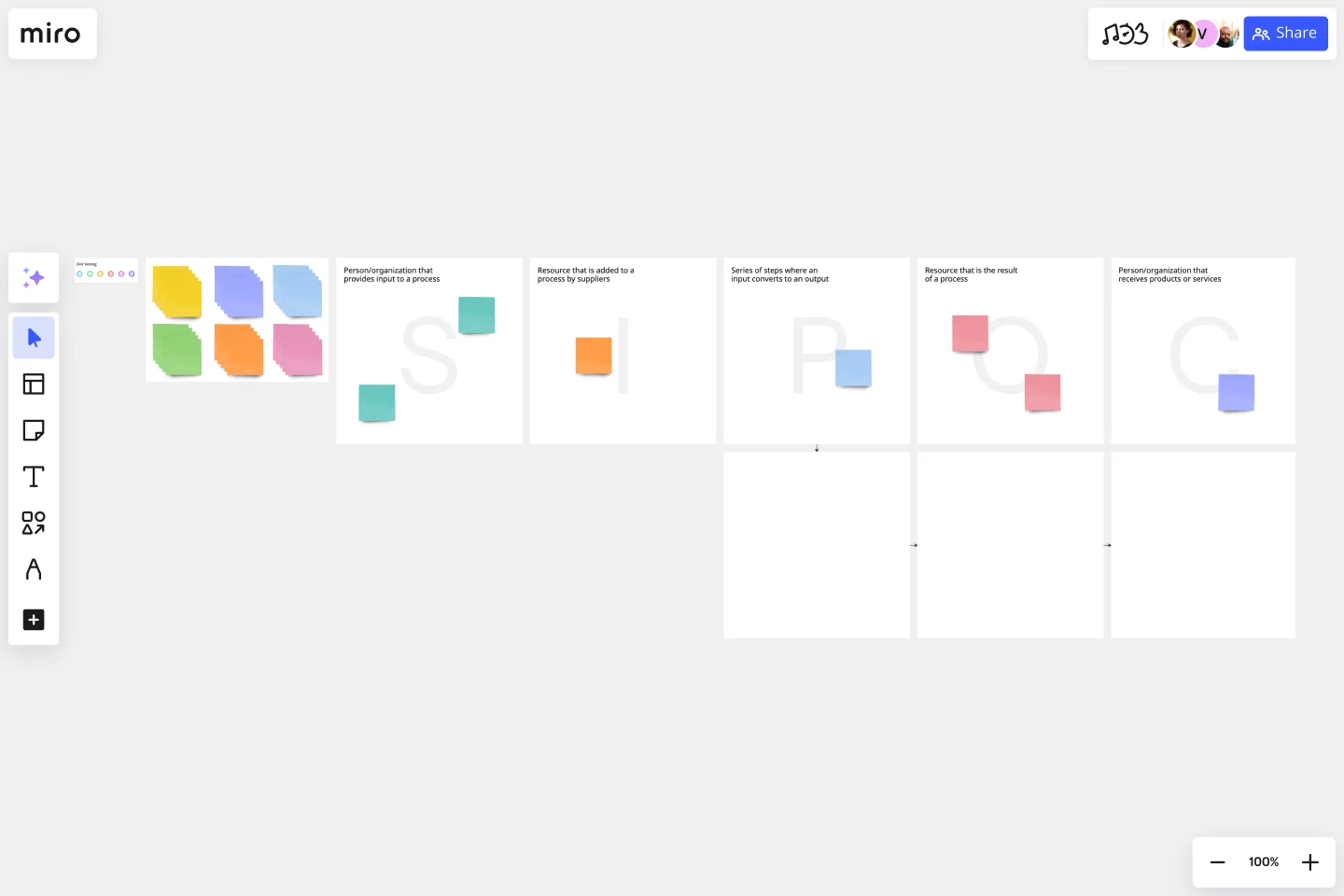
    Open Miro's SIPOC Template, define the trigger (first notice of loss) as your start point and final settlement as your end state, and drop in every handler from adjuster to subrogation specialist before touching a single connector.

  • Build your swimlane in Diagramming Mode

    In Diagramming Mode, drag each step - coverage verification, liability assessment, reserve setting, payments - into Swimlane lanes by role (field adjuster, desk adjuster, SIU, finance) so every handoff and approval dependency is explicit from day one.

  • Flag bottlenecks with sticky notes and comments

    Use color-coded Sticky Notes and Threaded Comments to pin exception cases directly onto each step - think multi-party claims, late documentation, or coverage disputes - so your future-state redesign is built on what actually breaks, not what the SOP says.

  • Turn improvement gaps into tracked actions

    Use the Jira Integration to convert flagged bottlenecks (stalled reserve approvals, adjuster-to-SIU handoff delays) into tickets with owners and deadlines, then run a Presentation Mode walkthrough to get sign-off from claims leadership before any changes go live.

Process Mapping tips for insurance claims teams

  • Start your swimlane with the FNOL trigger and settlement closure as hard boundaries - claims maps that skip this step tend to balloon into enterprise-wide process reviews before anyone's agreed on scope.

  • Color-code steps by claim type (property, liability, workers' comp) using Sticky Note tags so your map stays readable across the full portfolio without needing a separate board per line of business.

  • For larger claims organizations, use Frames to separate high-level end-to-end flow from detailed sub-process maps (e.g., SIU referral protocols, litigation handoffs), then Export a PDF version for audit and compliance documentation.

Understand how insurance claims teams transform their work

  • Best collaborative tool for business process mapping

    Verified User

    G2
  • I’ve been utilizing the AI agent Sidekick, and it’s definitely been helpful for process mapping.

    Verified User

    G2

Process Mapping essential guide for insurance claims professionals

CategoryKey insights
  • Common mistakes to avoid

    The biggest trap for claims analysts is mapping the policy-compliant version of a claim instead of what actually happens: the adjuster workarounds, the informal escalation calls, the exceptions that never made it into the SOP. For smaller teams, cramming every sub-step and edge case into a single diagram is equally damaging - if your map takes ten minutes to explain, it'll never get used past the kickoff meeting. Large claims operations have a different problem: maps built by one analyst from documentation alone, without the frontline handlers and subrogation specialists in the room, will miss the handoffs that slow claims down the most.

  • Key integrations for insurance claims teams

    Jira and Asana let adjusters and ops leads turn a bottleneck identified on the process map directly into a tracked work item, so nothing gets lost between the whiteboard and the fix. Confluence and Smartsheet keep claims procedures and caseload data connected to the map itself, which matters when you're managing high claim volumes across distributed teams. For organizations already invested in Lucidchart or Visio for formal documentation, Miro's import support means you don't have to rebuild from scratch.

  • When to use it

    Reach for Miro's process mapping tools when your claims team is about to redesign a workflow - a new line of business, a regulatory change, or a spike in cycle times that's triggered a process review. Picture a claims ops team mapping an auto liability intake process across five departments: starting from a BPMN template, they document every handoff from first notice of loss through final settlement, spot two redundant approval loops, then validate the future-state map with department leads before linking each improvement to Jira tickets for implementation. It's also the right tool when you need onboarding documentation that new adjusters will actually use, rather than a written SOP that collects dust.

  • Security & Compliance

    Insurance claims work sits under serious regulatory scrutiny, and Miro's SOC 2 Type II certification gives compliance officers a clear answer when vendors get reviewed. For carriers handling health-related claims, HIPAA compliance means you're not creating a risk every time a team maps a process that touches personal health information. Enterprise claims organizations get granular sharing permissions and data residency controls, so sensitive process documentation stays within the boundaries your legal and IT teams require.

Frequently asked questions for insurance claims teams

Last updated: Thursday, June 25, 2026