Andrey
See collaborative AI in action — straight from the Canvas 26 keynote.
Jeff

Process mapping for franchise operations teams

Document every franchisee workflow before the next QBR. Map approval chains, onboarding steps, and compliance handoffs in one shared canvas.

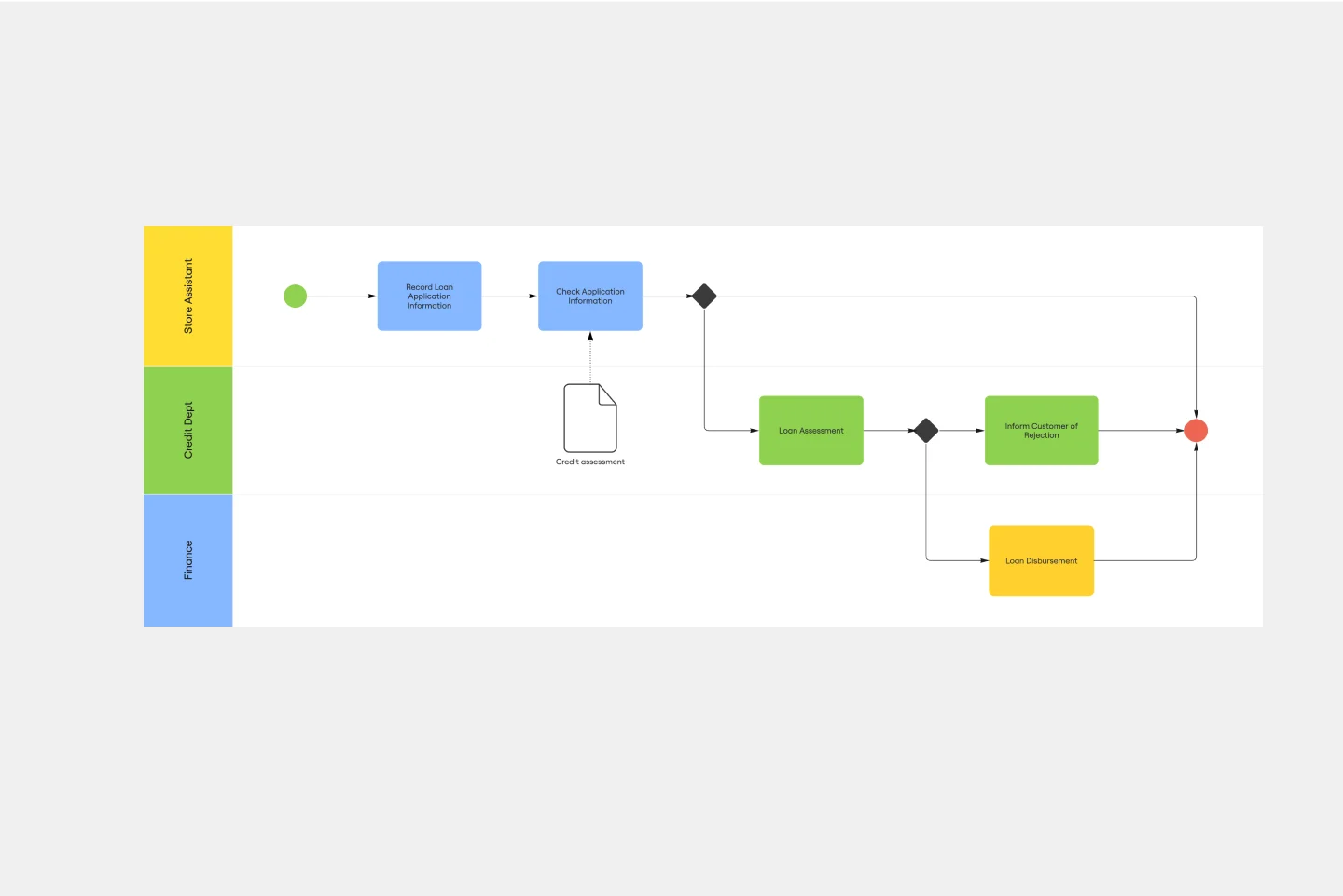
A BPMN swimlane diagram on a Miro board showing a loan application process across three lanes (Store Assistant, Credit Dept, Finance) with process steps including Record Loan Application, Check Application Information, Loan Assessment, Inform Customer of Rejection, and Loan Disbursement, connected by decision gateways and a credit assessment document artifact.

What experts say

  • Process mapping encourages collaboration among team members by involving stakeholders in the process documentation and improvement efforts.

    Systems and Teams

    Research source · Systems and Teams

    Industry Expert
  • Process mapping is a method that promotes a better understanding of processes and helps organizations identify areas for improvement.

    IBM

    IBM

    Keynote Speaker

The research on process mapping

  • 30%

    Process mapping in Lean Six Sigma yielded 30% reduction in order processing time

    Source: Systems and Teams

See process mapping in action

Related templates for franchise operations teams

We have 168 templates in our library for Process Mapping.

Bpm
Use template
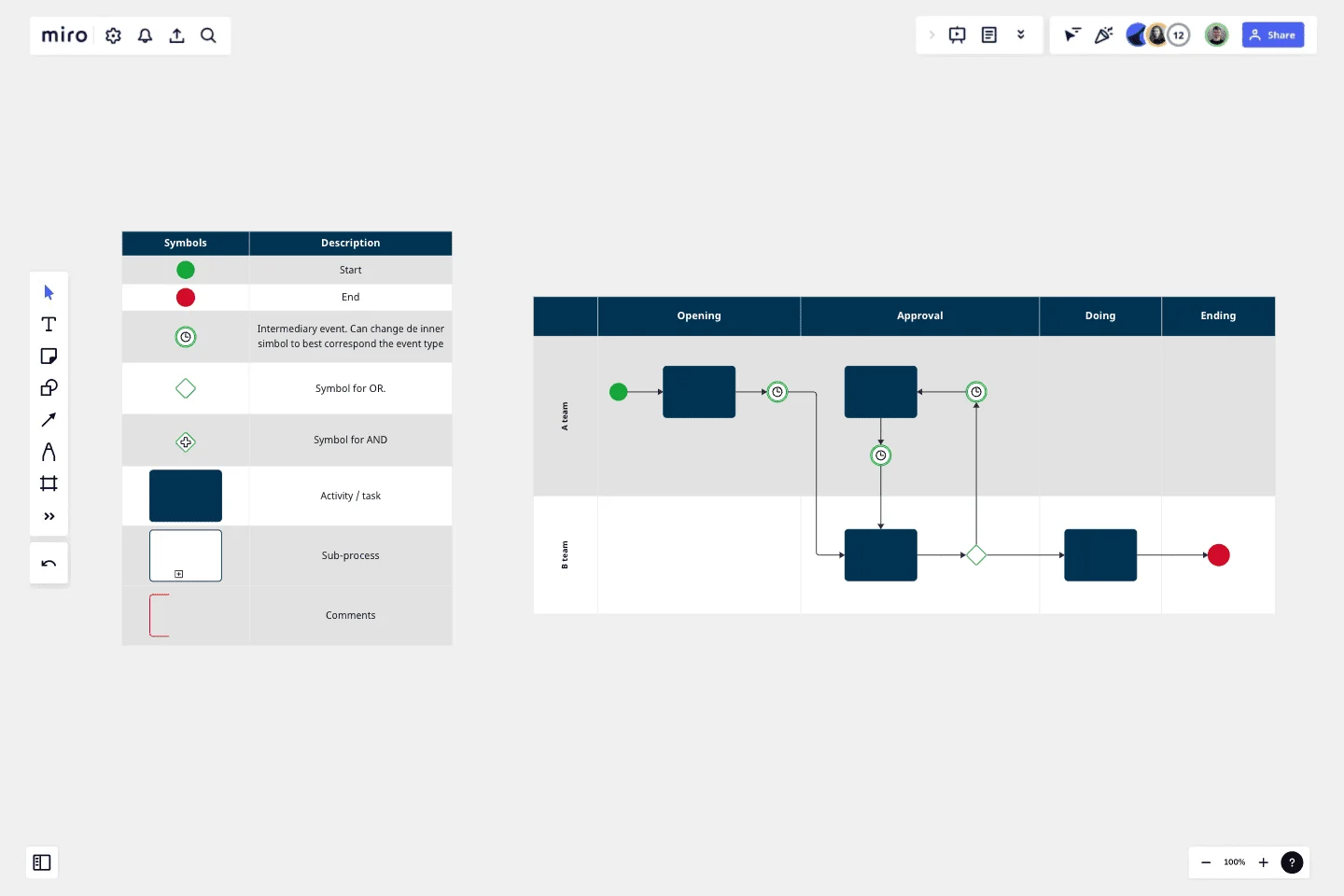
Swimlanes Diagram Basic
Use template
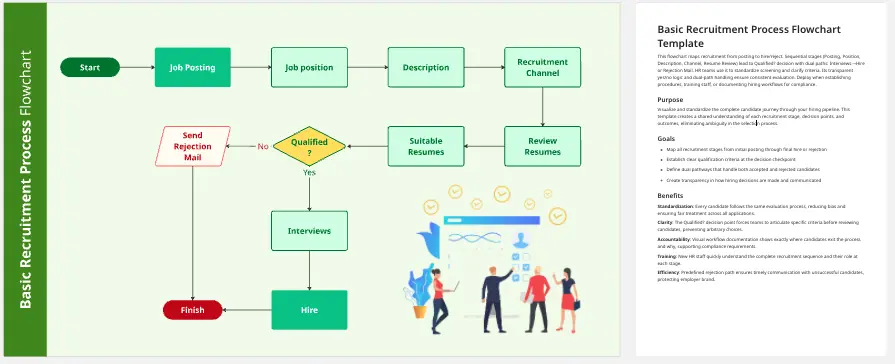
Basic Recruitment Process Flowchart By Rizwan Khawaja
Use template
Bpmn Basic
Use template

Why franchise ops teams love mapping processes in Miro

  • From 50 locations to one canonical playbook

    Every regional manager has their own version of the truth. Miro's swimlane layouts separate corporate, franchisee, and vendor ownership in one map so handoffs between HQ and the field are explicit, not assumed.

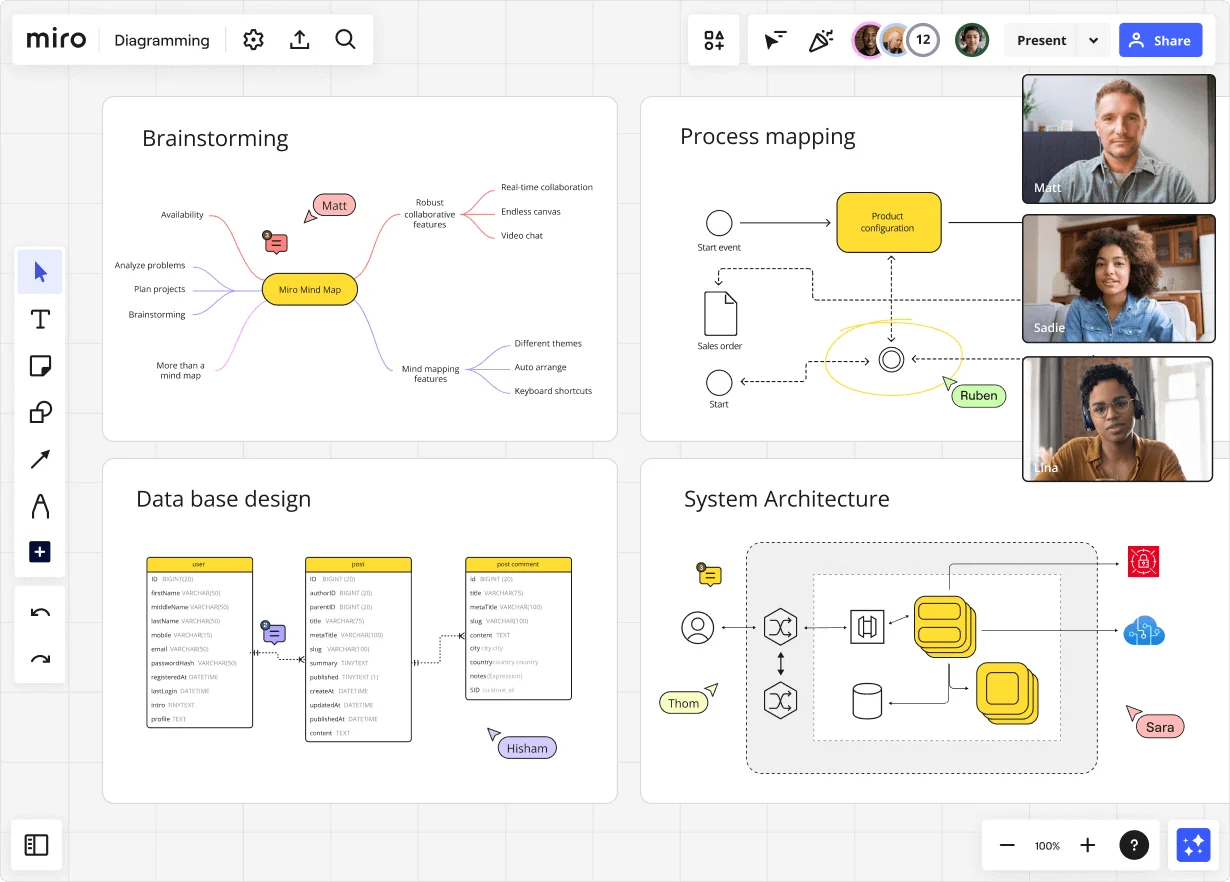
    Miro diagramming board showing four active workspaces: a mind map centered on 'Miro Mind Map' with feature branches, a BPMN-style process mapping flowchart with 'Product configuration' decision node, a database ER diagram with three related tables (user, post, post comment), and a system architecture diagram with interconnected components — all with visible collaborator cursors (Matt, Sadie, Ruben, Lina in video panel, plus Hisham, Thom, Sara as cursor labels).
  • Stay current when compliance requirements change mid-quarter

    Map the updated workflow in Diagramming Mode, apply Status Labels (Draft / In Review / Published), and every regional director sees the live version. No email chains, no conflicting copies.

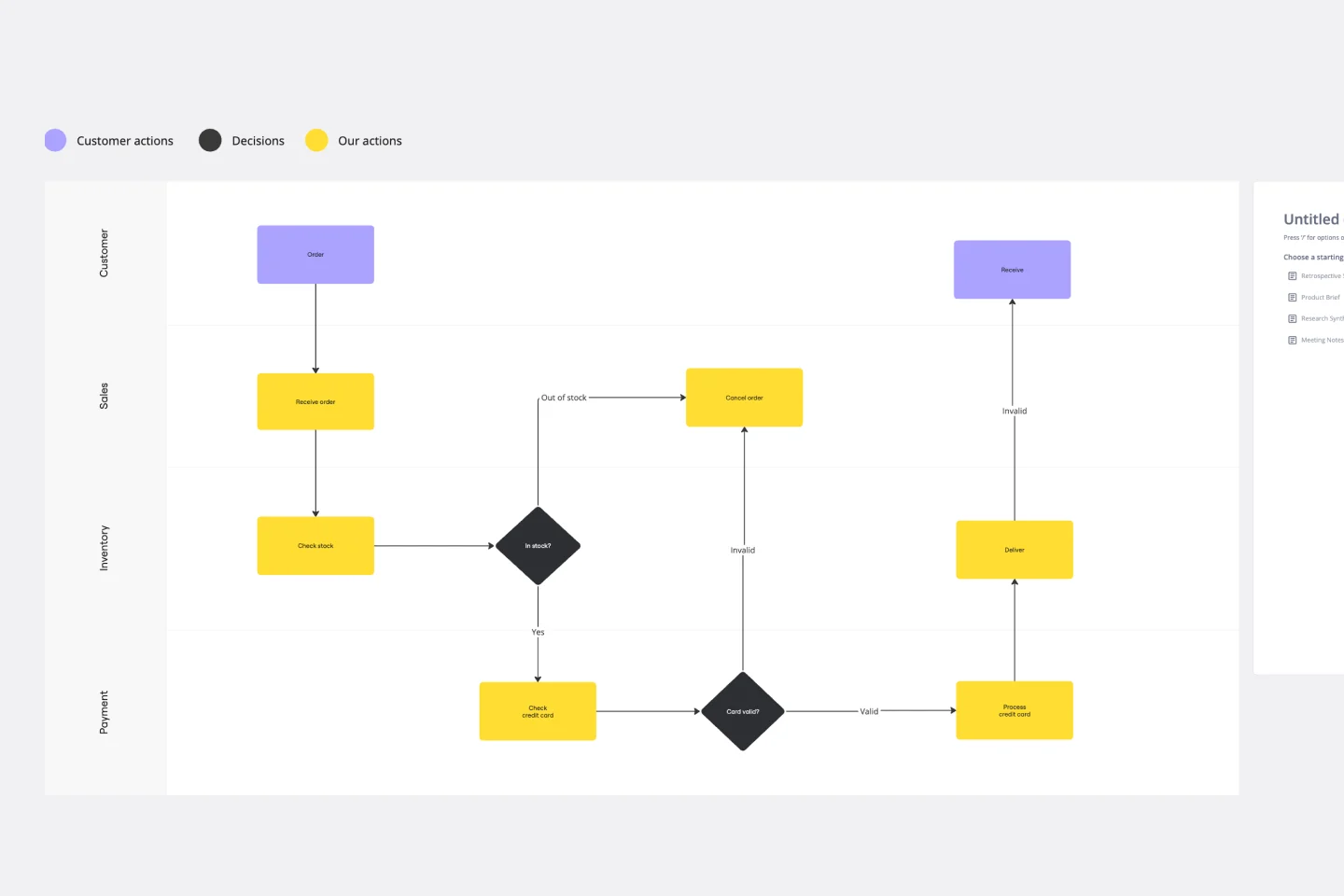
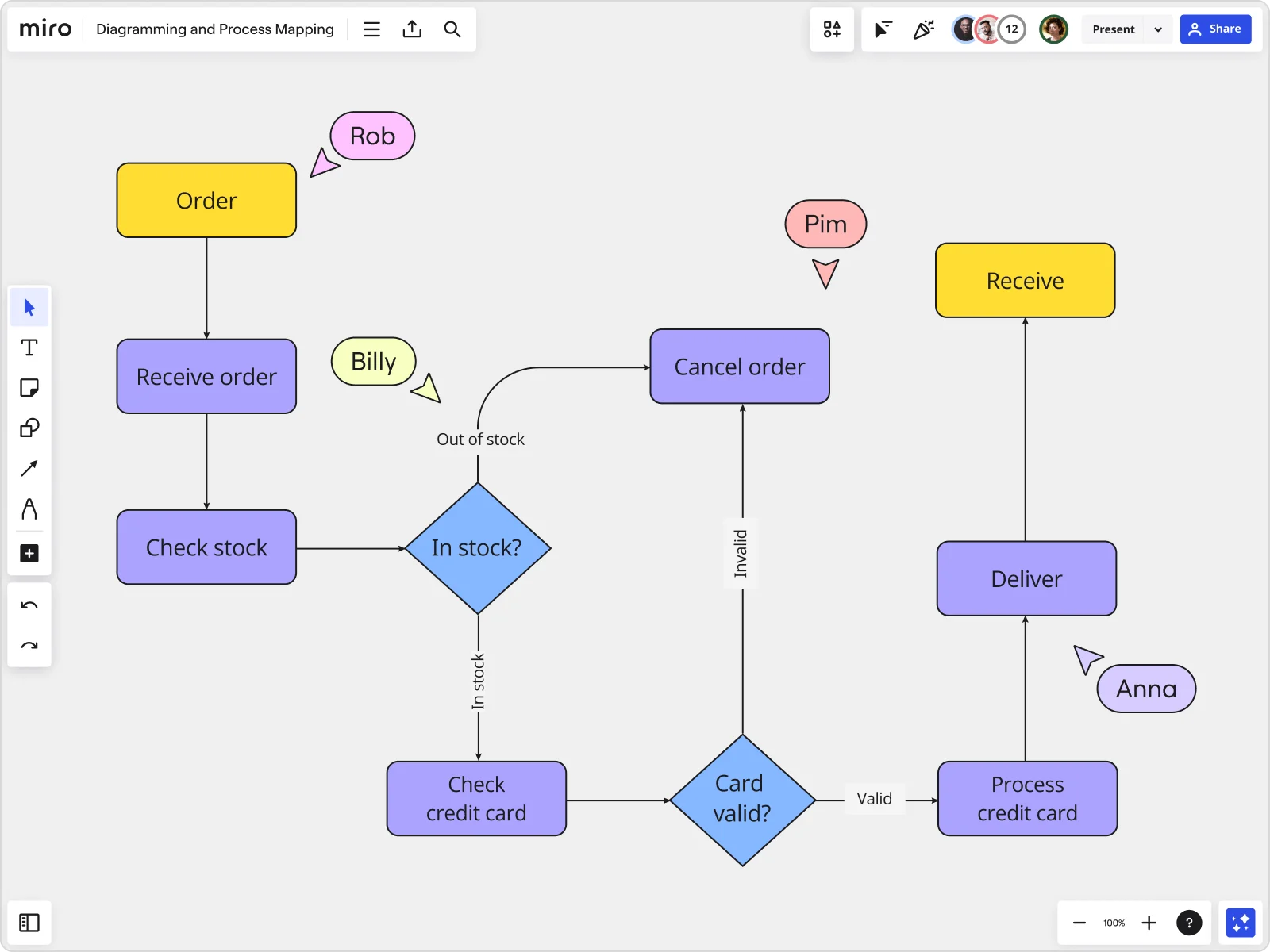
    Miro board displaying a detailed order processing flowchart with colored decision diamonds (blue) for 'In stock?' and 'Card valid?' checks, purple process blocks for steps like 'Receive order', 'Check stock', 'Check credit card', 'Process credit card', 'Deliver', and 'Cancel order', a yellow 'Order' start block and 'Receive' end block, plus named collaborator cursors (Rob, Billy, Pim, Anna) visible on the canvas.
  • Audit prep that doesn't start from scratch each cycle

    Miro's Synced Copies carry the canonical process map to each location's board automatically. Edit the master once and the update propagates in seconds across your entire documentation set.

    Miro board displaying a BPMN process mapping diagram with two swimlanes (Customer and Online Shop), showing decision gateways, message events, and task boxes for an order/offer workflow including 'Send offer', 'Accept offer', 'Decline offer', 'Send Payment', 'Receive Confirmation', and 'Receive Decline' steps, with the BPMN shapes panel open on the left.
  • Turn a whiteboard sketch into a documented escalation path

    Field operators sketch escalation flows during training sessions and that knowledge disappears fast. Miro's AI turns a plain-language description into a structured BPMN diagram instantly, so ops coordinators refine rather than rebuild.

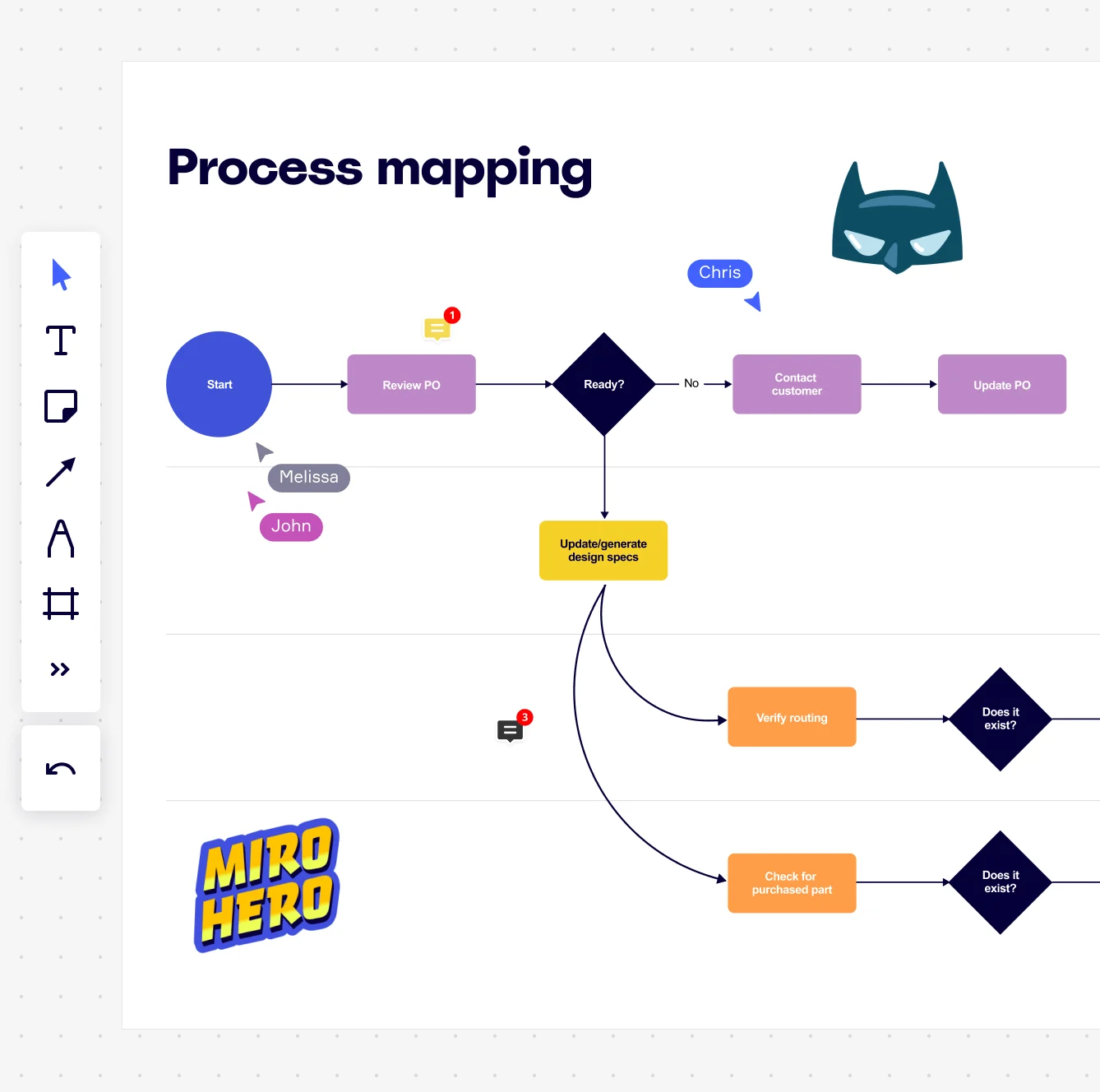
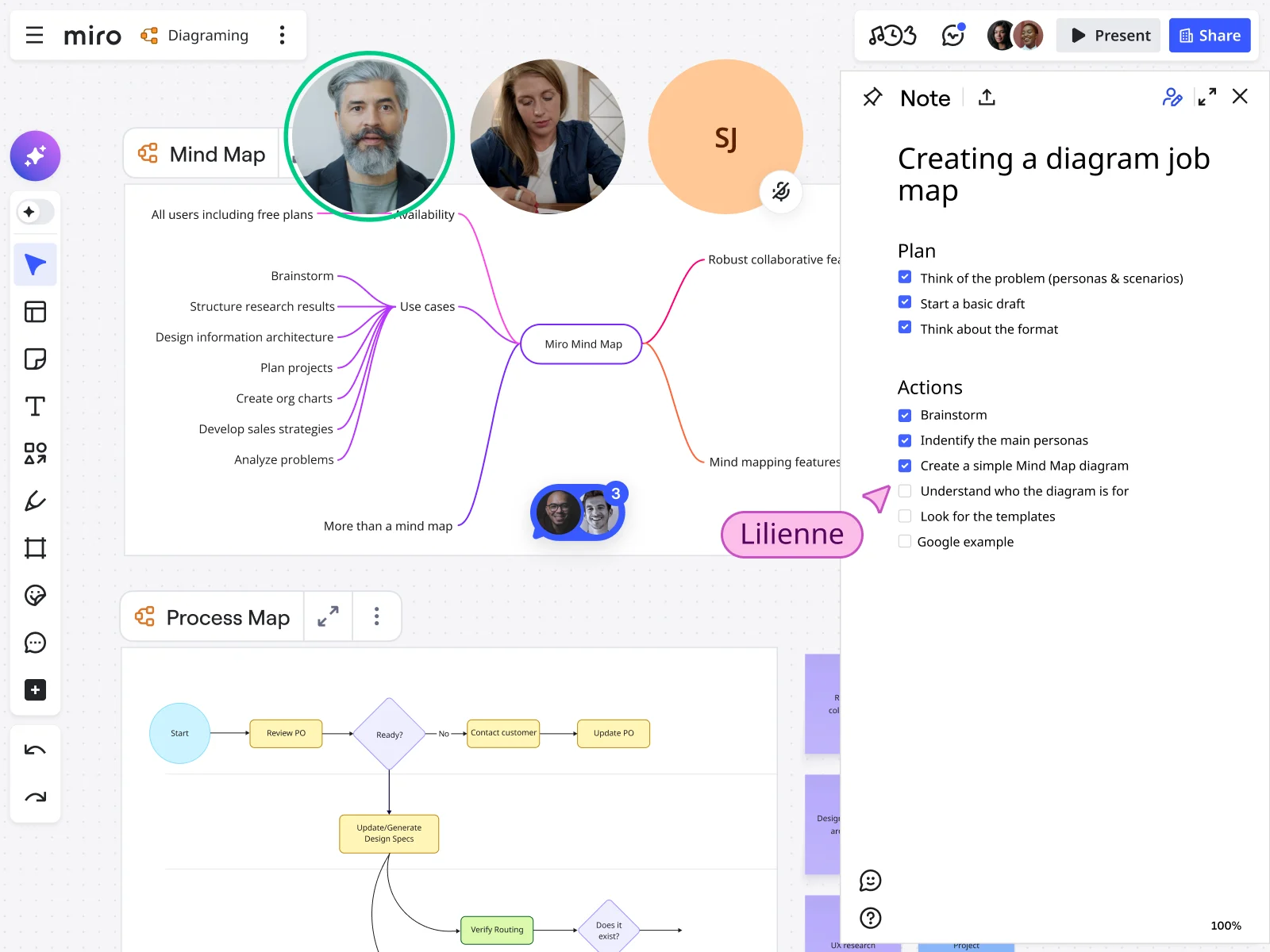
    Miro board displaying a process mapping flowchart with labeled nodes including Start, Review PO, a Ready decision diamond, Contact Customer, Update PO, Update/generate design specs, Verify routing, and Check for purchased part, with collaborative cursors (Chris, Melissa, John), comment badges, and decorative Batman and Miro Hero stickers.
  • Connect your onboarding map to the tasks that actually run it

    The process map and the action list shouldn't live in different tools. Miro's Confluence and Jira integrations link each mapped step to tracked tasks, so every handoff from site setup to grand opening has an owner and a deadline.

    Miro process mapping board displaying a cross-functional flowchart with circular process nodes (Process 1.0, 1.1, 2.0), decision paths (Yes/No branches leading to 'Accept offer' and 'Decline offer'), and rectangular action steps including 'Send payment', 'Receive Confirmation', 'Receive Decline', and 'Process', connected by solid and dashed arrows.

How franchise teams get started with Process Mapping in Miro

  • Map your onboarding SOP from day one

    Open the SIPOC Template to define exactly where a new franchisee's onboarding process starts (signed franchise agreement) and ends (first mystery shop pass), so your ops team isn't debating scope when the cohort launch clock is already ticking.

  • Build your four-wall operations map in swimlanes

    In Diagramming Mode, use the Swimlane Shape Pack to assign each process lane to a real owner - franchisee, field consultant, corporate ops, supply chain - so handoffs between the franchisor portal and your franchise management system are visible, not assumed.

  • Turn deviation findings into live process fixes

    Attach mystery shop results and field consultant deviation reports directly to your process steps using Comments and Sticky Notes, then sync the corrected map to every sub-process board via Synced Copies so the operations manual updates everywhere in seconds, not weeks.

  • Get VP sign-off before disclosure documents go out

    Run your franchise development validation walkthrough in Presentation Mode with built-in Voting so the VP of Franchise Development and regional ops directors can prioritize which required standards vs. recommended best practices need revision before the first FDD goes out.

Process Mapping tips for franchise operations teams

  • Color-code your process steps by standard type - one color for required brand standards, another for recommended best practices - so a new franchisee in market 47 can read the map without a field consultant standing next to them explaining what's mandatory.

  • Use AI Generate Diagram to draft your unit-level operations flow from a text description of your current SOP, then invite your most experienced field consultants to correct it in real time - they'll surface the workarounds that never made it into the official ops manual.

  • For refranchising events, duplicate your master operations map and use Status Labels (Draft / In Review / Published) so the regional ops director always knows which version is cleared for the converting location cluster and which is still a work in progress.

Understand how franchise operations teams transform their work

  • Can easily and quickly map out current business processes and ideal future states.

    James Nicholls

    G2
  • I’ve been utilizing the AI agent Sidekick, and it’s definitely been helpful for process mapping.

    Verified User

    G2

Process Mapping essential guide for franchise operations teams

CategoryKey insights
  • Common mistakes to avoid

    The biggest trap for franchise ops teams is mapping the playbook as written rather than how a store manager on day one actually runs the open or close - field deviations don't show up in the corporate SOPs, and your mystery shop scores will keep telling you something's off until you fix that gap. For smaller franchisee cohorts just getting started, scope creep is a real killer: without agreeing on start and end points upfront, the map quietly expands from "new location onboarding" to "entire four-wall operation" and becomes useless to a regional field consultant on a tight timeline. Larger franchise networks add another pitfall - letting each region build its own notation style means you end up with incompatible maps across markets, so pick one standard (a flowchart or BPMN shape pack) and hold every ops portal and LMS documentation update to it.

  • Key integrations for franchise operations teams

    Smartsheet connects directly to the franchisee tracking workflows and build-out milestone timelines that franchise development directors already live in, so the process map stays tethered to real operational data rather than becoming a standalone artifact. For enterprise franchise groups running multi-system stacks, Jira links each process improvement directly to an implementation ticket, and if your field consulting team already has process diagrams living in Visio or Lucidchart, Miro's import tools bring them into a shared workspace without forcing anyone to start over. Confluence works well for smaller franchise brands that use it as their operations knowledge base, letting the ops team embed validated process maps directly where franchisee-facing documentation lives.

  • When to use it

    Reach for process mapping in Miro when a scheduled franchisee cohort launch is approaching and the field consulting team realizes the onboarding SOPs are scattered across a shared drive, an LMS, and a three-year-old slide deck - that's the moment a single validated visual becomes worth more than any written manual. It's equally the right call during a refranchising event, when a cluster of corporate locations is converting and the regional ops director needs to align brand standards across new ownership groups before the first franchise disclosure document goes out. For example, an ops team preparing a market-47 franchisee launch can use Miro's swimlane layouts to map each stage of ramp - from pre-opening training sign-off to mystery shop readiness - identify the handoff gaps between corporate supply chain and local franchisee setup, and present the validated current-state map to the VP of Franchise Development for sign-off before a single key is handed over.

  • Security & Compliance

    For franchise operations teams handling sensitive franchisee financial disclosures, unit-level performance data, and pre-launch documentation, Miro's SOC2 Type II certification and granular sharing permissions mean you control exactly who sees a map at each stage of the approval chain - field consultant, regional director, or external franchisee. Enterprise franchise groups operating across multiple countries get data residency controls that keep operations documentation in the right jurisdiction, which matters when you're managing compliance across international master franchise agreements. Private Mode is worth using any time the ops team is workshopping a process that touches sensitive brand standard deviations or franchisee performance reviews that shouldn't be visible to the broader working session before leadership has signed off.

Frequently asked questions for franchise operations teams

Last updated: Wednesday, July 01, 2026