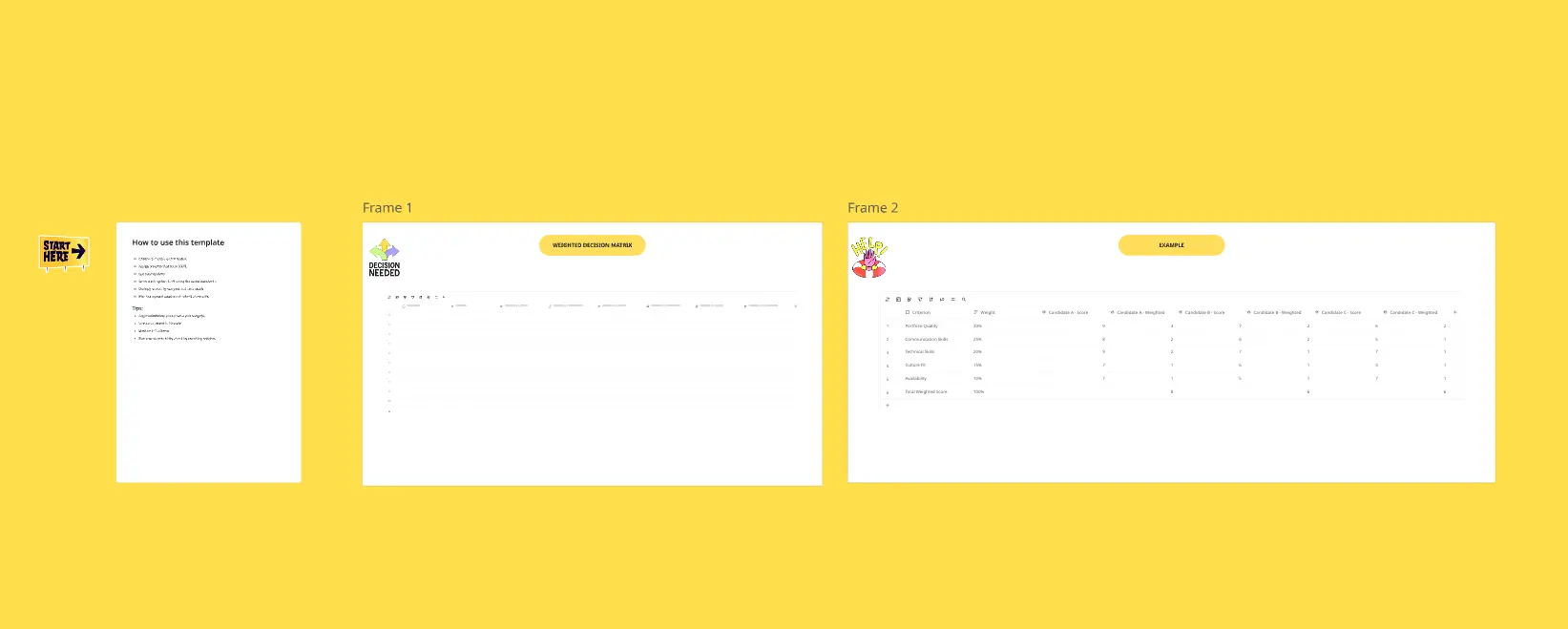
What it is for:A weighted decision matrix compares a few options against criteria the team agrees in advance. You leave with a completed table showing the options, criteria, weights, ratings and the evidence behind each one, plus a note on how sensitive the result is to the weights.
Who it helps:Teams and decision owners choosing between two to six serious options with real cost or risk, who will need to explain the choice later.
When to use it
You have 2 to 6 serious options and the choice carries real cost, risk or public impact.
Several teams have different priorities and you need a shared, visible basis for the decision.
You will need to explain the decision later to leaders, auditors or the public.
How to use it
Remove options that break any hard rule, such as a legal or budget limit.
Agree four to seven criteria and set their weights before looking at options.
Define what a 1, a 3 and a 5 mean for each criterion.
Rate criterion by criterion, with one line of evidence per rating.
Calculate the totals, then shift the most debated weights to see if the choice holds.
Tip:Keep the number of criteria small. Beyond seven, each weight becomes tiny and the totals blur together.
Credits and sources:Original Tiremesù worksheet and wording. Further reading: ASQ https://asq.org/quality-resources/decision-matrix
Full guide and film:https://www.tiremesu.com/guides/weighted-decision-matrix