Trace a food or agricultural commodity from land and farming through consumption and recovery, identify its biggest impacts, and find practical ways to build a fairer, lower-impact, more circular food system.
Purpose of the template
Food and agriculture affect land, water, biodiversity, climate, animal welfare, farmer livelihoods, labour conditions, and public health. This template helps teams map one commodity, crop, livestock product, ingredient, or food category across its full supply chain.
It supports better decisions on sustainable sourcing, organic and regenerative production, fair farmer conditions, climate resilience, food-waste prevention, lower-impact diets, responsible claims, and circular recovery of nutrients and organic materials.
What is included
The template follows six connected stages:
Land, inputs & farm sourcing
Farming & primary production
Processing & packaging
Transport, retail & distribution
Consumption & food-waste prevention
Redistribution, recovery & circular food systems
Each stage includes guiding questions and prefilled examples of key risks and opportunities, including land conversion, soil health, water, biodiversity, farmer incomes, extreme weather, animal welfare, food loss, packaging, cold chains, sustainable diets, food donations, composting, anaerobic digestion, and industry advocacy.
The final stage feeds back into the first: recovered nutrients, organic matter, and agricultural by-products can support more circular food systems.
How to use it
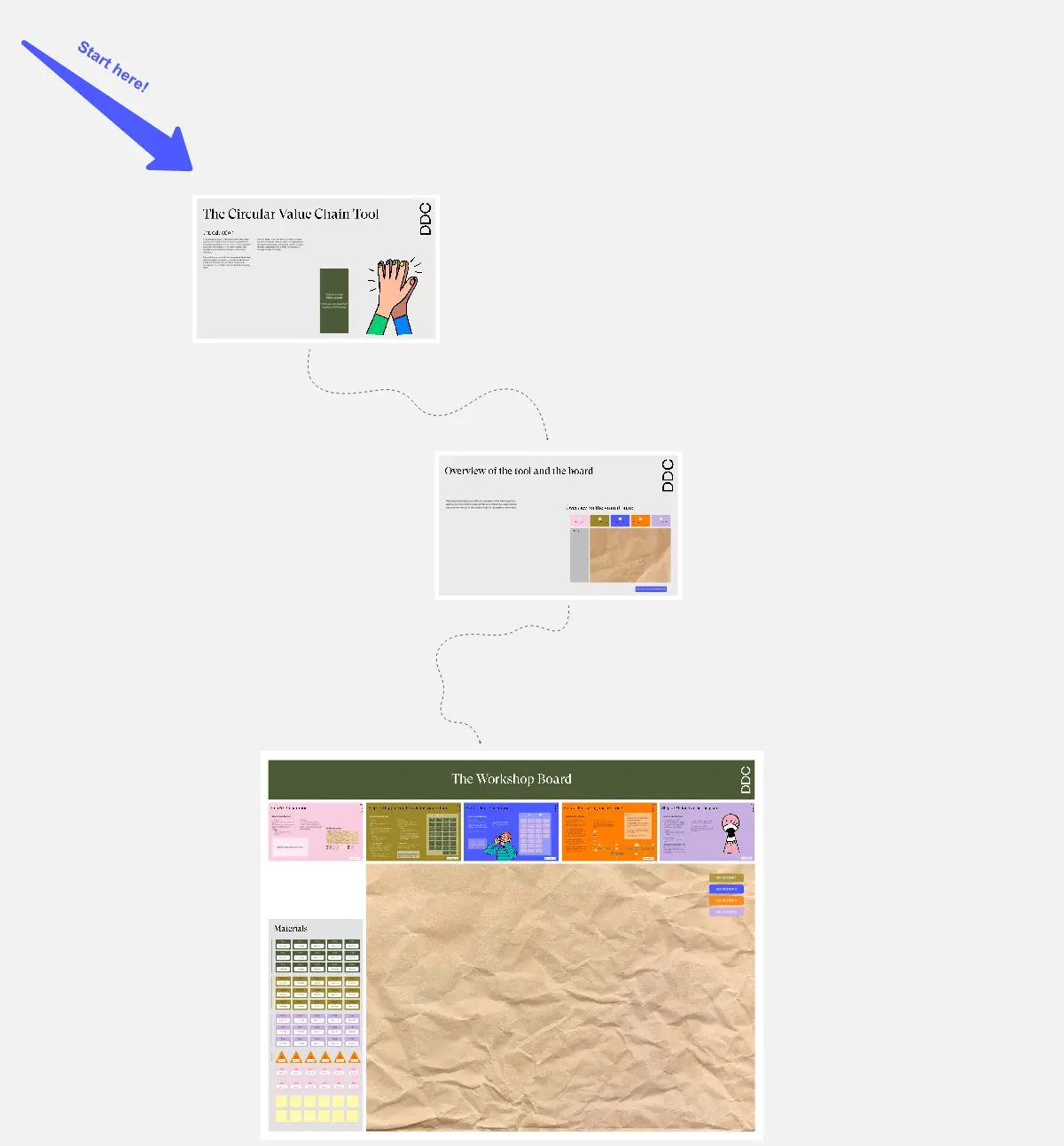
Start by completing the Business profile and Food & agricultural commodities profile. Choose one commodity or product category—such as coffee, wheat, dairy, cocoa, beef, vegetables, or a key ingredient—before mapping another.
Work from Stage 1 to Stage 6. Add sticky notes with findings, evidence, suppliers, sourcing regions, unanswered questions, assumptions, risks, and opportunities. Use green markers for opportunities or actions to explore, and orange markers for risks, gaps, dependencies, or requirements.
Finish by reviewing the full chain together. Prioritise the most important land, water, biodiversity, climate, labour, farmer-livelihood, supply, and regulatory risks. Agree the strongest opportunities to reduce food waste, improve farmer conditions, support organic or regenerative agriculture, and enable lower-impact diets.
Suggested workshop
Run this as a 90–120 minute cross-functional workshop.
Before the session, select one commodity or food category and gather available sourcing, supplier, farming, certification, processing, transport, sales, waste, and regulatory information.
Begin by agreeing the scope and completing the two profiles. Then spend around 10–15 minutes on each supply-chain stage, using the prompts to capture evidence, uncertainties, risks, and opportunities. Mark the most important notes as green or orange as you go.
Use the final 15–20 minutes to agree priorities: the most significant environmental, social, climate, supply, and regulatory risks; the most promising interventions; and the actions the business will take, support, or advocate for.
Who it is for
Use this template with sustainability, procurement, food sourcing, agriculture, product development, operations, logistics, quality, marketing, legal, finance, waste-management, and leadership teams. It is also useful with farmers, producers, suppliers, retailers, food-service providers, civil-society organisations, and other partners.
A starting point, not a complete list
The template is deliberately prefilled with suggestions, example risks, and possible opportunities to make it easier to begin. These are prompts—not fixed answers or a complete checklist. Change, remove, add to, or adapt every element to reflect your commodity, product, geography, supply chain, and business priorities.
What you will leave with
A shared map of the food or agricultural supply chain, its highest-priority environmental and social risks, opportunities for better farming and circularity, key regulations and standards, evidence gaps, and a practical set of actions to help build a more resilient and sustainable food system.