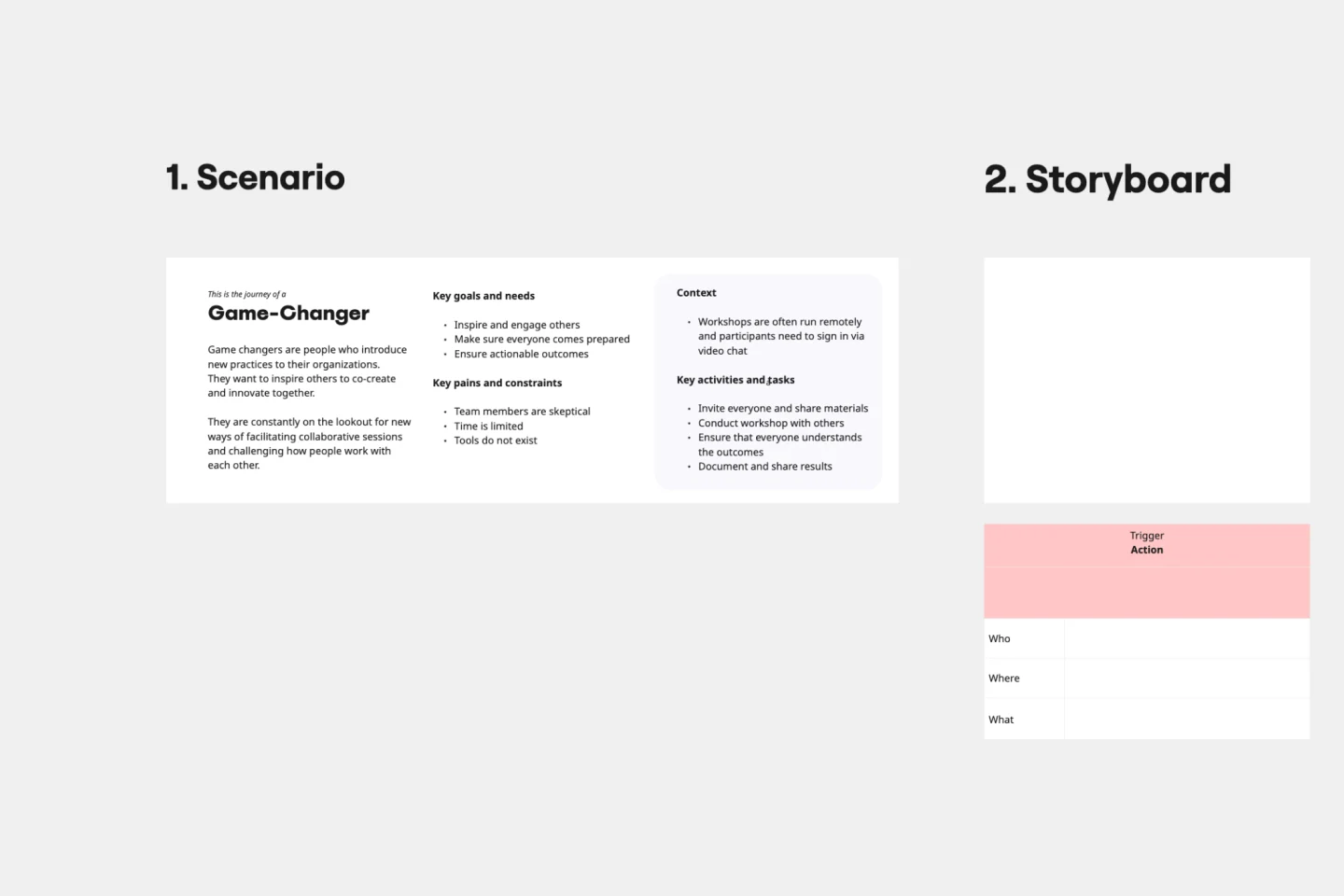
What it is for:A storyboard is a short sequence of drawn frames that shows how a person would experience a new service, from the moment a need appears to the result. You leave with a clear, shareable story of the new service, a list of assumptions under each moment, and the one or two frames that carry the most risk.
Who it helps:Teams explaining a new service idea to leaders or partners, or testing it with users before anything exists.
When to use it
You have a concept and need to explain it to leaders or partners in a few minutes.
You want feedback from users on an idea that does not exist yet.
A service crosses several channels or organisations and you need to see the whole sequence.
How to use it
Pick one real scenario from research: one person, one situation.
List six to eight key moments in order, from trigger to what happens after.
Draw one moment per frame with a one-line caption.
Write what each frame assumes and circle the riskiest frame.
Walk three to five users through it, then decide what to test next.
Tip:Give the person a name and a life. It keeps the story honest and specific.
Credits and sources:Original Tiremesù worksheet and wording. Further reading: 18F Methods https://github.com/18F/methods/tree/main/_methods
Full guide and film:https://www.tiremesu.com/guides/storyboard