What is the Step Ladder Gap Analysis Template?
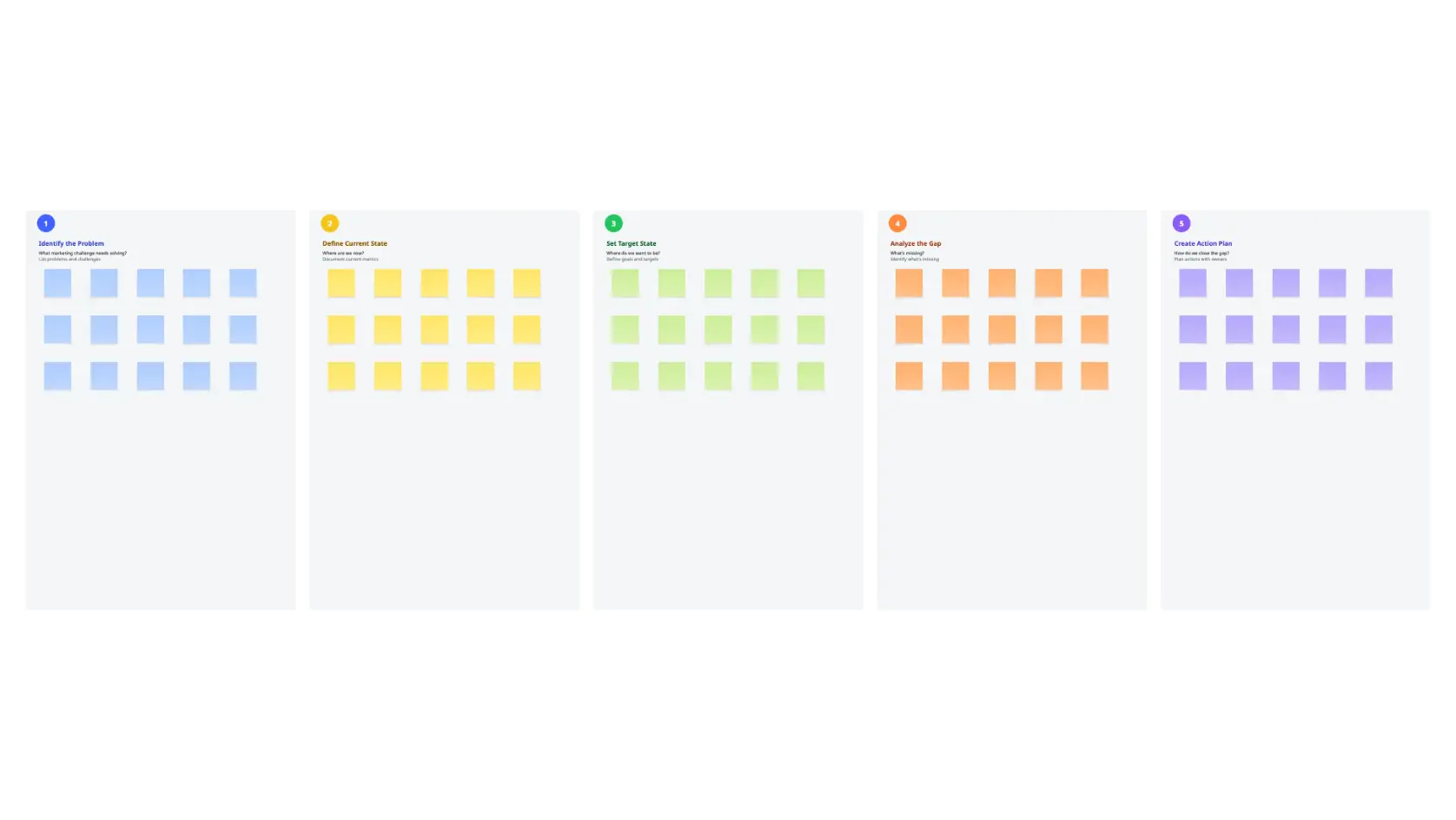
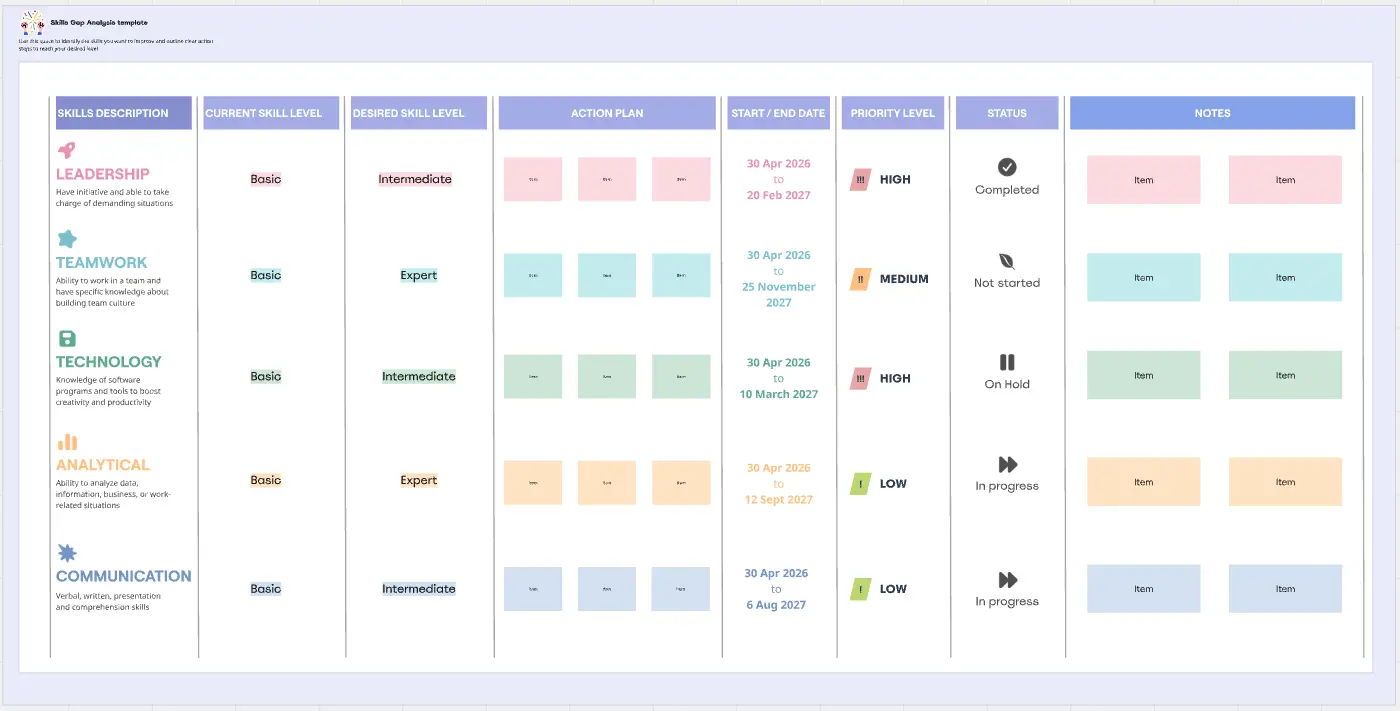
A visual gap analysis template that helps teams compare their current state with a desired future state, identify what is missing, and break the improvement journey into smaller steps.
What problem does the Step Ladder Gap Analysis Template solve?
Unclear improvement priorities
Large goals that feel difficult to act on
Missing steps between current and future states
Weak ownership
Unclear success measures
Lack of visibility into progress
How to use the Step Ladder Gap Analysis Template
Describe the current state.
Define the desired future state.
Identify the main gaps between the two.
Choose the first improvement step.
Add the next step toward the future state.
Assign owners and due dates.
Add a success measure to each step.
Review progress as the team moves up the ladder.
Common pitfalls
Creating a future state that is too vague
Skipping the gap between current and future conditions
Making each step too large
Adding actions without owners
Using goals without measurable targets
Trying to solve every gap at once
Ways to avoid mistakes
Use current data to describe the starting point.
Make the future state measurable.
Break large changes into smaller stages.
Give each step one clear owner.
Add a success measure to every stage.
Review the ladder as progress is made.
Miro Features You Can Use
Shapes for each ladder step
Arrows to show progression
Sticky notes for gap findings
Tags for owners and priorities
Comments for progress updates
Color coding for current, intermediate, and future states
Status labels for planned, active, and complete
FAQs
Q: Who can benefit from this template?
A: Product teams, operations teams, project teams, founders, department leads, and improvement groups.
Q: What types of gaps can this template support?
A: Process gaps, performance gaps, customer experience gaps, capability gaps, product gaps, and operational gaps.
Q: How many steps should the ladder include?
A: Two to four steps usually keeps the plan focused and easy to follow.
Q: How should the future state be written?
A: Describe the desired condition and add a measurable target where possible.
Q: Can this template be used for team or department planning?
A: Yes. It works well for small improvement initiatives and larger transformation goals.
Q: What will participants leave with?
A: A clear current state, defined future state, identified gaps, staged actions, owners, dates, and success measures.