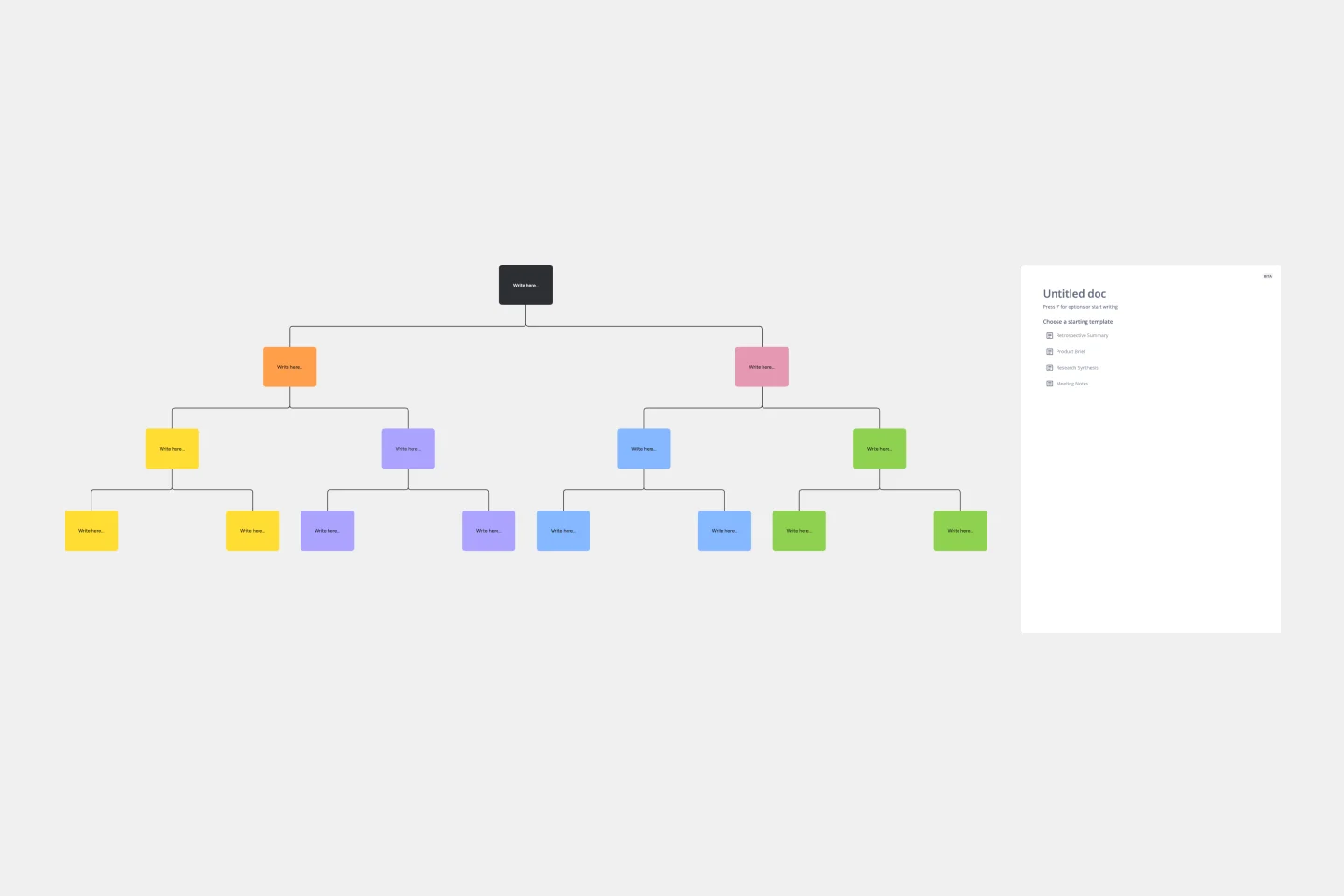
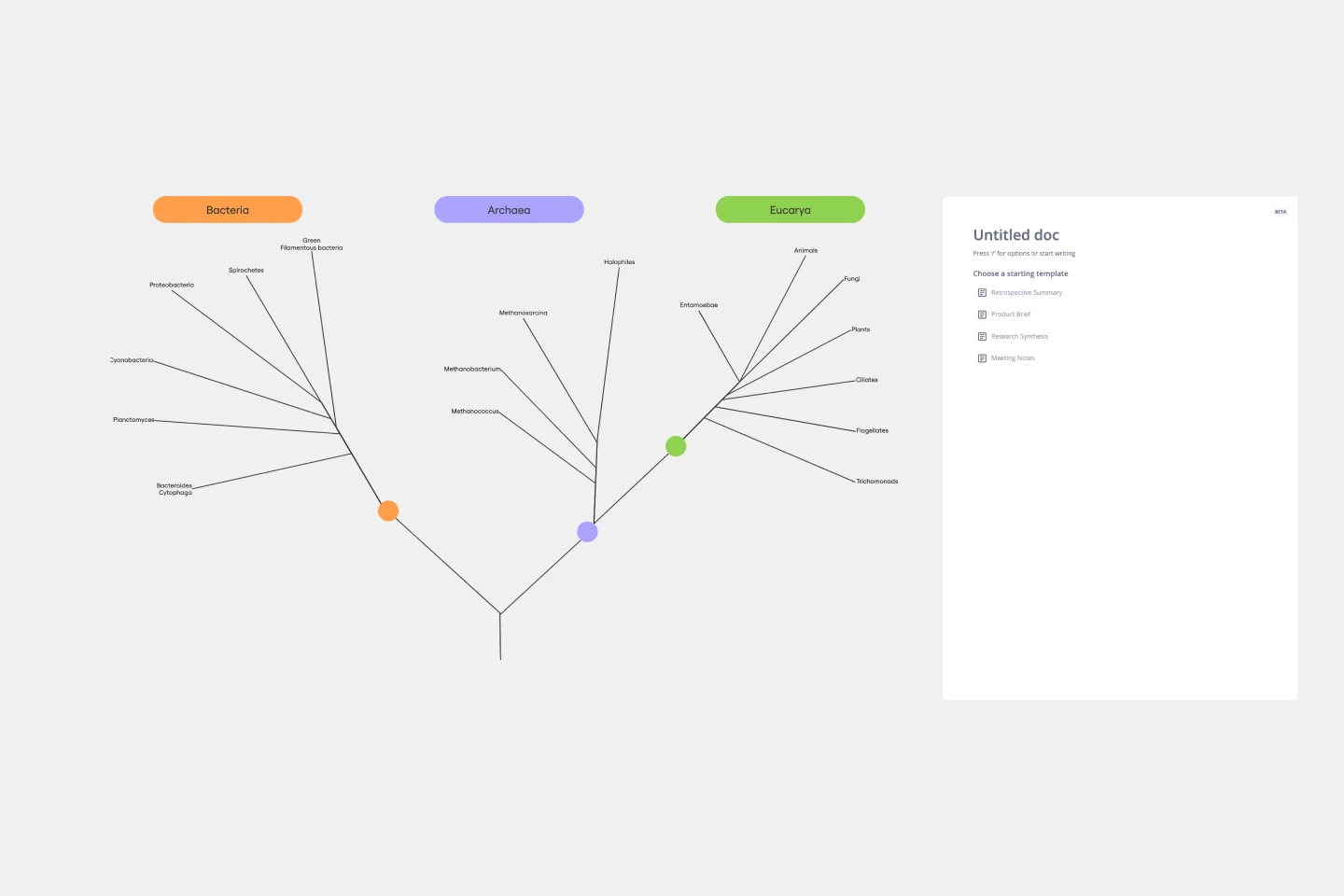
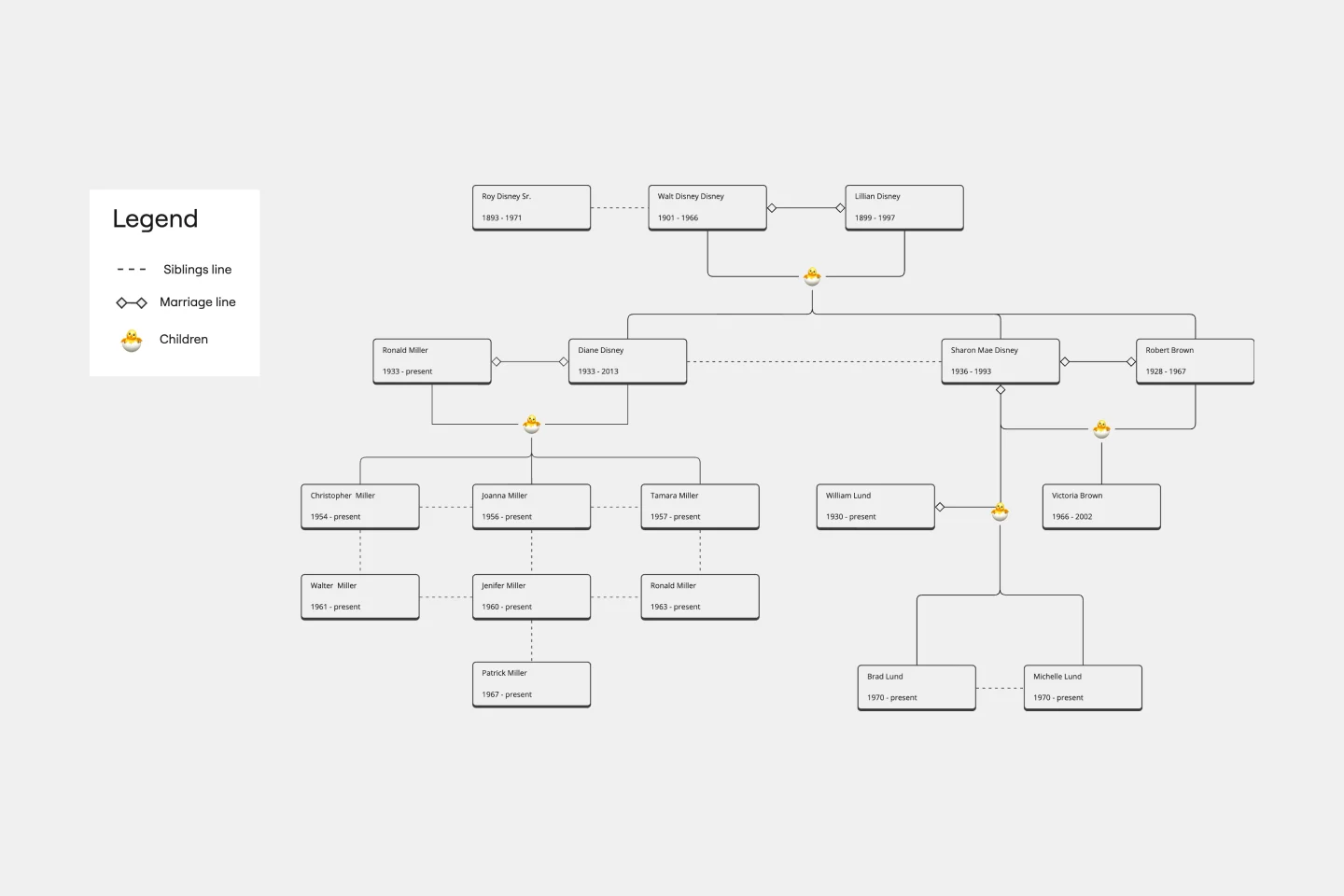
What it is for: A problem tree is a diagram that places one central problem on the trunk, its causes as roots below and its consequences as branches above. You leave with one agreed central problem, its causes arranged in roots and its consequences in branches, every link either supported by evidence or marked to check, and a short choice of roots to work on and branches to watch.
Who it helps: Teams and sponsors who must agree what to fix and explain to decision makers why a problem matters.
When to use it
When a flip chart of problems mixes causes and effects and the team cannot agree what to fix.
When you need to explain to decision makers why a problem matters, not just what it is.
After affinity grouping, to arrange the patterns into causes and consequences.
How to use it
Write the central problem on the trunk as a condition, not a missing solution.
Put up everything you know: research patterns, complaints, data.
Sort each item: causes go below as roots, consequences above as branches.
Check every link aloud with because or so, and write its evidence.
Choose two or three roots to work on and one or two branches to measure.
Tip: Keep the trunk to one problem. If two problems keep competing for it, draw two trees.
Credits and sources: Original Tiremesù worksheet and wording. Further reading: LUMA Institute https://www.luma-institute.com/about-luma/luma-system-explore-methods/
Full guide and film:https://www.tiremesu.com/guides/problem-tree