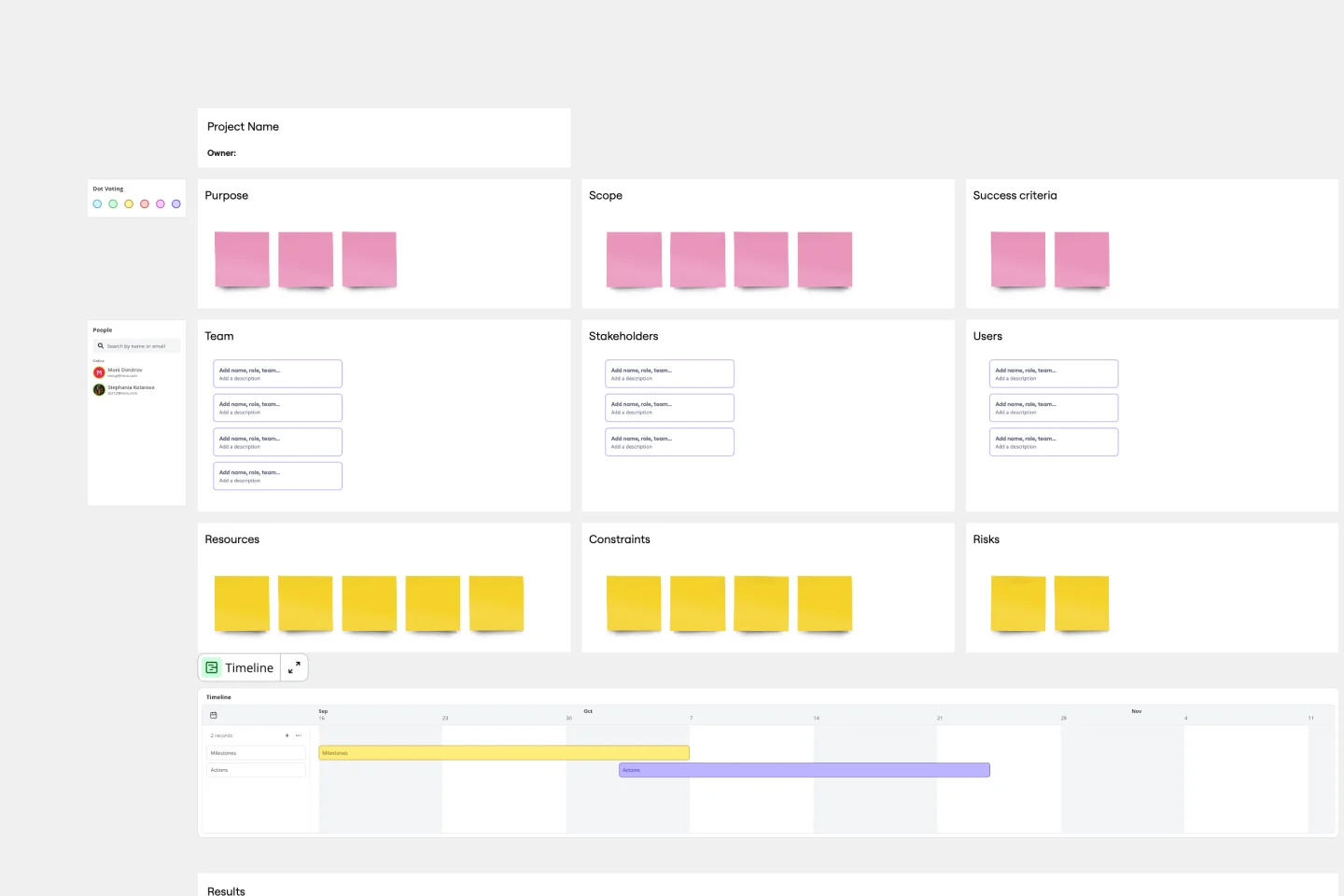
What is the One-Page Project Charter Template?
A project planning template that helps teams summarize a project on one page. It captures the problem, goals, objectives, deliverables, scope, schedule, resources, costs, benefits, risks, constraints, and assumptions.
What problem does the One-Page Project Charter Template solve?
Unclear project direction
Weak sponsor alignment
Missing scope boundaries
Unrealistic timelines
Unclear resource needs
Hidden project risks
Projects starting without shared expectations
How to use the One-Page Project Charter Template
Add the project name, sponsor, client, and owner.
Describe the problem being solved.
Define the project goal and objectives.
List the main deliverables.
Clarify what is in and out of scope.
Add major milestones.
Identify required resources.
Estimate project costs.
Describe expected benefits.
Document risks, constraints, and assumptions.
Review the charter with sponsors and clients.
Common Pitfalls
Writing goals that cannot be measured
Leaving scope open-ended
Adding too many deliverables
Ignoring resource limits
Treating assumptions as facts
Skipping sponsor review
Ways to Avoid Mistakes
Use one clear problem statement.
Keep objectives measurable.
Separate scope from deliverables.
Estimate resources before committing to dates.
Make assumptions visible.
Review risks before approval.
Ask sponsors and clients to confirm the final charter.
Miro Features You Can Use
Frames for the one-page layout
Text boxes for project details
Sticky notes for risks and assumptions
Tables for milestones and costs
Tags for owners and status
Comments for sponsor feedback
Color coding for risks, constraints, and assumptions
FAQs
Q: Who can benefit from this template?
A: Project managers, product teams, consultants, sponsors, clients, delivery teams, and cross-functional project groups.
Q: When should the charter be created?
A: At the beginning of a project, before detailed planning or execution.
Q: How detailed should the charter be?
A: Keep it at the summary level. The goal is to create a clear one-page overview, not a full project plan.
Q: What is the difference between a risk and a constraint?
A: A risk is something that may happen and affect the project. A constraint is a limit the project already has.
Q: What is an assumption?
A: An assumption is something the team is treating as true for planning, but it may still need validation.
Q: What will participants leave with?
A: A one-page charter that gives sponsors and clients a clear view of the project’s purpose, scope, timing, resources, costs, benefits, and potential challenges.