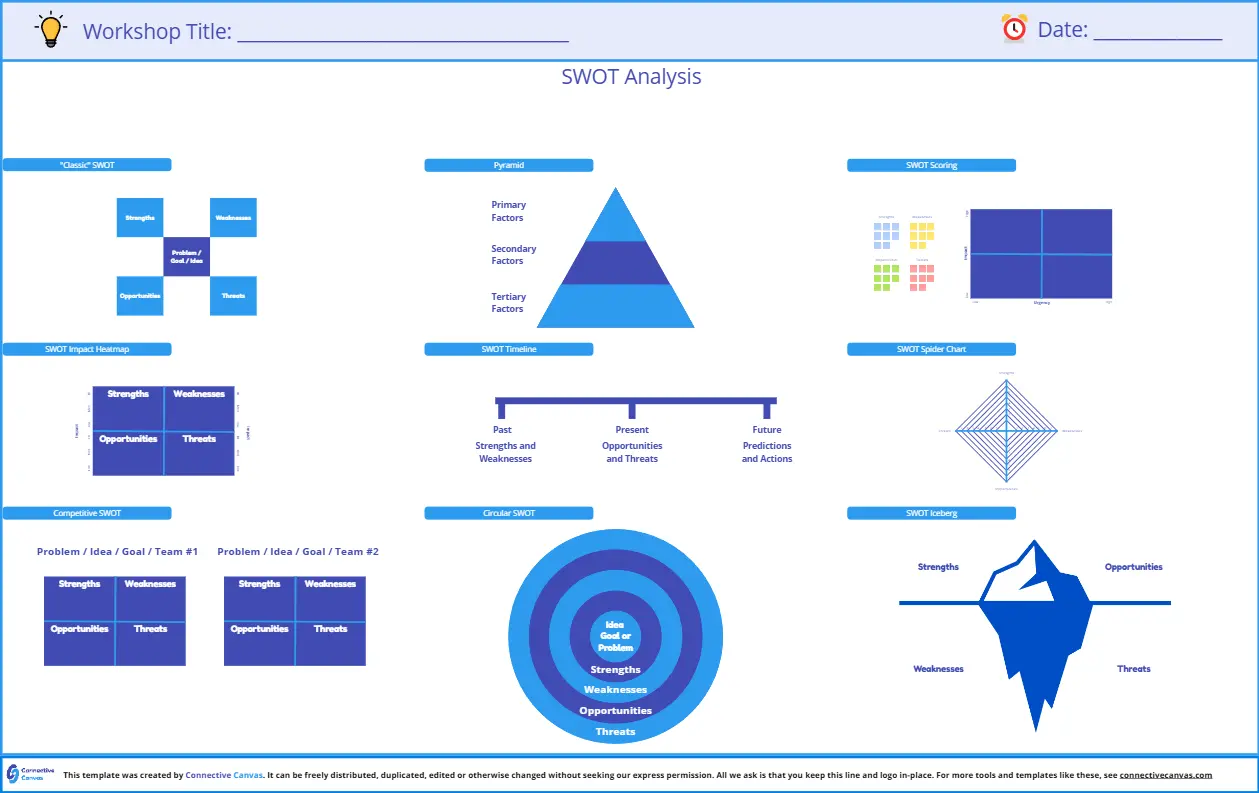
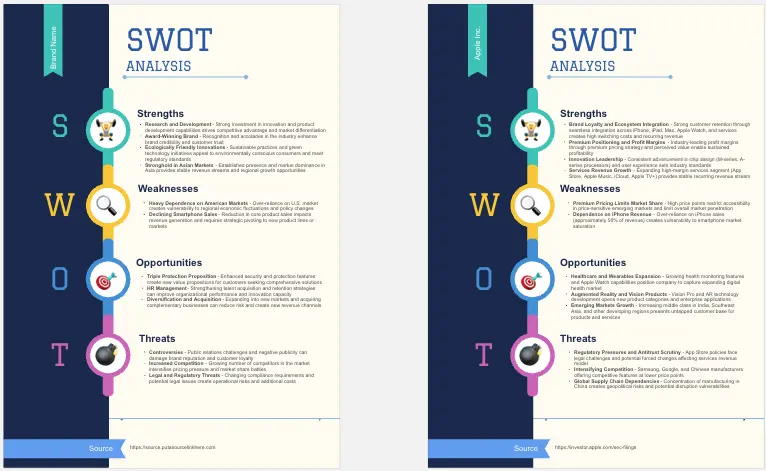
A colourful, A4-ready board for evaluating your marketing strategy through a classic SWOT framework—while making sure sustainability communication is credible, evidence-based, and audience-aware. With generous space for sticky notes, it is designed for collaborative workshops, campaign planning, and easy export or printing.
What is it for?
Use this template to assess how well your marketing supports business goals, reaches the right audiences, and responds to changing market conditions. It helps teams identify:
Marketing capabilities, customer insights, channels, and partnerships to build on.
Gaps in messaging, data, accessibility, governance, or campaign performance.
New audience needs, market trends, certifications, and credible sustainability opportunities.
Competitive, regulatory, reputational, privacy, and platform risks that could affect campaigns.
The board also includes a dedicated Sustainability communication check to help teams make clear, responsible claims and avoid common pitfalls such as greenwashing, greenwishing, and greenhushing.
Who is it for?
Marketing teams, brand and communications professionals, sustainability teams, product marketers, agencies, consultants, and cross-functional campaign groups. Use it when shaping a marketing strategy, reviewing a campaign, entering a new market, preparing a sustainability communication plan, or aligning brand, legal, product, and sustainability stakeholders.
How to use it
Add one idea per sticky note in the Strengths, Weaknesses, Opportunities, or Threats quadrant.
Use the built-in prompts to discuss internal capabilities and external market conditions.
Add evidence, customer feedback, research, or data sources where available.
Use the Sustainability communication check before developing or approving campaign claims.
Ask whether each sustainability message is specific, accurate, substantiated, and understandable to the intended audience.
Identify notes that present the greatest opportunity or risk, then vote to prioritise them.
Turn the priorities into practical next steps, such as strengthening evidence, revising a message, testing a new channel, improving accessibility, or seeking legal review.
The result is a marketing strategy that is more focused, credible, and ready to act on.