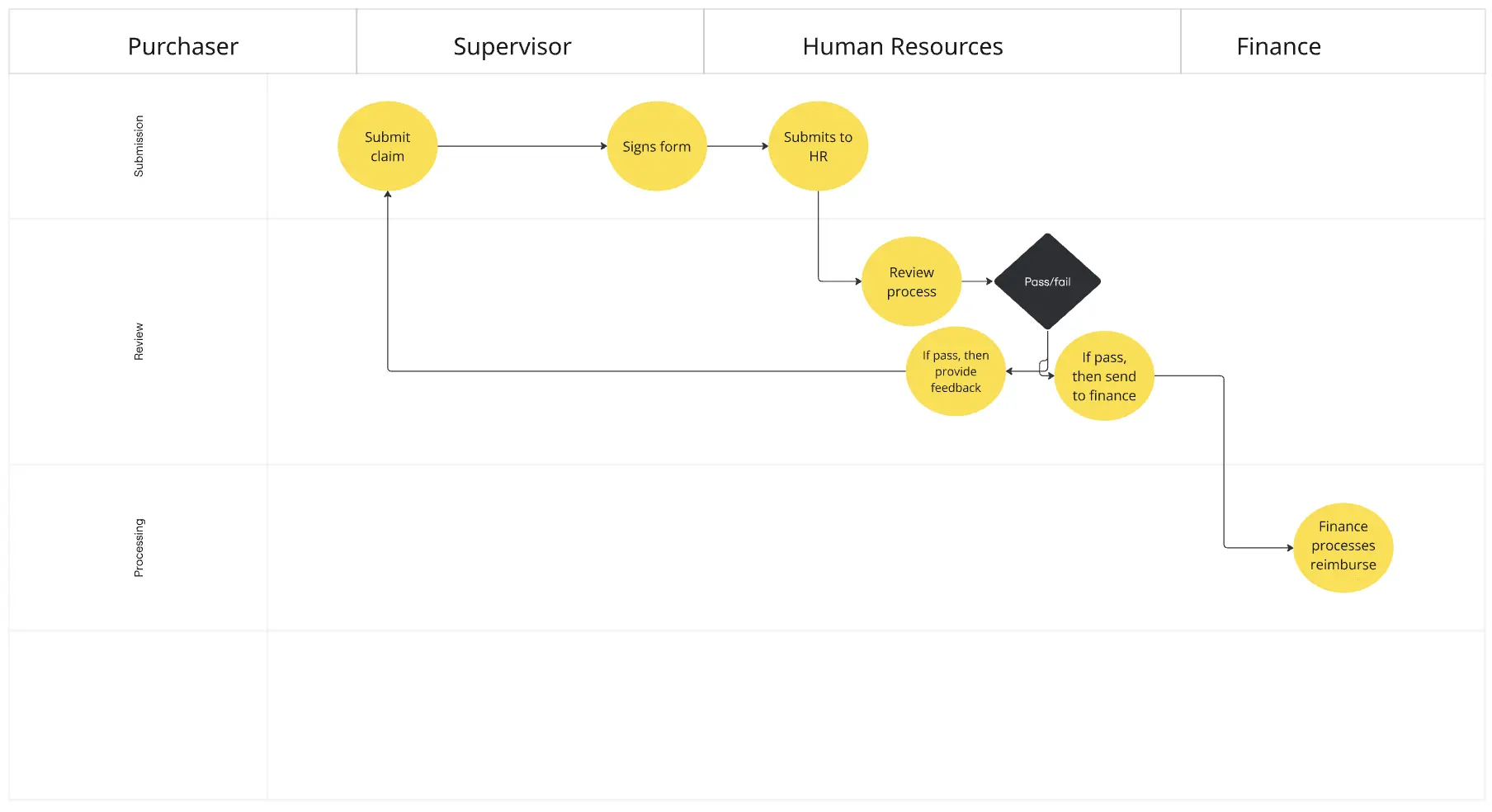
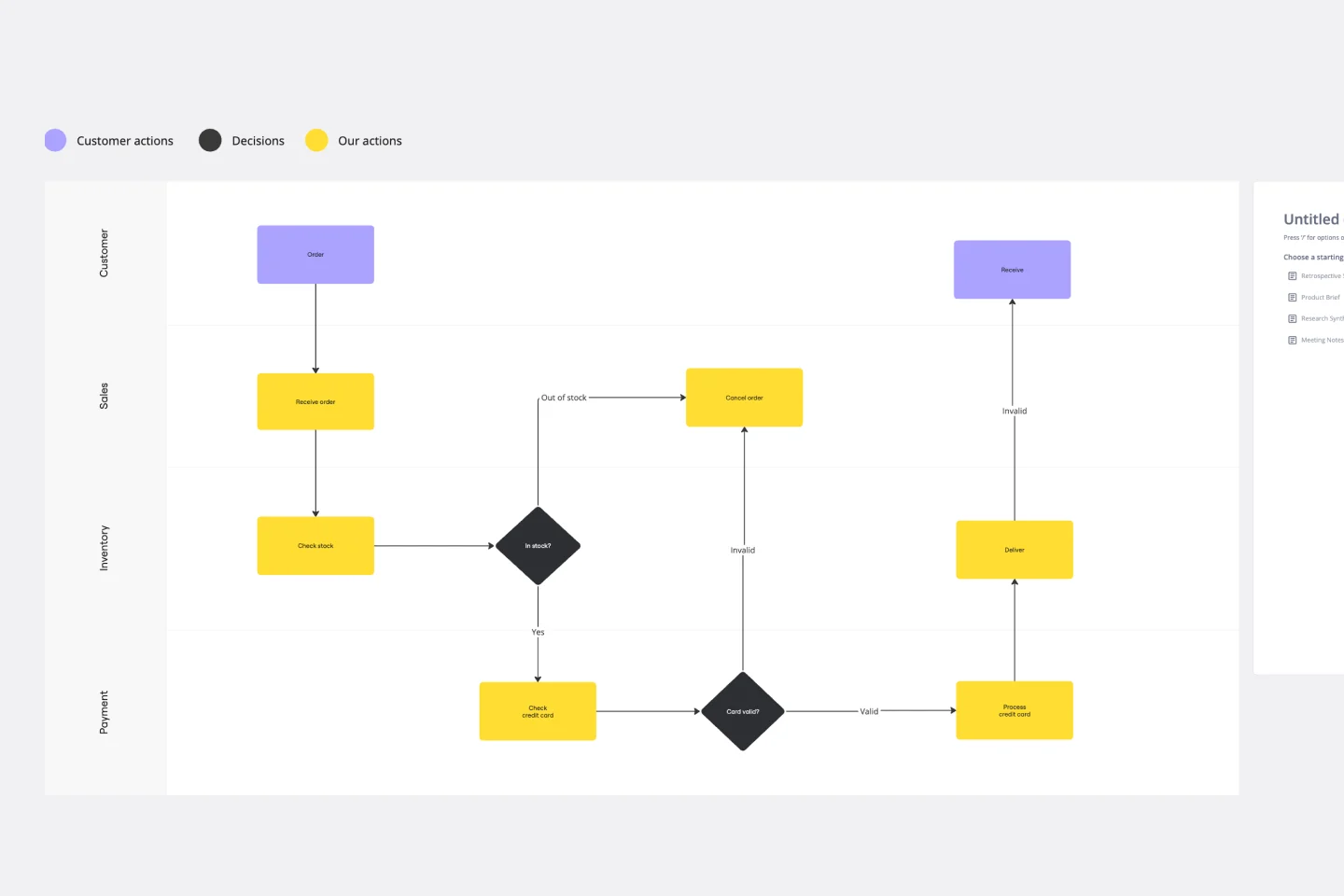
What is the Insurance Claims Resolution Swimlane Template?
A process mapping template that helps insurance teams visualize how a claim moves across the policyholder, claims intake, adjusters, risk review, service partners, and finance. The template focuses on decision paths, exceptions, rework, and claim ownership.
What problem does the Insurance Claims Resolution Swimlane Template solve?
Unclear claim ownership
Long claim cycle times
Missing documentation loops
Slow fraud escalation
Partner delays
Repeated customer follow-up
Claims waiting between teams
Unclear decision authority
How to use the Insurance Claims Resolution Swimlane Template
Define one claim type.
Set the process start and finish.
Map the policyholder journey.
Add internal claim activities.
Place decision points on the diagram.
Connect exception paths.
Mark rework loops and waiting periods.
Set service standards for high-impact transitions.
Common pitfalls
Mapping every claim type at once
Ignoring customer actions
Missing return loops
Using vague decision criteria
Mixing ownership between lanes
Leaving exception paths disconnected
Treating rare and common exceptions the same
Ways to avoid mistakes
Start with one common claim type.
Map the main path before adding exceptions.
Give each activity one primary owner.
Use clear decision questions.
Mark rework loops visually.
Separate common exceptions from rare escalations.
Add response targets to high-risk handoffs.
Miro Features You Can Use
Swimlane frames
Decision diamonds
Connectors for claim paths
Sticky notes for delays and rework
Color coding for standard and exception paths
Tags for claim status and ownership
Comments for disputed decisions
Tables for service standards
Voting for improvement priorities
FAQs
Q: Who can benefit from this template?
A: Claims teams, insurance operations, adjusters, fraud teams, finance teams, customer service, and partner management teams.
Q: What claim types can be mapped?
A: Auto, property, travel, health, warranty, commercial, and other claim processes.
Q: What makes this swimlane approach different?
A: It gives more attention to decisions, exceptions, and rework loops rather than mapping only the standard claim path.
Q: Should fraud review always have its own lane?
A: Use a dedicated lane when fraud review is a distinct process with separate ownership and timing.
Q: What should teams do with rework loops?
A: Measure how often they occur, identify the trigger, assign ownership, and decide which loops can be reduced through clearer information or process changes.
Q: What will participants leave with?
A: A visual claim process showing ownership, decisions, exception routes, rework, delays, and service expectations.