Gap Analysis for Healthcare
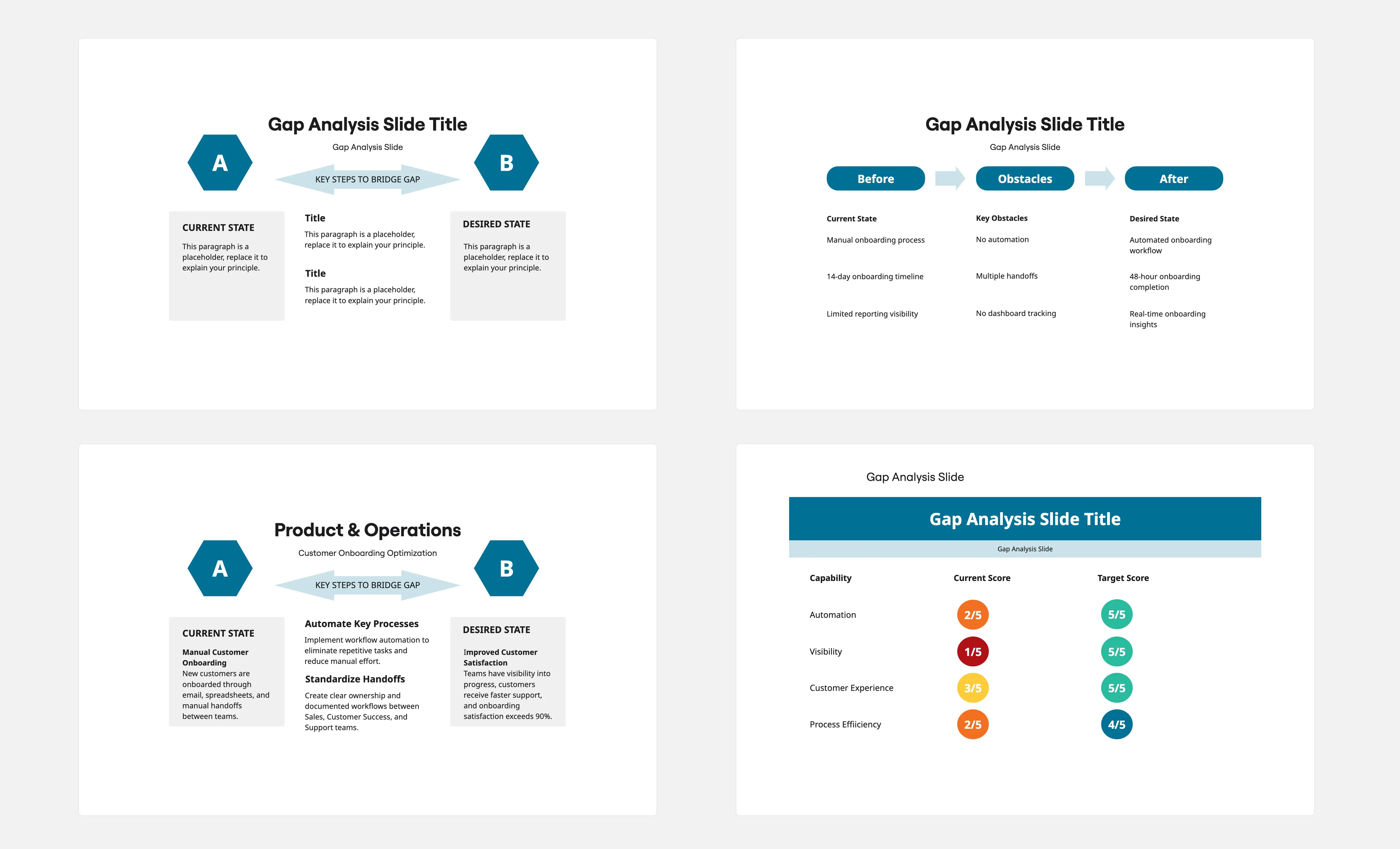
This template provides a structured framework for healthcare leaders to assess performance gaps and develop action plans to bridge the distance between current operations and desired outcomes.
Purpose
The Gap Analysis template helps healthcare organizations systematically evaluate where they are today, define where they need to be, and create a clear roadmap to close the gap. It brings clarity to improvement initiatives by organizing the assessment and planning process into five sequential phases.
Template Structure
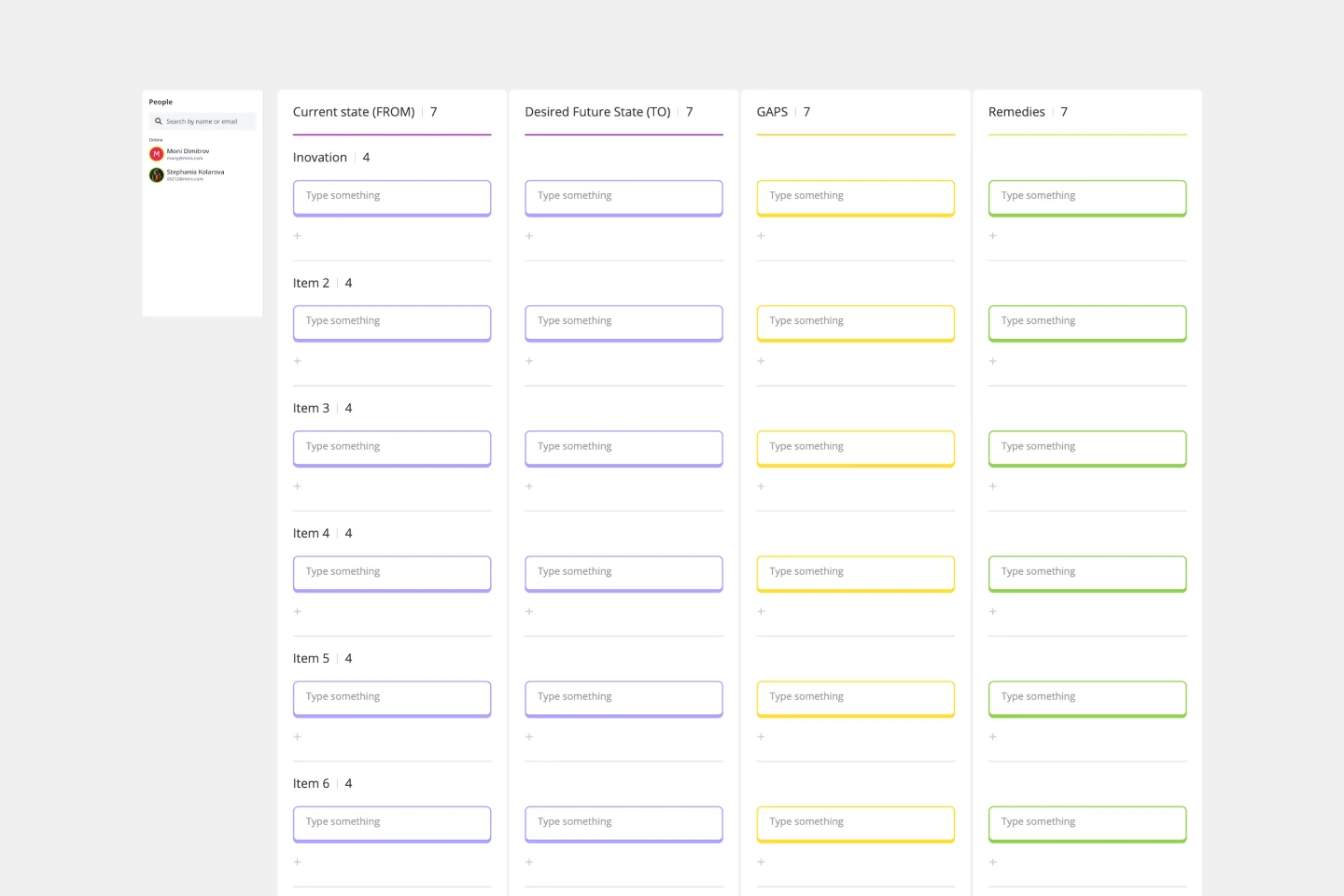
The template is organized into five columns, each representing a distinct phase of the gap analysis process:
Current State
Document how programs and processes operate today. This phase captures workflows, resources, capabilities, staffing levels, and existing constraints. The focus is on creating an accurate baseline snapshot validated by frontline teams who understand day-to-day realities.
Objectives
Define the target state with measurable goals. This phase translates desired outcomes into specific, time-bound objectives that reflect both clinical excellence and organizational priorities. Leadership and clinical stakeholders confirm objectives to ensure shared ownership.
Gap Analysis
Compare current performance against targets to identify shortfalls. This phase investigates root causes rather than symptoms, quantifies gaps with evidence, and summarizes findings in language that enables decision-making and resource allocation.
Implementation
Build and execute concrete action plans to close identified gaps. This phase breaks work into manageable stages, assigns clear ownership, coordinates change management, and deploys initiatives with defined milestones and accountability.
Monitoring
Track progress and adjust plans based on emerging evidence. This phase includes due dates and completion tracking for key milestones, treating implementation as a continuous learning loop rather than a one-time event.
How to Use
Each column contains four guidance sections that progressively detail the work required in that phase. Progress through the columns from left to right, completing each phase before advancing. The template accommodates specific milestone dates and allows teams to document completion status as work advances.
Benefits
Provides a systematic approach to performance improvement
Creates shared understanding across clinical and operational teams
Enables evidence-based decision-making
Maintains focus on patient and staff impact
Supports accountability through clear milestones and tracking
Cheers!
Khawaja Rizwan