This template helps teams turn climate goals into credible, practical action. It creates a clear view of the gap between current emissions and the low-carbon future the business is working towards, using emissions data, operational knowledge, supplier insight, and climate targets.
How to use this template
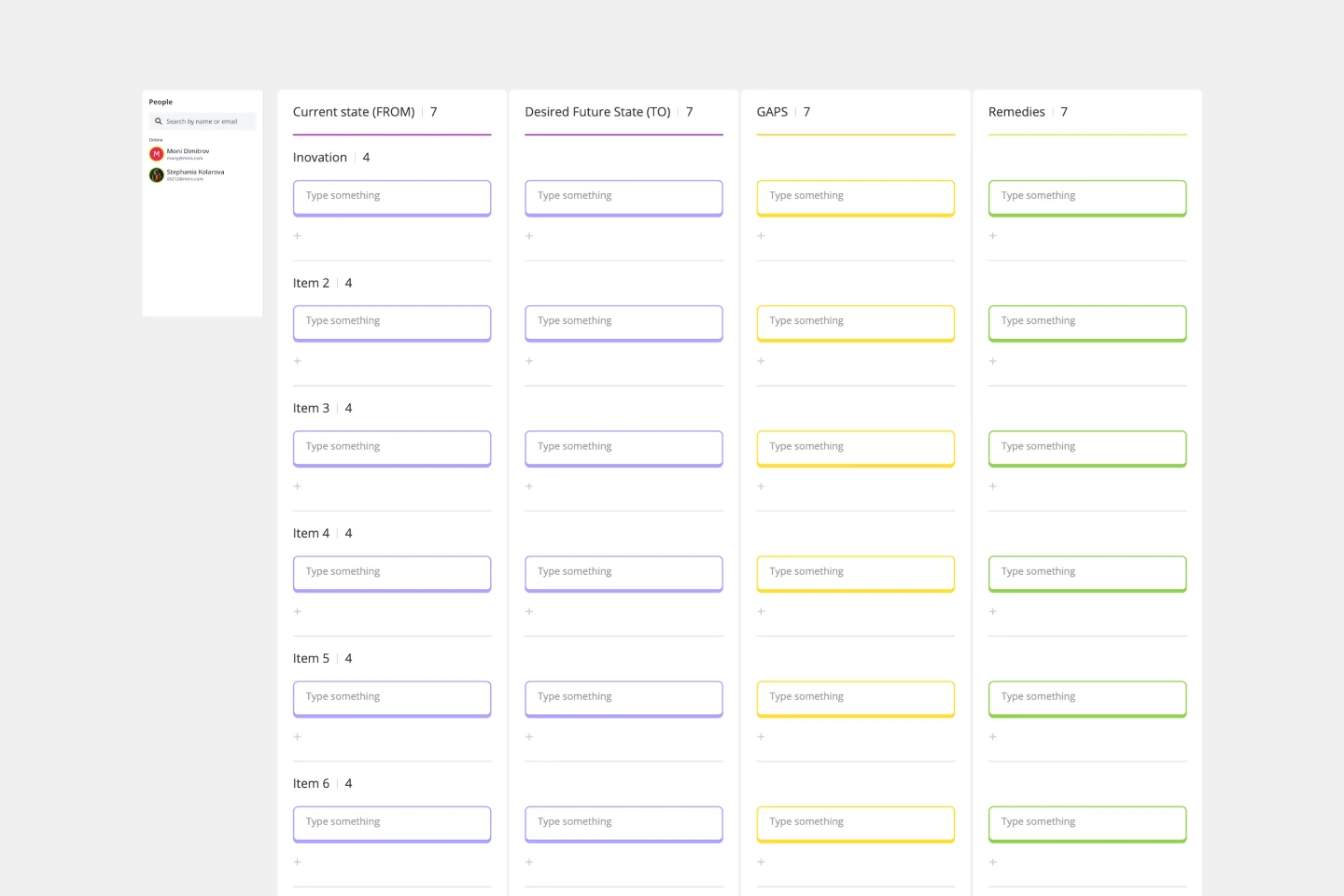
Choose one emissions source, climate target, site, product, or mitigation area to improve. Work from left to right through the What, Where, When, Who, and How rows:
Describe the current emissions position.
Define the desired future or reduction target.
Identify the gap, barrier, or missing capability.
Agree the specific action needed to close it.
Use emissions inventories, energy records, supplier information, operational knowledge, and relevant climate targets. Make assumptions visible where data is incomplete. Finish by completing the Summary Gap Analysis with owners, milestones, success measures, and evidence of completion.
Who it is for
Use this template with sustainability, operations, facilities, procurement, finance, product, logistics, and leadership teams. It works well for cross-functional workshops, climate-action planning, decarbonisation projects, and supplier-engagement discussions.
What you’ll leave with
A shared view of emissions hotspots, priority gaps, credible mitigation actions, accountable owners, interim milestones, success measures, and the evidence needed to track delivery.