What is the Game Design Requirements Template?
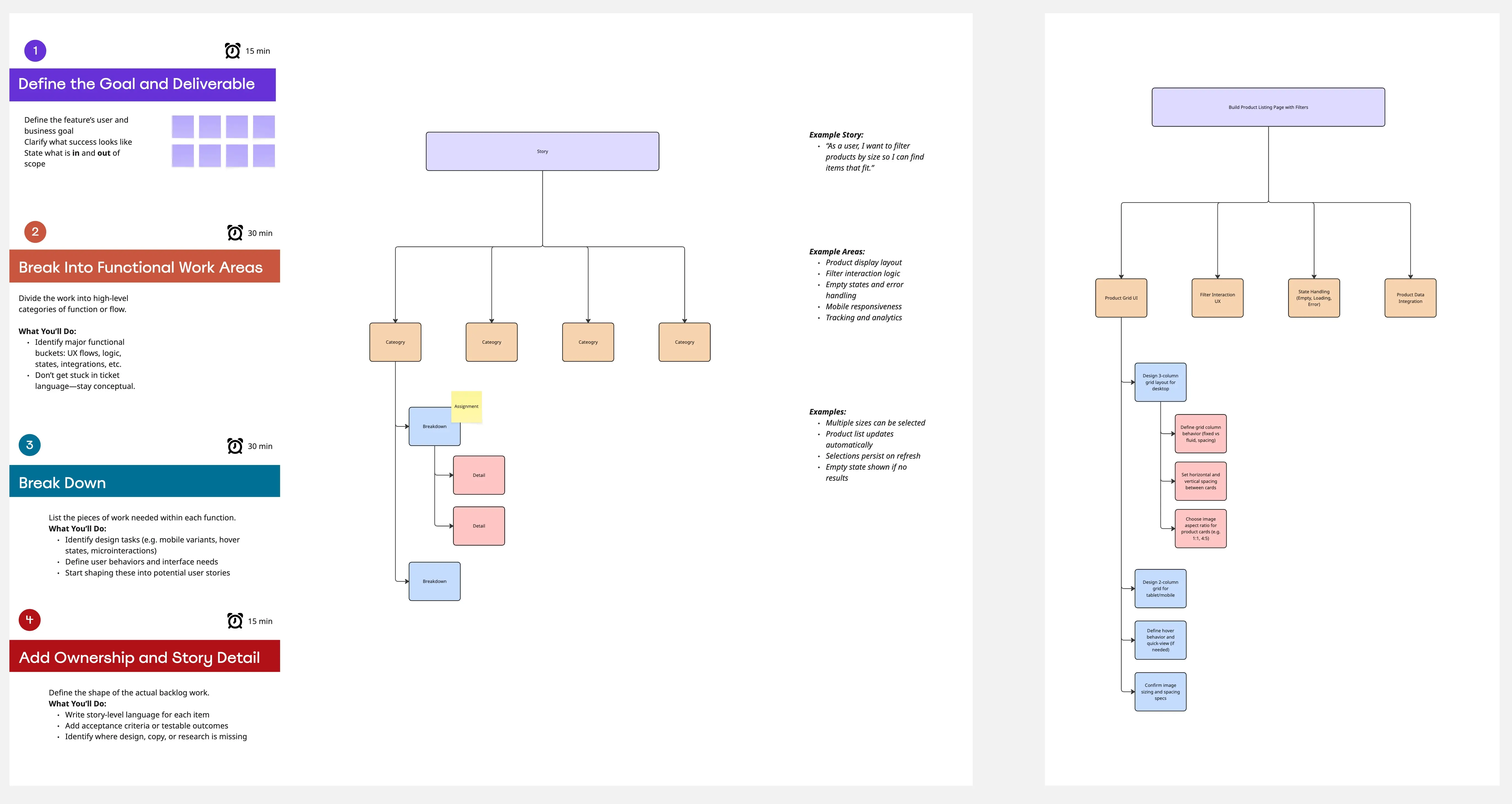
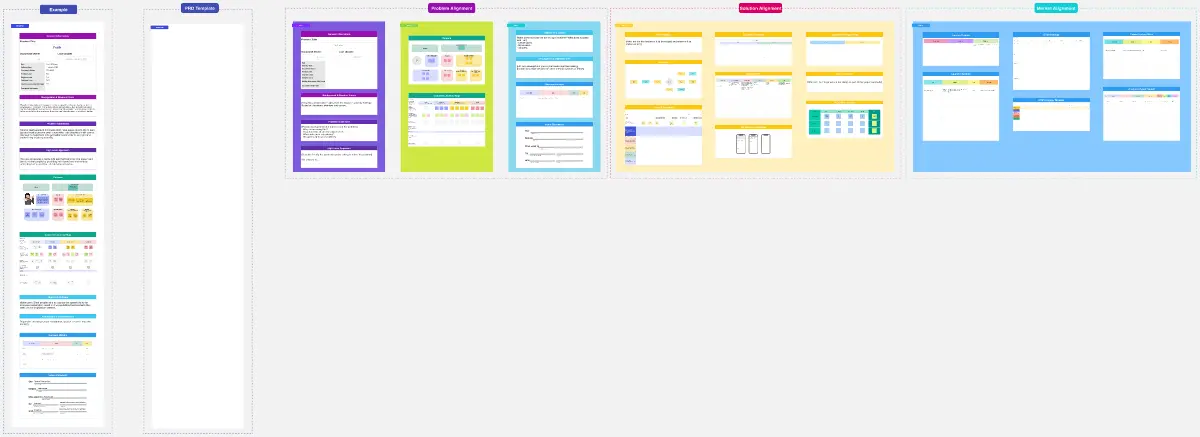
A collaborative planning template that helps game teams define, discuss, and organize the requirements behind a game concept. The workshop guides participants through the game overview, player experience, gameplay ideas, design requirements, prioritization, and planning so the team can move forward with a shared direction.
What problem does the Game Design Requirements Template solve?
Unclear game requirements
Disconnected design ideas
Poor alignment across disciplines
Undefined player experience
Too many competing gameplay ideas
Missing prioritization
Design decisions without a clear plan
How to use the Game Design Requirements Template
Start with the game overview and project context.
Define the intended player experience and key design goals.
Capture gameplay ideas, requirements, and supporting concepts.
Review the major game elements with the team.
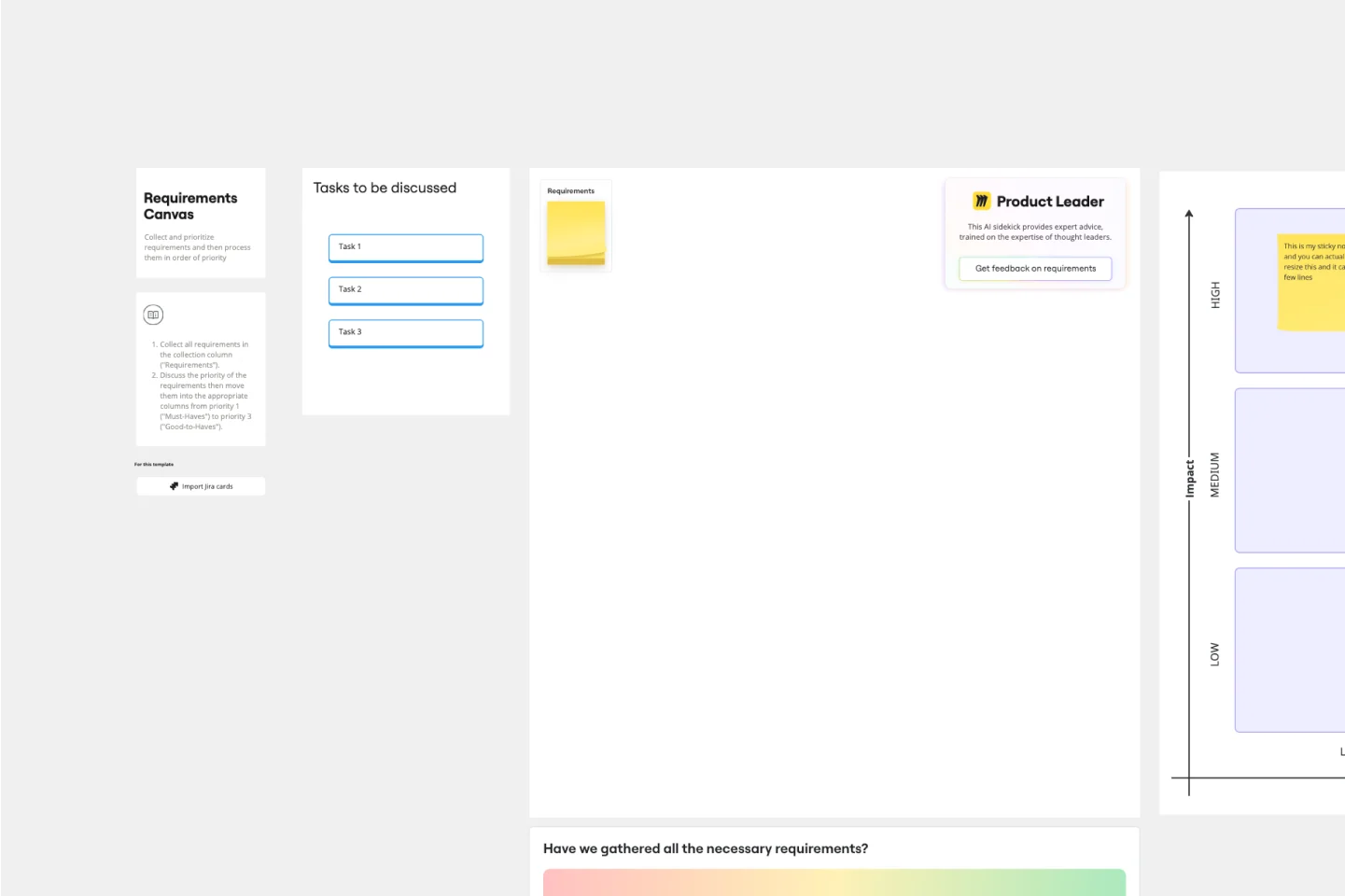
Group and prioritize the strongest requirements.
Compare ideas based on value, effort, importance, or project fit.
Finish by organizing the selected requirements into a clear direction for the next stage of design and development.
Common pitfalls
Starting production before the game direction is clear
Mixing requirements with untested ideas
Adding too many mechanics at once
Designing without considering the intended player experience
Allowing one discipline to define the entire game
Prioritizing features without reviewing effort or value
Leaving workshop decisions undocumented
Ways to avoid mistakes
Agree on the game vision before discussing details.
Keep player experience at the center of design decisions.
Separate ideas from confirmed requirements.
Give participants time to contribute independently.
Group similar concepts before prioritizing.
Review requirements across design, art, engineering, and production.
Record final decisions and next actions before closing the session.
Miro Features You Can Use
Frames for each workshop stage
Sticky notes for gameplay ideas and requirements
Voting for prioritization
Tables for comparing requirements
Tags for importance, effort, or discipline
Comments for design feedback
Color coding for different requirement types
Large work areas for collaborative ideation
FAQs
Q: Who can benefit from this template?
A: Game designers, producers, developers, artists, writers, UX designers, product managers, and cross-functional game teams.
Q: When should this template be used?
A: Use it during early game planning, concept development, feature definition, pre-production, or when a team needs to realign around game requirements.
Q: Can this template support both small and large game projects?
A: Yes. Small teams can use it to define a focused concept, and larger teams can use it to align multiple disciplines around shared requirements.
Q: Does the template help prioritize game features?
A: Yes. The later stages give teams space to compare, organize, and prioritize requirements before development.
Q: Can participants work independently during the workshop?
A: Yes. Individual idea generation works well before the team groups, discusses, and prioritizes the results.
Q: What will participants leave with?
A: A shared game direction, organized design requirements, prioritized ideas, and clearer next steps for design and development.