Eight Concept Stakeholder Analysis
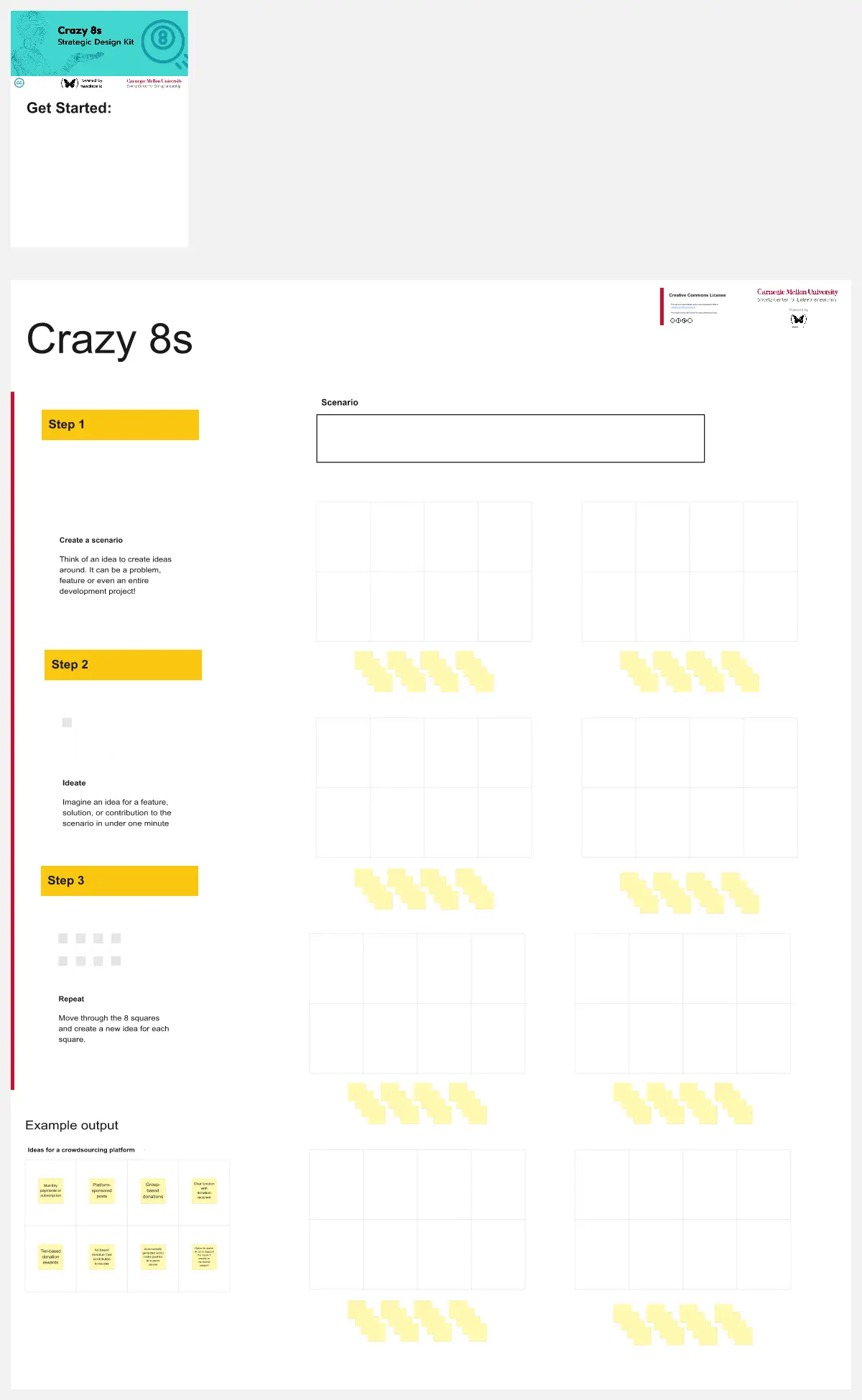
The Eight Concept Stakeholder Analysis is a structured framework for generating and evaluating eight distinct concepts around one defined challenge. It separates divergent ideation from evaluative convergence, accelerating decision quality by forcing breadth, surfacing assumptions, and producing a traceable selection rationale.
Who Uses It
Strategy consultants, executive leadership, product managers, innovation and design teams, entrepreneurs, corporate strategy teams, marketing, operations, public-sector organizations, NGOs, and cross-functional teams.
Core Process
Define the decision with challenge statement, timeline, and owner. Set context including objectives, constraints, and success criteria. Assemble 3–8 people and establish no-judgment rules during ideation. Generate eight distinct concepts (not variants), labeling them 1–8. Document each concept's name, summary, stakeholder value, required resources, assumptions, and implementation notes. Evaluate all concepts against consistent dimensions: feasibility, impact, alignment, time-to-value, cost, risk, scalability, and reversibility. Score and rank using a simple matrix, then select a lead direction with assigned owner, milestones, pilot plan, and documented rationale. Revisit and update scores as new evidence emerges.
Cheers!
Khawaja Rizwan, MVP