A Practical Framework for Leadership OKR Workshops
I've facilitated dozens of OKR sessions with senior leadership teams, and one thing I've learned is that without structure, these workshops can quickly become unfocused wishlists or departmental turf wars. This template is the result of refining an approach that actually works—one that helps leadership teams develop OKRs that are strategic, balanced, and genuinely owned across functions.
Why Four Buckets?
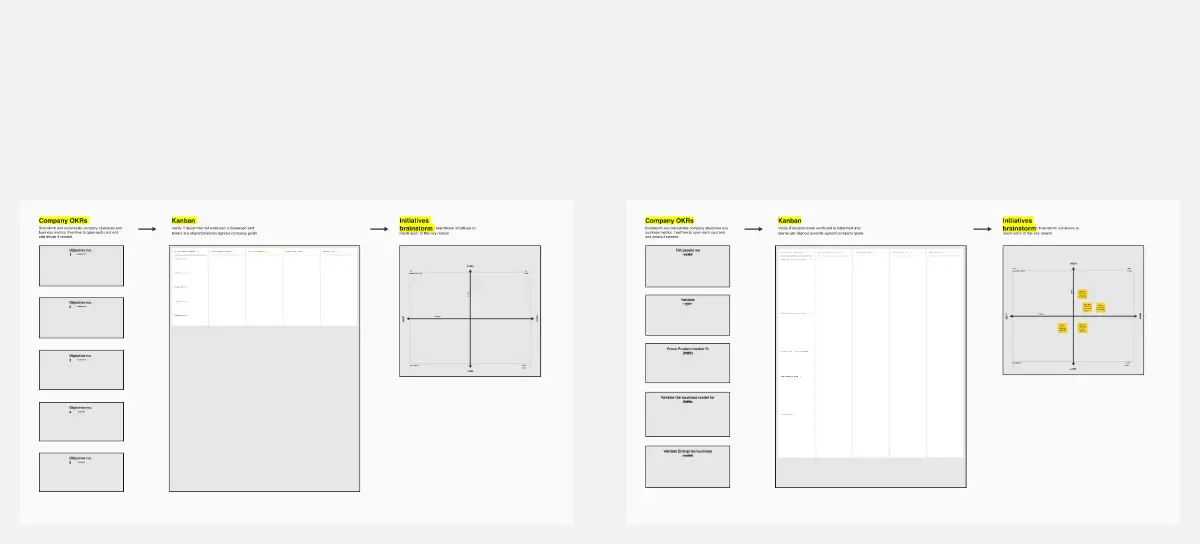
The core of this approach is organizing objectives into four key areas: Customer, Commercial, Culture, and Strategic Growth/Initiatives.
I started using this structure because I kept seeing the same problem: leadership teams would create 12-15 objectives that all felt important but had no coherence. Sales wanted revenue goals. Product wanted feature launches. HR wanted engagement scores. Everyone was right, but nothing connected.
The four-bucket model forces a different conversation. Customer objectives keep you honest about whether you're actually serving the people who pay you. Commercial goals capture the financial reality—you need to grow sustainably. Culture ensures you're not burning out your team in pursuit of short-term wins. And Strategic is where you put the longer-term bets that don't fit neatly into the other three but are critical to where the company needs to go.
What I love about this split is that it immediately surfaces imbalance. If you've got six commercial objectives and nothing in culture, that's a red flag. If strategic is empty, you're probably too focused on this quarter and not enough on next year.
How the Session Flows
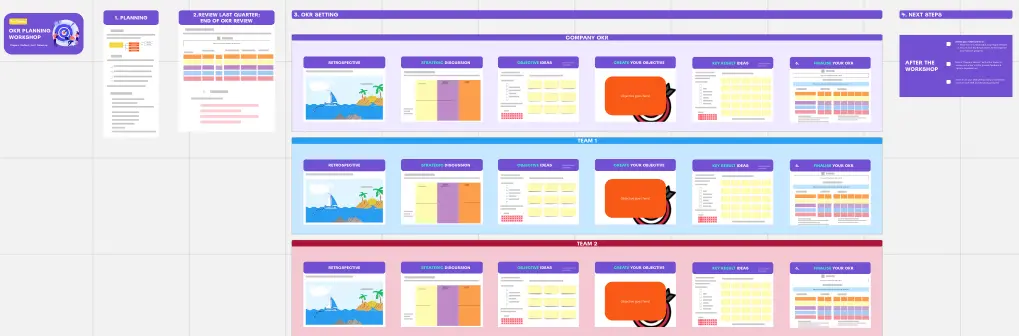
This template is built for a half-day workshop with your leadership team. Here's how it works:
Start with strategy. Before anyone writes an objective, you align on the company's current strategy. What are we actually trying to achieve this year? What's our positioning? What are the 2-3 things that matter most? I've found that skipping this step is the fastest way to end up with OKRs that feel disconnected from what the company is trying to become.
Ideate within the buckets. Everyone silently generates objective ideas on stickies and drops them into the relevant swim lanes. This keeps it democratic—no one dominates the conversation early. You'll get a messy wall of ideas, and that's exactly what you want at this stage.
Cluster and refine. Now you're looking for patterns. Where do multiple people see the same opportunity or problem? Where is there natural alignment across functions? These are your candidates. The objectives that have energy from multiple leaders are the ones that will actually get driven, because they're not sitting on one person's plate.
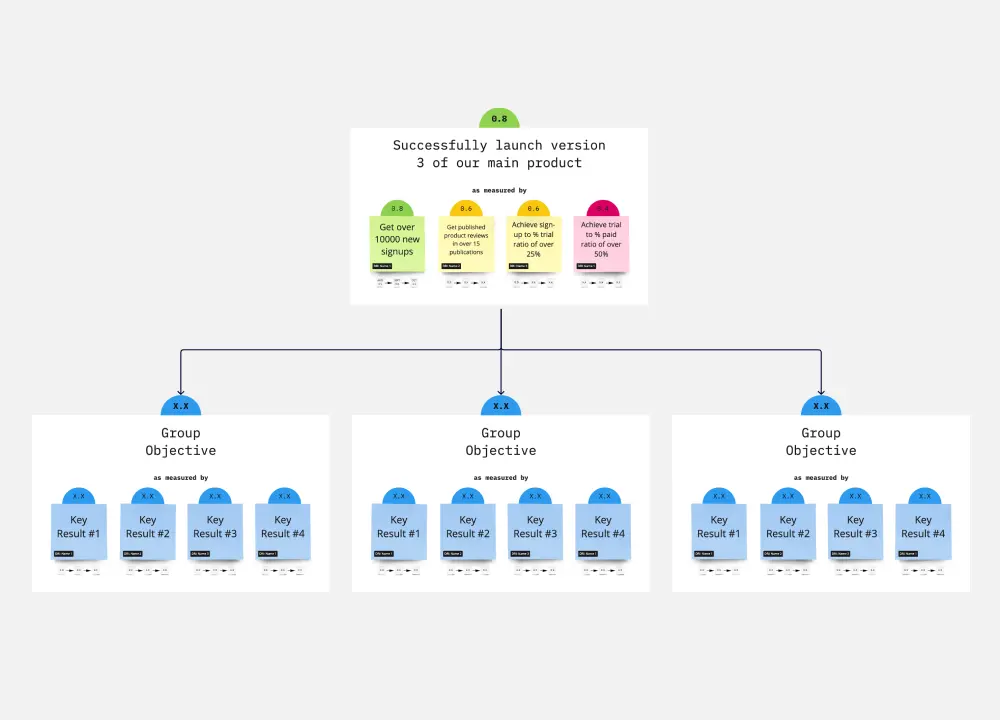
Draft key results together. For each objective that makes the cut, you collaborate on defining 2-4 key results. This is where you get specific about what success looks like. The template includes examples of good vs. bad key results because I've seen too many teams write things like "improve customer experience" and call it a key result. That's not measurable. "Increase NPS from 32 to 45 by Q4" is.
Why This Approach Works Well
I've used variations of this approach with executive teams in SaaS, retail, professional services, and nonprofits. It works because:
It creates balance. You can't ignore culture or strategic bets when they're literally on the board in front of you.
It builds shared ownership. When you identify alignment early, OKRs stop being "Sarah's goal" or "the sales team's thing" and start being company commitments.
It connects the dots. Starting with strategy means your OKRs aren't just a list of what each department wants to do—they're tied to where the company is headed.
It's collaborative and visual. Doing this in Miro means everyone can see the whole picture, contribute in real time, and leave with a shared artifact they can cascade to their teams.
Who This Is For
This template is designed for leadership teams—typically 5-15 people who are accountable for company-wide outcomes. It works best in a dedicated workshop setting: a quarterly planning offsite, an annual strategy session, or a focused half-day where you're not trying to squeeze OKR development between other agenda items.
If you're introducing OKRs for the first time or you've been doing them for years but they feel stale or disconnected, this structure gives you a reset. It's opinionated enough to keep the conversation on track but flexible enough to adapt to your company's context.
The goal is simple: walk out of the session with OKRs that your leadership team actually believes in and is ready to cascade.