Classic Corporate Eisenhower Matrix
Brief
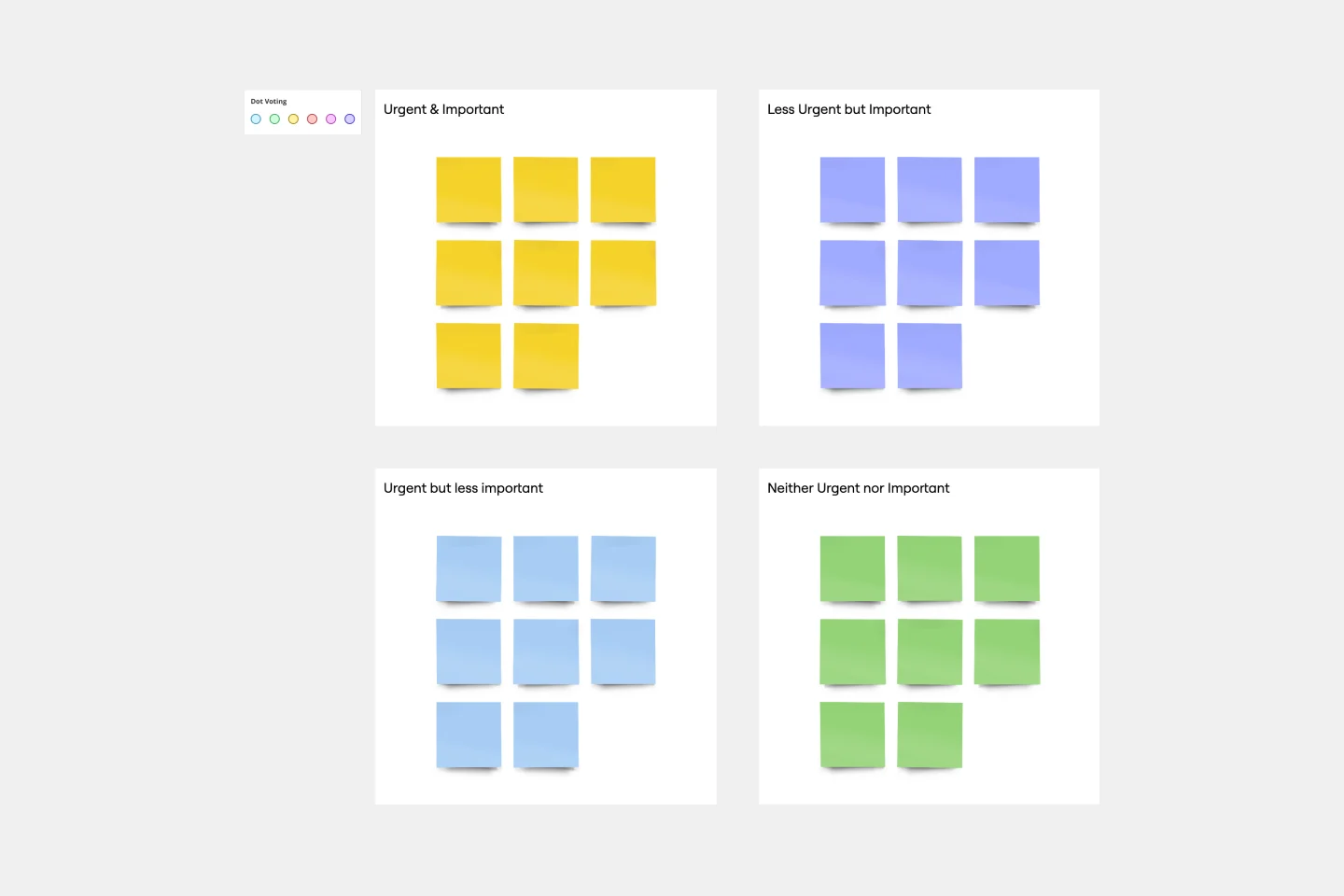
This template divides tasks into four action-oriented quadrants: Do First (urgent and important), Schedule (important but not urgent), Delegate (urgent but not important), and Eliminate (neither urgent nor important). Each quadrant carries a clear instruction: do it yourself immediately, decide when you'll do it, assign it to someone else, or drop it without guilt. The result is a single visual that turns an overwhelming task list into a focused action plan in minutes.
Who can use it
Anyone managing competing priorities in a professional setting: IT managers, project leads, department heads, team coordinators, or individual contributors preparing for a busy week. It works equally well for solo planning and for team triage sessions where tasks need to be sorted and assigned quickly.
How to use it
List every task, deadline, or request competing for your attention.
For each task, ask two questions: Is it important (tied to a key goal or outcome)? Is it urgent (has a hard, near-term deadline)?
Place the task as a sticky note in the matching quadrant.
Act on the quadrant labels: tackle Q1 today, time-block Q2 into your calendar, hand Q3 to the right person with context, and cancel or archive Q4 items.
Revisit at the start of each week or sprint to keep priorities current.
About the example
The included example shows an IT manager at a university running a 15-minute Monday morning triage for the week of August 17. Twenty-four real tasks are sorted across the grid: restoring a failed VoIP switch and submitting a tender response land in Do First; drafting a disaster-recovery strategy and scheduling team certifications go into Schedule; backup verification and onboarding accounts are delegated; and unused SaaS trials and unread PDF reports are eliminated. A takeaway line reinforces the key insight: the week is won in Quadrant 2, where strategic work like the DR strategy protects your calendar before the next fire starts.
Cheers!
Khawaja Rizwan