Career Change SWOT Analysis
Intro
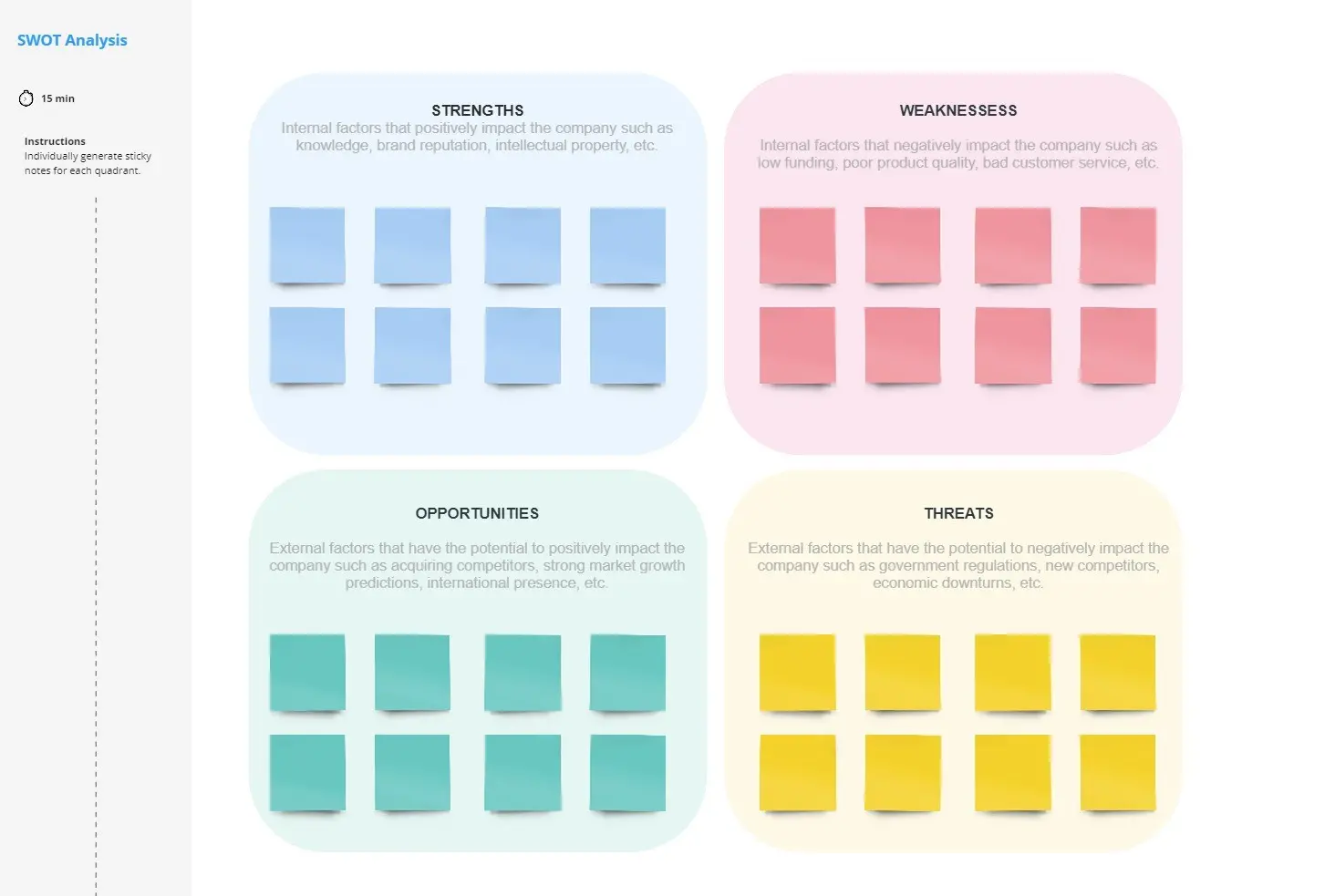
A structured framework for evaluating career transition decisions using SWOT analysis. The template divides your assessment into four key areas: Strengths (transferable skills and assets), Weaknesses (skill gaps and limitations), Opportunities (favorable market conditions), and Threats (external challenges). Each quadrant includes guiding questions and placeholder bullet points to document your analysis.
Who Can Use It
Professionals considering career transitions or pivots
Career counselors and coaches guiding clients through change
HR teams supporting employee career development
Job seekers planning strategic career moves
Individuals in workforce retraining programs
How to Use It
Start with Strengths: List transferable skills, relevant experience, technical abilities, and personal qualities applicable to your target field
Identify Weaknesses: Honestly assess skill gaps, missing certifications, limited networks, or unfamiliar tools
Map Opportunities: Research market trends, job growth projections, training programs, and industry demand
Recognize Threats: Document competition levels, economic factors, technology changes, and potential barriers
Analyze patterns: Review all quadrants to create an actionable transition plan addressing gaps while leveraging advantages
Example Provided
Marketing Manager to UX/UI Designer transition, showing 8 years of customer research experience as strength, lack of formal UX training as weakness, 23% projected job growth as opportunity, and competition from design graduates as threat.
Cheers!
Khawaja Rizwan