Spot patterns in research data with an affinity mapping tool
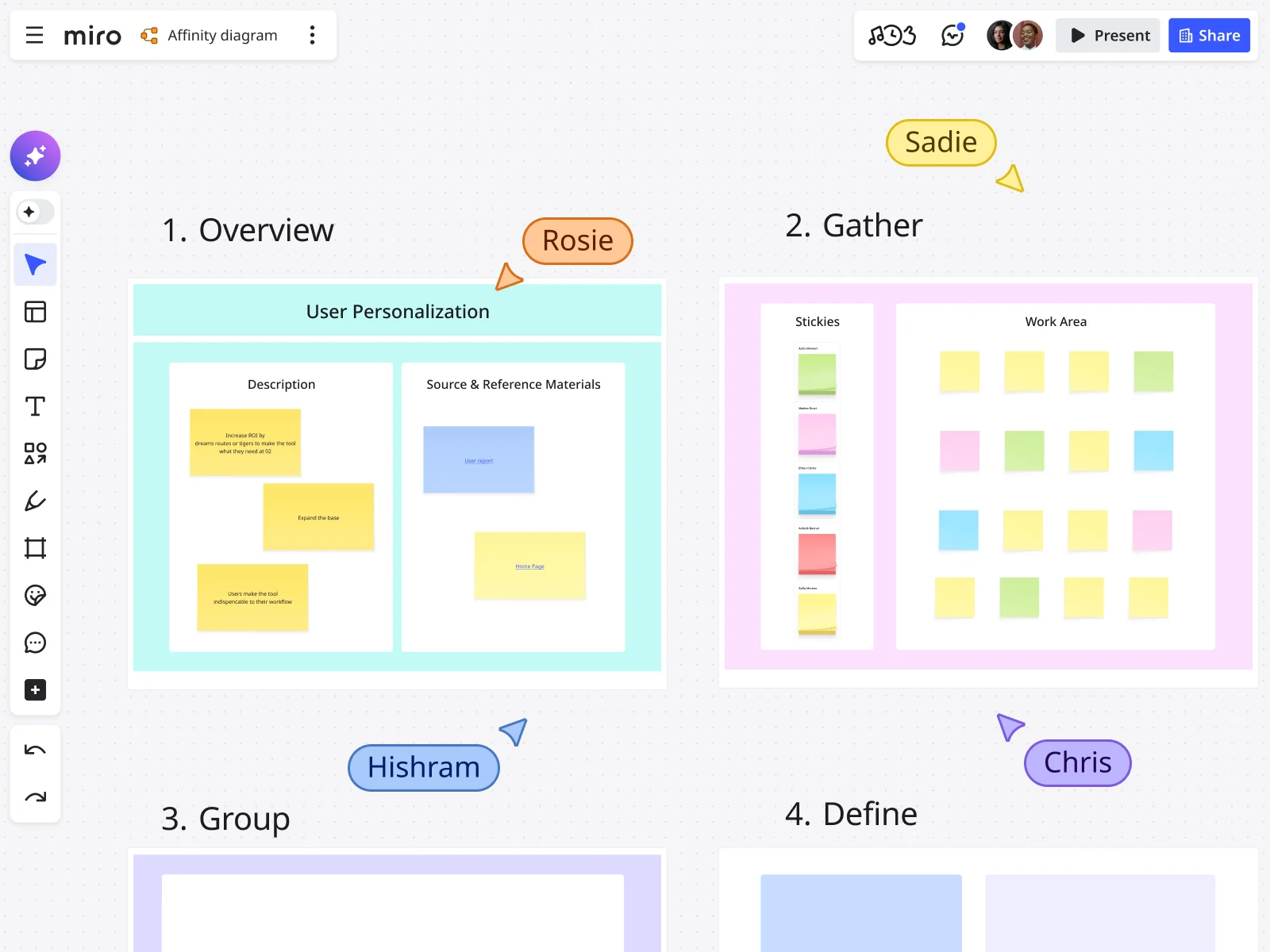


















Turn complex ideas into clear themes fast with an affinity diagram
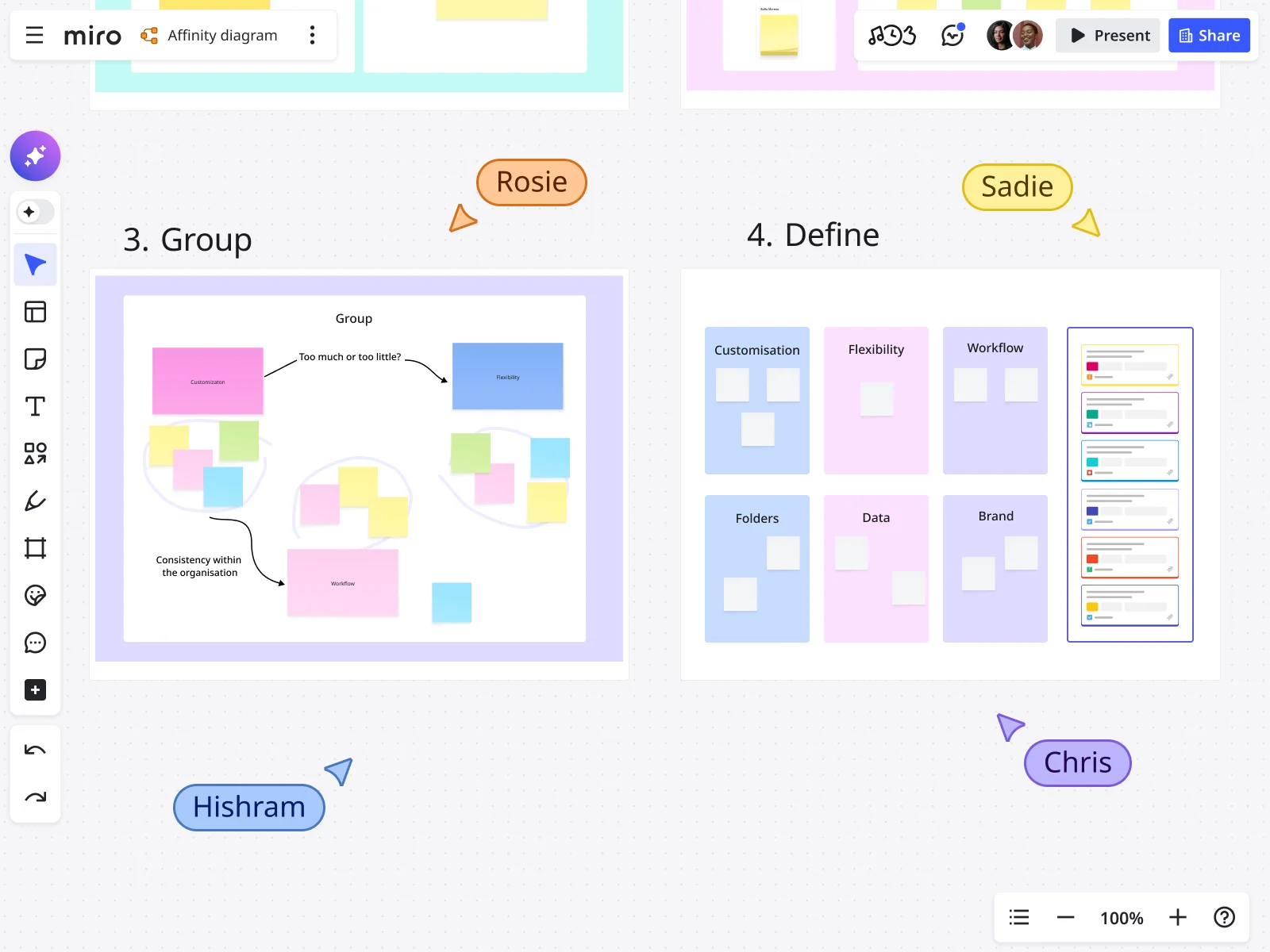
Why teams choose Miro for affinity mapping
A canvas that grows with your research
Work without limits on Miro's infinite canvas. Add sticky notes from user interviews, upload screenshots, drop in survey quotes, sketch connections — whatever helps you make sense of your data. Your affinity map adapts to your project, not the other way around.
AI that spots patterns you might miss
Let AI do the heavy lifting. Use our AI-powered clustering to automatically group sticky notes by common themes, sentiment, or topics. Stuck on how to organize your findings? Sidekicks provide contextual guidance on affinity mapping techniques, helping you structure insights more effectively.
Research sessions that actually move forward
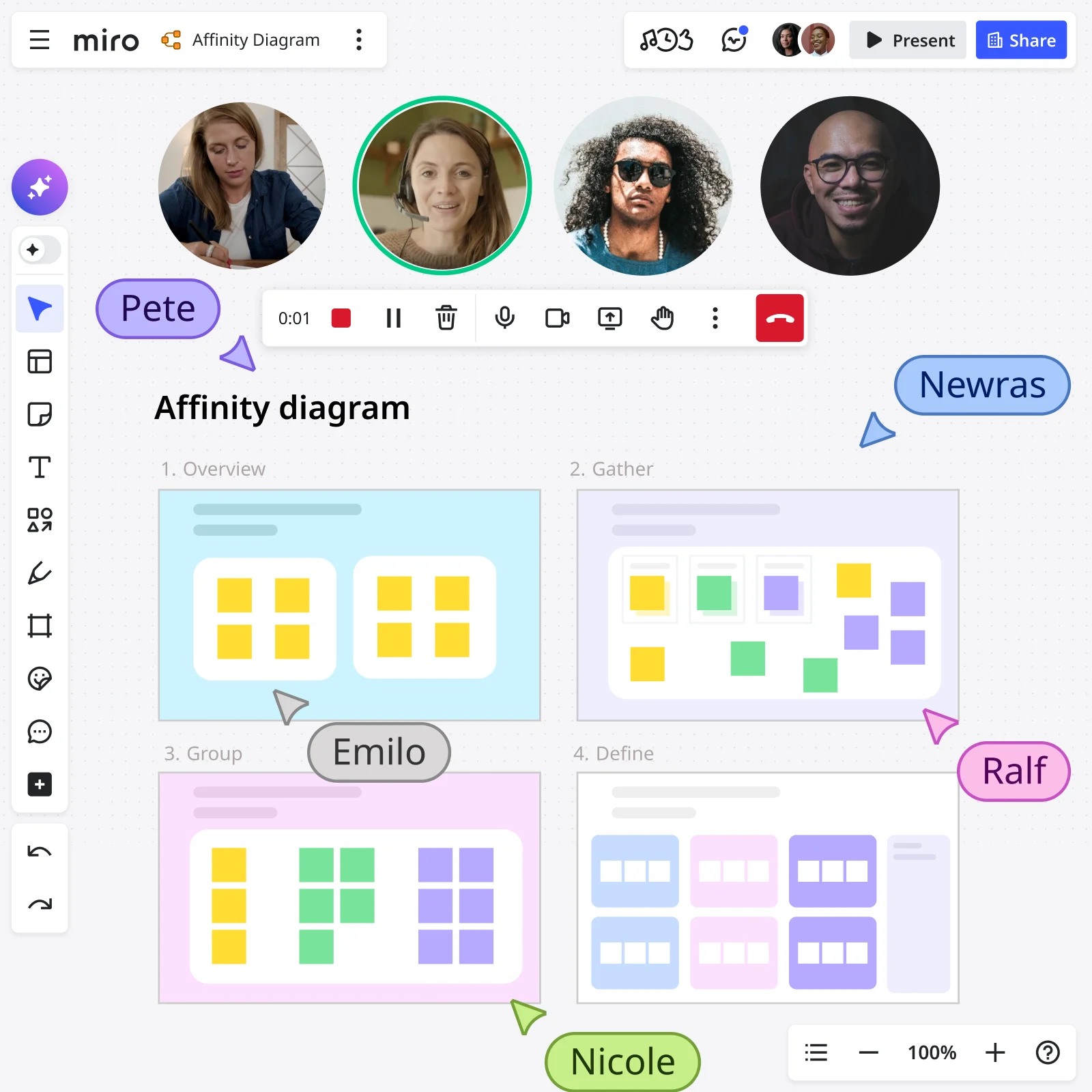
Organize hundreds of data points in minutes with our affinity mapping tool. Drag sticky notes into groups, use color coding for different user segments, and create headers that capture key themes. Everyone leaves your synthesis session with clear takeaways instead of more questions.
Built for how teams actually work
Collaborate in real-time during live research debriefs or work async as teammates add their observations. Tag colleagues in specific insights, leave comments on patterns you're seeing, and build your affinity map together — no matter where everyone's working from.
Your single source of research truth
Create a central hub where your entire team can reference user insights. Product managers check pain points before prioritizing features. Designers review user needs before sketching. Everyone works from the same understanding of your research.
Start fast with proven templates
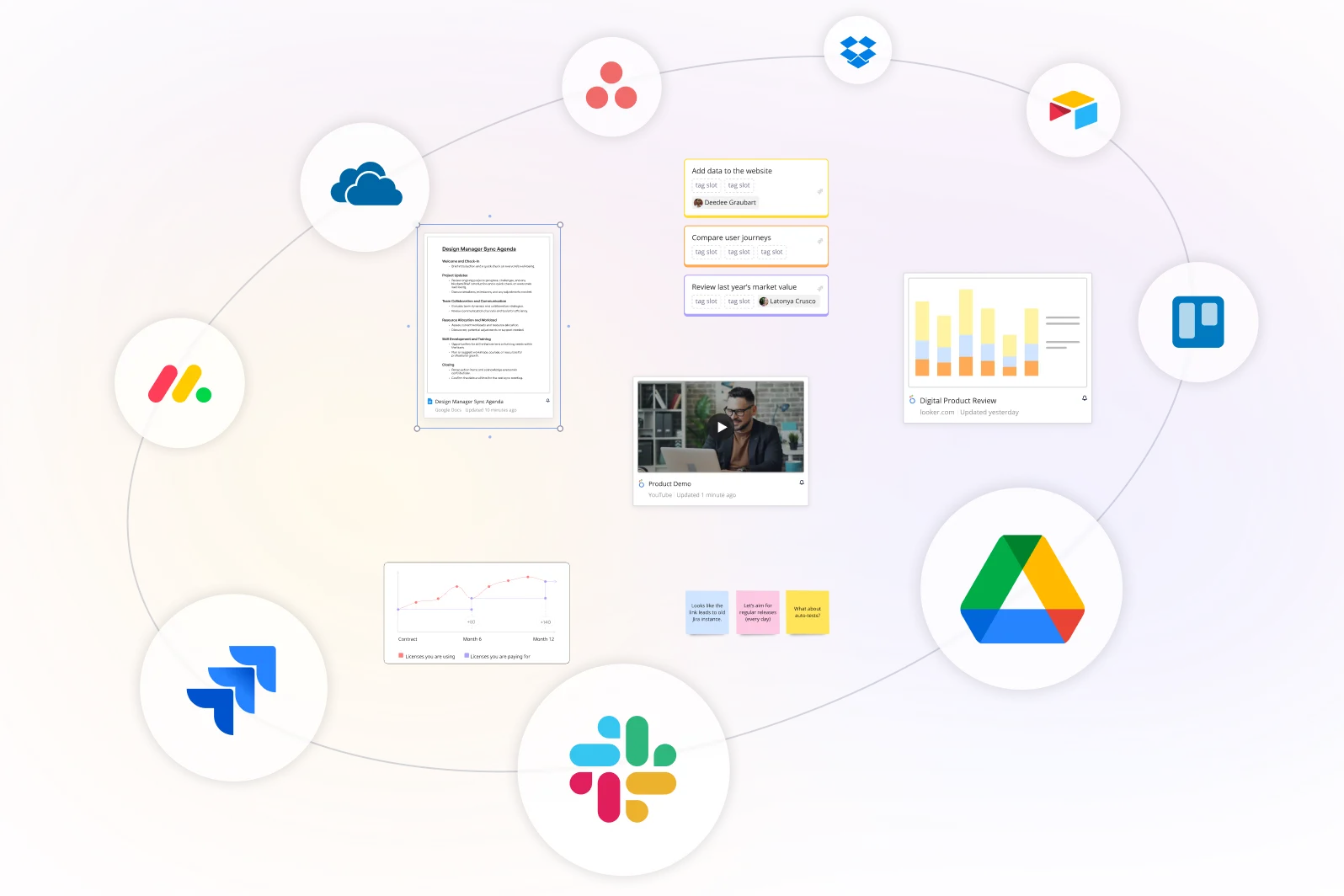
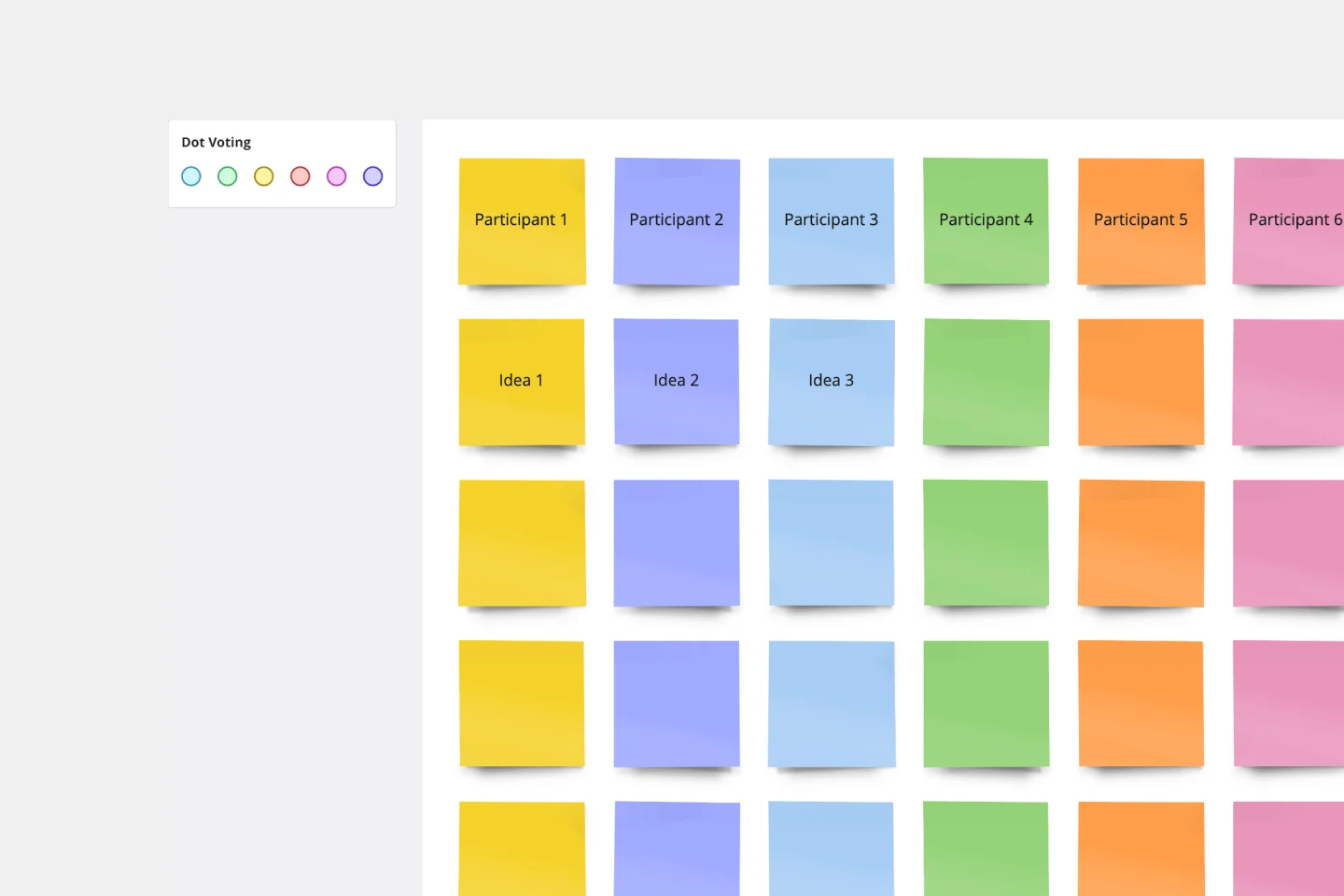
Skip the setup and jump straight into organizing insights. Browse our template library for ready-made affinity diagram structures used by research teams at leading companies. Customize them for your specific needs in seconds.
Integrated with your favorite tools
Related templates
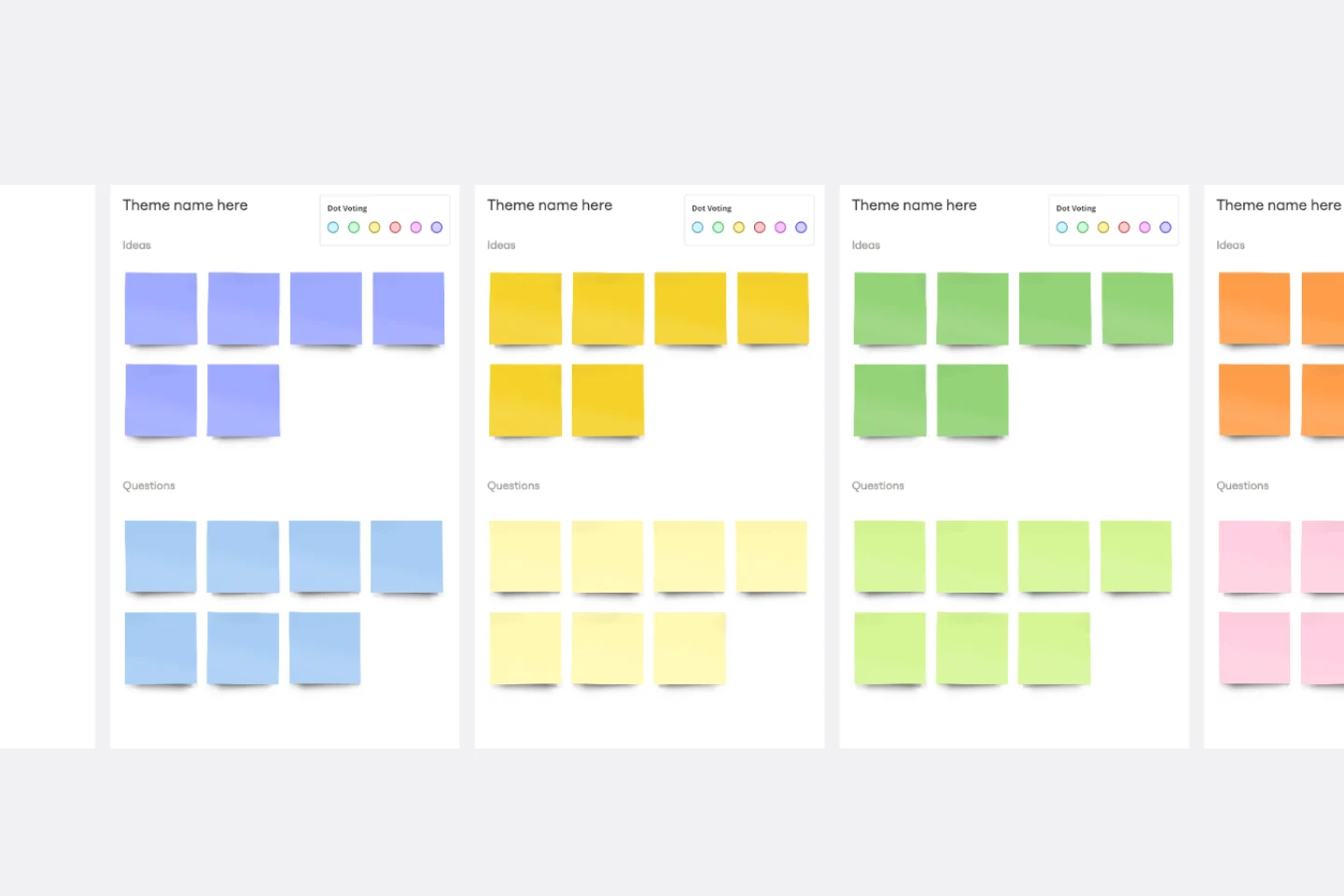

How to make an affinity diagram online

The world's most innovative companies are collaborating in Miro, everyday
“With Miro, we went from project brief to in-market launch in 10 months. That usually takes 3 years at PepsiCo.”
Caroline de Diego
Senior Manager, Global Design & Marketing Innovation at PepsiCo


“Bringing everyone together to plan in Miro means the most impactful initiatives will happen at the right time.”
Lucy Starling
Product Operations Lead at Asos


“The team onboarded in 10 minutes to use Miro for workshops. Getting our organization to adopt this product was a no-brainer.”
Konrad Grzegory
Agile Transformation Lead at CD PROJEKT RED


“Miro templates helped us go from scratch to a full-fledged plan where we mapped activities, ideas, and dependencies.”
Marc Zukerman
Senior Director of Project Management at Hearst


“Miro allows all our teams to align themselves with certain tools and models: they work independently and create products that really meet our customers' needs.”
Luke Pittar
Sustainability Innovation & Design Coach at The Warehouse Group


“To be truly innovative, everyone needs to have a voice, and everyone needs to be able to iterate on each other’s ideas. Miro has made that possible for us.”
Brian Chiccotelli
Learning Experience Designer at HP


Users love Miro for end-to-end innovation. We're the G2 leader in visual collaboration platforms and are rated in the top 50 enterprise tools. Miro helps large companies get meaningful work done.
Top 50 Products for Enterprise
G2 reviews


Affinity mapping tool FAQs
How can I organize ideas in a group in Miro?
In Miro, it’s easy to organize and cluster your ideas. Use the Cluster by feature to group sticky notes by common themes, tags, sentiment, color, and author. Or, use our ready-made Affinity Diagram Template to help you structure ideas on the board.
How do you use an affinity diagram in UX?
In User Experience (UX) design, affinity diagrams are invaluable tools for organizing and understanding large amounts of qualitative data. Start by gathering data from various sources like user interviews, surveys, or usability tests, and write each piece of data or observation on a separate sticky note. Then, sort these stickies into groups based on similarities or patterns, creating a header for each group that summarizes its main theme. This process uncovers trends, insights, key user needs, and pain points from the data, which can then guide and inform your UX design decisions. Keep in mind the affinity diagram is a flexible tool that can be adjusted as your understanding of the data evolves.
Does Miro offer affinity diagram templates?
Yes. Miro's template library includes ready-made affinity diagram templates you can use immediately. These templates come pre-structured with sections for capturing insights and organizing themes. Just select a template, invite your team, and start mapping.
Is Miro free to use for affinity mapping?
Yes. Miro's Free plan lets you create affinity diagrams with unlimited team members on up to three editable boards. You get access to core features including sticky notes, templates, and basic collaboration tools. Paid plans unlock unlimited boards, advanced features like AI clustering, and additional integrations. Check our pricing page for more information.
How does Miro keep my research data secure?
Miro takes security seriously. We're SOC 2 Type II certified, GDPR compliant, and offer enterprise-grade security features including SSO, data encryption in transit and at rest, and granular access controls. You control who can view and edit your boards, and you can set different permission levels for different team members.
Where can I learn more about affinity mapping techniques?
Join Miro's Community to connect with other teams using affinity mapping for research synthesis, brainstorming, and problem-solving. You'll find best practices, templates, and real examples from teams across industries. The Community is free to join and includes workshops, tutorials, and discussion forums.