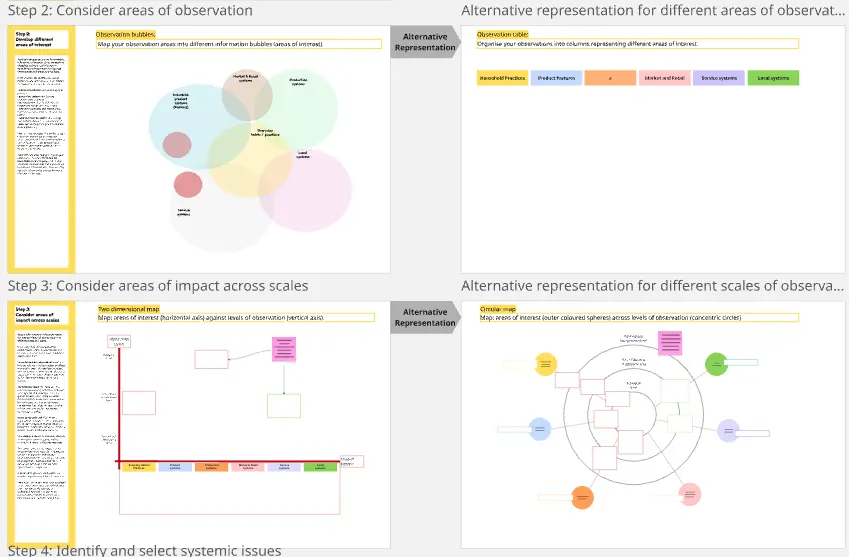
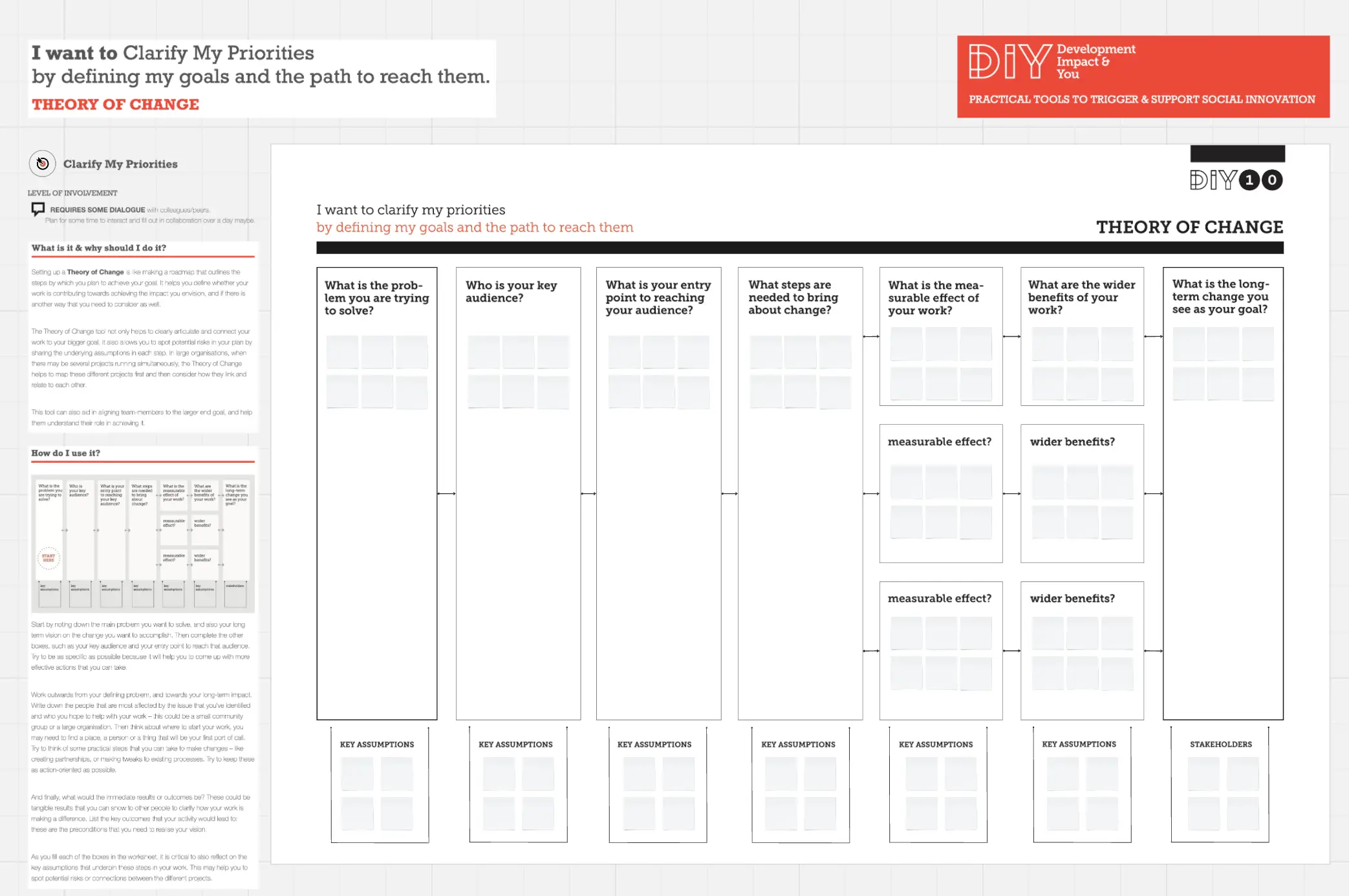
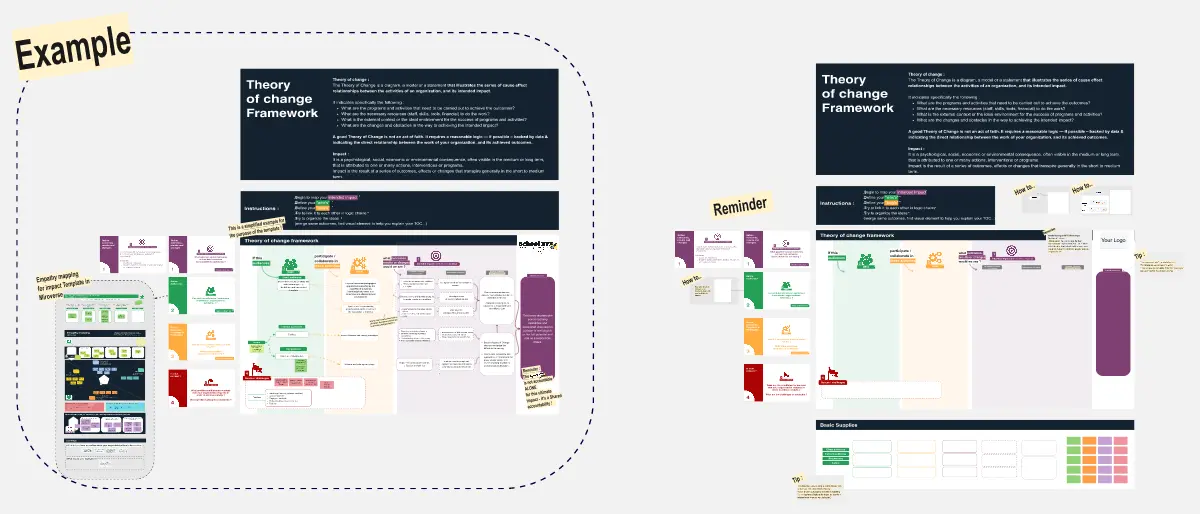
This template is designed to help you develop and justify a design proposition for systemic change.
The purpose of the activity is not to predict exactly what will happen, but to develop a reasoned explanation of how your proposed intervention could contribute to positive change. The resulting map can help you communicate your design proposition, explain why it is needed, identify the changes it is intended to create, and justify how it may contribute to wider systemic change.
The template is organised into three stages:
Step 1: Describe the challenge
Capture the challenge or situation that your intervention is trying to address. Focus on the conditions, behaviours, relationships, structures, or practices that contribute to the issue.
Step 2: Represent the intervention
Create a visual representation of your proposed intervention. Show the key activities, resources, people, organisations, technologies, or relationships involved in making the intervention work.
Step 3: Connect the intervention to systemic change
Identify the positive shifts and outcomes that the intervention is intended to create. Use arrows to show how immediate changes may contribute to wider social, environmental, economic, or systemic outcomes over time.
Finally, reflect on the assumptions that underpin your proposition. These assumptions help explain why you believe the proposed pathways of change are plausible.