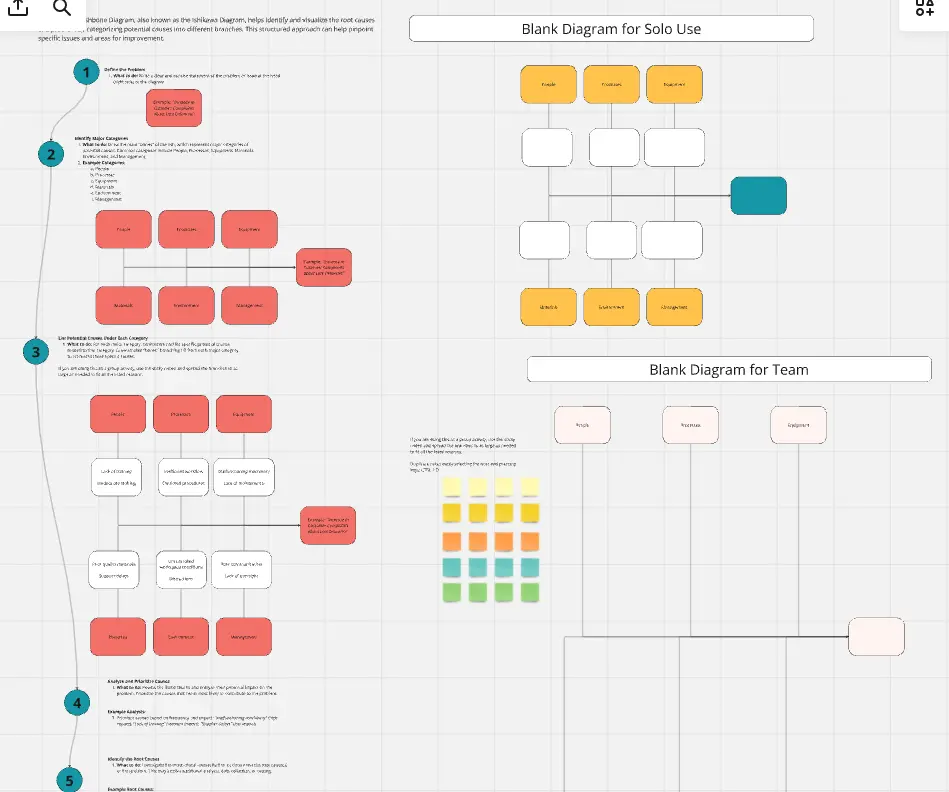
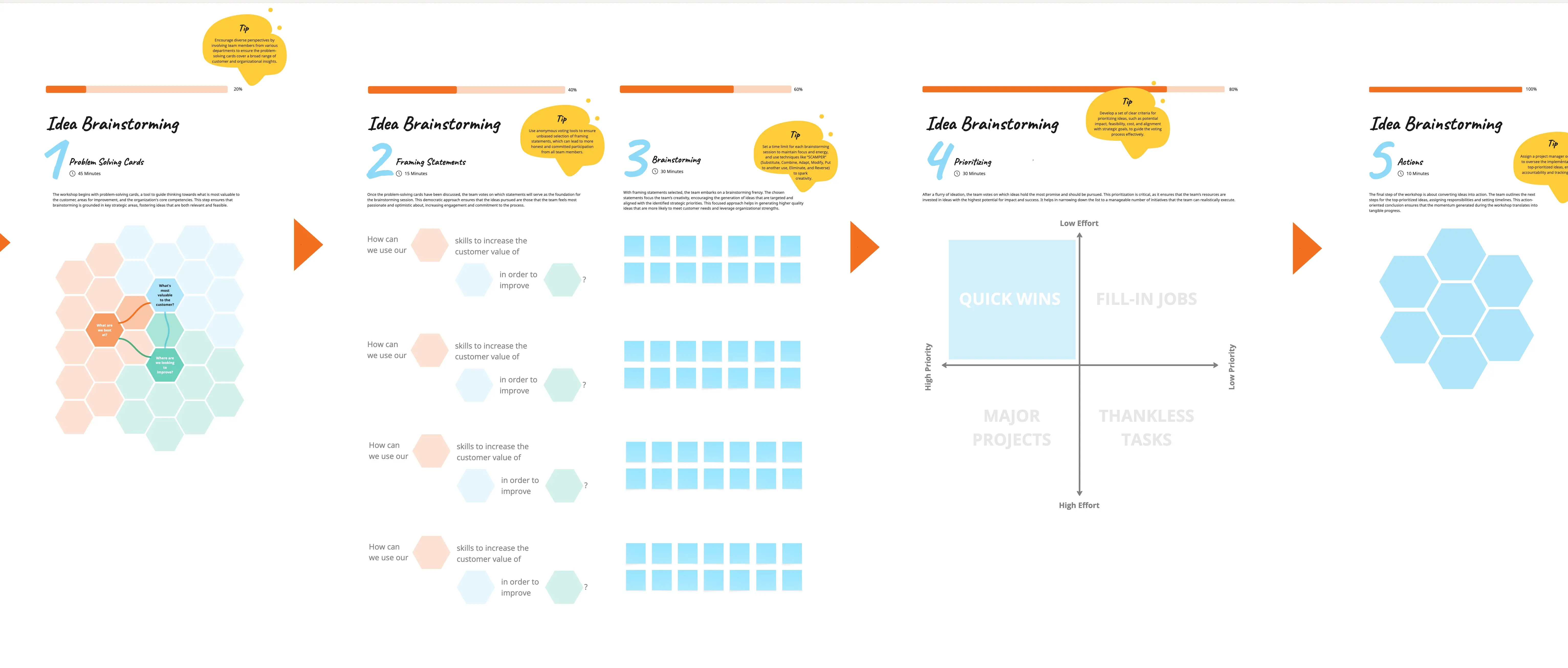
What is the Simple Root Cause Analysis Template?
A four-step problem-solving template that helps teams define an issue, identify likely causes, select a solution, and measure the result.
What problem does the Simple Root Cause Analysis Template solve?
Recurring issues
Unclear causes
Unsupported assumptions
Solutions without ownership
Missing success measures
How to use the Simple Root Cause Analysis Template
Define the issue and rate its severity.
List possible causes and test the strongest one.
Choose a solution and review its risks.
Define testing, targets, ownership, and review dates.
Common Pitfalls
Treating symptoms as causes
Choosing a fix too early
Skipping evidence review
Using vague success measures
Leaving actions without owners
Ways to Avoid Mistakes
Use real incident data.
Separate facts from assumptions.
Test the strongest cause first.
Assign one owner.
Use measurable targets.
Miro Features You Can Use
Tables for the four steps
Tags for severity and probability
Comments for evidence
Color coding for each section
Links for logs and screenshots
Voting to rank likely causes
FAQs
Q: Who can use this template?
A: Product, engineering, operations, support, quality, and project teams.
Q: How many causes should be listed?
A: Three to five possible causes keeps the analysis focused.
Q: How long does the workshop take?
A: About 30–40 minutes.
Q: What will participants leave with?
A: A defined issue, likely root cause, selected solution, owner, and measurable success target.