What is the Root Cause Analysis Ishikawa Template?
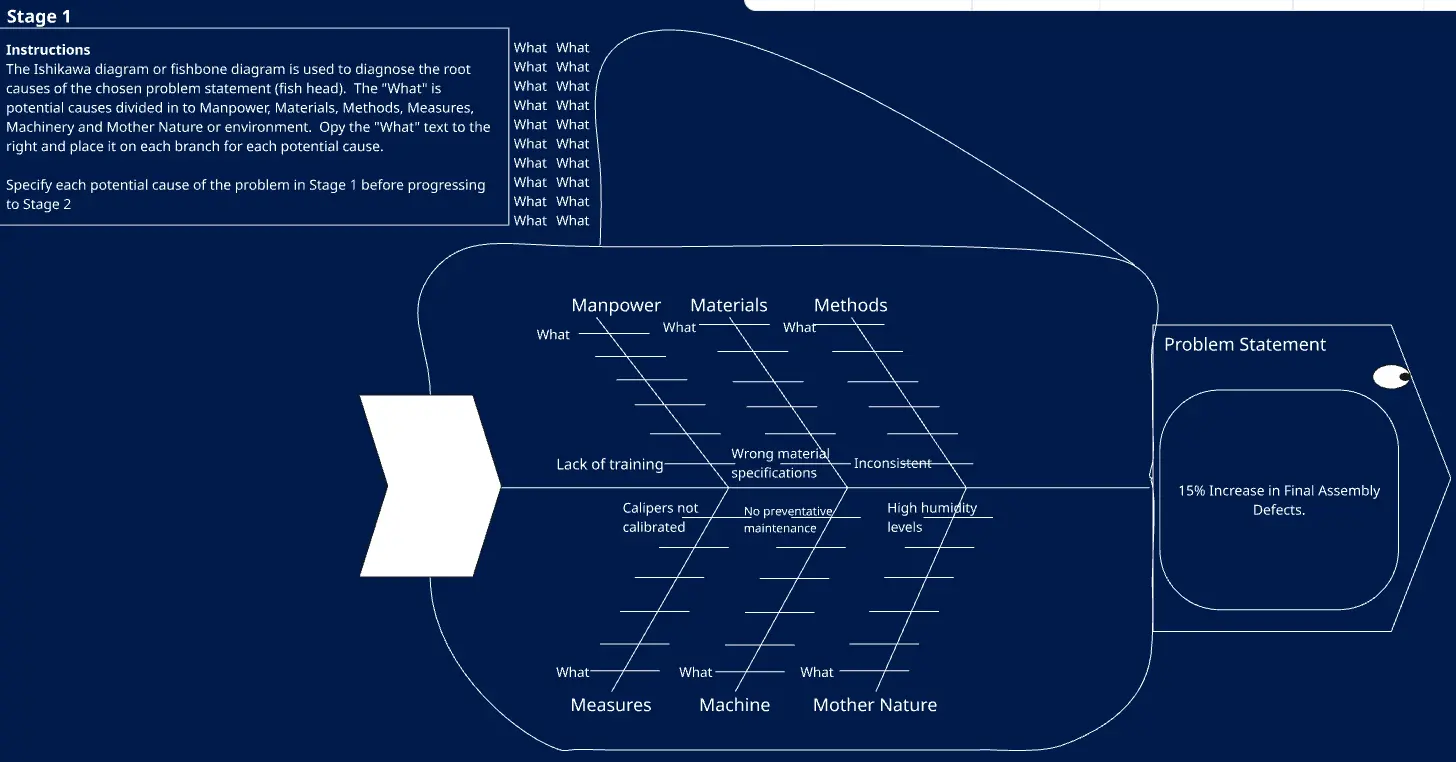
A fishbone diagram template that helps teams organize possible causes of a problem into clear categories. Teams can explore contributing factors, separate symptoms from causes, rank likely root causes, and plan evidence-based investigation.
What problem does the Root Cause Analysis Ishikawa Template solve?
Recurring problems
Unstructured cause discussions
Symptom-focused fixes
Missing cross-functional input
Unsupported assumptions
No clear investigation plan
How to use the Root Cause Analysis Ishikawa Template
Write the problem at the head of the fishbone.
Confirm the cause categories.
Add possible causes under each category.
Combine repeated ideas.
Ask “Why?” to find deeper causes.
Vote on the strongest causes.
Select causes for investigation.
Assign evidence, owners, and dates.
Common pitfalls
Using a broad problem statement
Listing symptoms as causes
Blaming individuals
Adding causes without evidence
Stopping at the first explanation
Choosing too many priority causes
Ways to avoid mistakes
Use one measurable problem statement.
Focus on systems and conditions.
Mark assumptions clearly.
Ask “Why?” more than once.
Limit investigation to the top causes.
Assign one owner to each test.
Miro Features You Can Use
Fishbone connectors for cause branches
Sticky notes for possible causes
Tags for evidence and assumptions
Voting for prioritization
Comments for source notes
Color coding for categories
Tables for owners and due dates
FAQs
Q: Who can benefit from this template?
A: Product teams, engineering teams, operations teams, quality teams, support teams, compliance teams, and project leaders.
Q: How many cause categories should be used?
A: Six categories work well for this layout, though teams can rename them to fit the issue.
Q: How many causes should each category include?
A: Three to five causes per category keeps the diagram readable.
Q: Can this template support software incidents?
A: Yes. Teams can use categories such as people, process, technology, data, monitoring, and documentation.
Q: What will participants leave with?
A: A completed fishbone diagram, ranked possible causes, evidence gaps, and an investigation plan.