Red & Orange Supply Chain Management Diagram
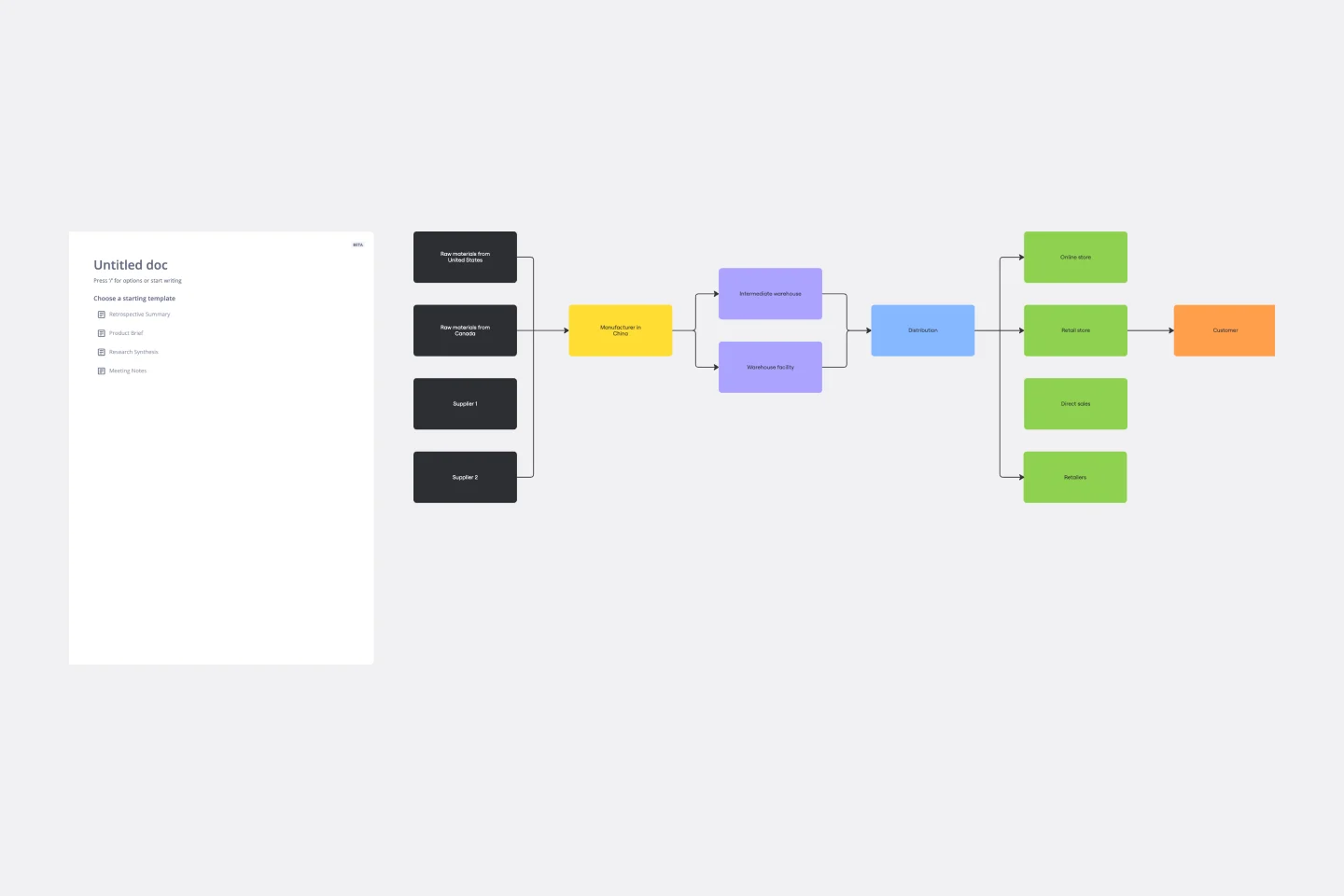
This comprehensive Supply Chain Management Diagram provides a complete visual framework for mapping both forward and reverse supply chain operations in a single, integrated view.
What This Template Is
A dual-flow process diagram that illustrates the complete lifecycle of products and services—from raw material sourcing to customer delivery, and back through returns and reverse logistics. The template uses a bold orange and red color scheme with clear visual hierarchy to distinguish between outbound supply chain activities and inbound reverse logistics.
Purpose and Value
This template helps organizations visualize, analyze, and optimize their entire supply chain ecosystem. It enables teams to identify bottlenecks, understand interdependencies, plan improvements, and align stakeholders across the full product journey. By presenting both the Supplier Chain and Customer Chain together, it emphasizes that modern supply chains are circular, not linear—returns, repairs, and customer feedback are integral to operational success.
Structure
The diagram is organized into two parallel horizontal flows:
Supplier Chain (Top Row) — The forward supply chain featuring six sequential stages:
Raw Materials, Manufacturing, Warehousing, Logistics, Distribution, and Retail/Consumer
Each stage includes specific operational activities, checkpoints, and key considerations
Connected by bidirectional arrows showing information and material flow
Customer Chain (Bottom Row) — The reverse logistics flow mirroring the top row:
Returns Intake, Rework/Repair, Reverse Storage, Reverse Logistics, Return Hubs, and Customer Feedback
Details the complete returns management process from authorization to refurbishment to data insights
Each stage is represented by a card containing relevant activities, systems, and best practices. Icons above each column provide quick visual reference to the stage function.
How Teams Can Use It
Strategic Planning: Map your current supply chain state, identify gaps, and design future-state improvements.
Cross-Functional Alignment: Bring together procurement, operations, logistics, and customer service teams to see how their work interconnects.
Process Documentation: Customize each stage with your organization's specific procedures, systems, and metrics.
Problem-Solving: Trace issues across the flow to find root causes and systemic inefficiencies.
Onboarding & Training: Use as a visual guide to help new team members understand end-to-end operations.
Edit the cards to reflect your industry specifics, add notes for action items, and use Miro's collaboration features to workshop improvements with your team in real-time.
Cheers!
Khawaja Rizwan