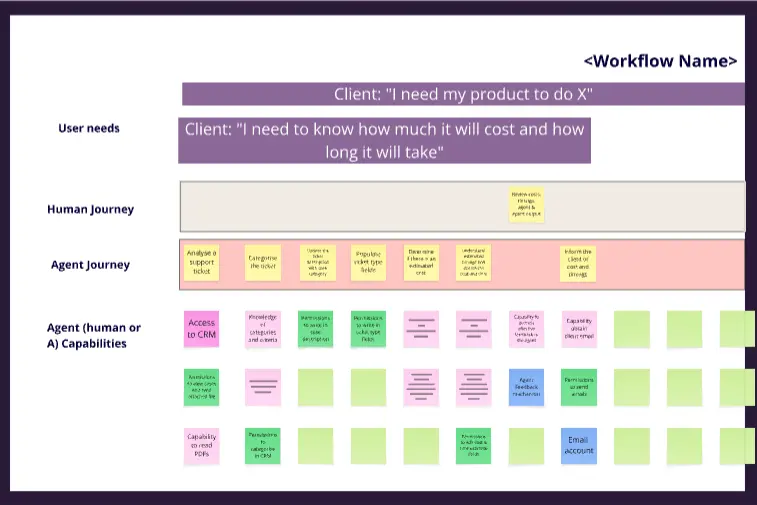
What it’s about: This board maps how seven leading AI coding tools describe the agentic SDLC: Anthropic Claude Code, OpenAI Codex, Cursor, GitHub Copilot, Replit, Lovable and VS Code. For each one, it lays out the vendor’s own published workflow stage by stage and shows where Miro adds a shared visual and collaboration layer. Every Miro use case links to the Help Center article, Academy course, video or template that shows you how to do it.
What it helps you achieve: Use it to understand your coding tool’s recommended workflow and spot where human review and team alignment matter most. It also shows you how to connect Miro’s MCP server so your coding agent can read and build boards. Beyond that, it helps you make an existing codebase understandable for non-technical colleagues with architecture maps, data models and clickable prototypes.
Who benefits most: Engineering leaders, product managers, designers, agile coaches and developers who are bringing AI coding agents into a team workflow and want everyone, not just the person running the agent, to see, shape and review the work.
How to use it: Start with the “Start here” frame for the legend and how to read a row. Jump to your tool’s row and follow the flow left to right: the vendor’s stages on the left, and on the right where Miro fits, with fit ratings and How-to links. Use the overview to compare all seven tools. Row 8 shows how to turn an existing repo into visuals for non-technical audiences, and row 9 has the how-to library, a learning path and a hackathon starter kit. For guided help, click the coach button to open Miro’s Agentic SDLC Coach, a Sidekick that asks for your tool, role and goal and walks you through it step by step.