Key Stages of Supply Chain Management
Overview
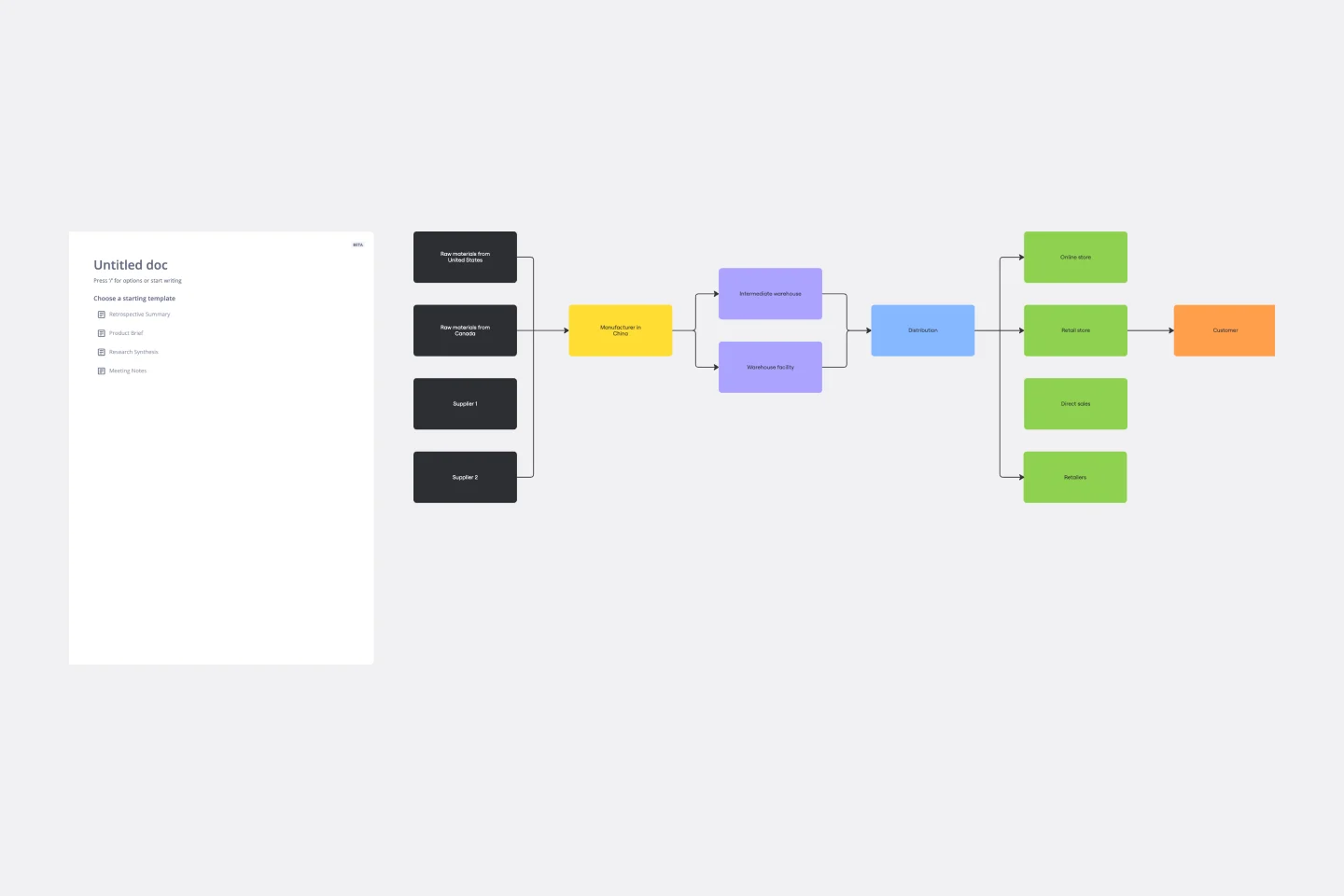
This visual template provides a comprehensive framework for understanding and mapping the seven critical stages of supply chain management. It presents the end-to-end flow of goods from raw material acquisition to final delivery in an easy-to-follow, sequential format.
What It's Used For
This template helps teams, managers, and stakeholders:
Visualize the complete supply chain workflow
Identify key processes and their relationships
Plan and optimize supply chain operations
Communicate supply chain strategies to cross-functional teams
Onboard new team members to supply chain fundamentals
Template Components
The template displays seven interconnected stages arranged in a dynamic zigzag flow pattern:
Stage 1: Sourcing - Focuses on efficiently acquiring raw materials and essential components to kickstart the supply chain.
Stage 2: Manufacturing - Details the conversion of raw materials into finished products through organized production processes.
Stage 3: Distribution - Covers the efficient delivery of finished products to customers, retailers, or other destinations.
Stage 4: Warehousing - Addresses the safe storage and management of goods within designated facilities.
Stage 5: Transportation - Explains how goods move smoothly between different stages and locations.
Stage 6: Inventory Management - Focuses on tracking, monitoring, and maintaining appropriate stock levels.
Stage 7: Logistics - Encompasses the coordination and management of all supply chain activities for smooth operations.
Each stage includes a numbered identifier, descriptive title, explanatory text, and visual icon for quick recognition.
How to Use This Template
Start by reviewing each stage sequentially to understand the natural flow of supply chain operations. Use the template to:
Map your organization's specific processes to each stage
Identify gaps or inefficiencies in your current supply chain
Assign responsibilities to teams for each stage
Develop metrics and KPIs for monitoring performance
Create training materials or presentations
Teams can customize the descriptions under each stage to reflect their unique operations, add notes about challenges or opportunities, or use it as a starting point for deeper process mapping exercises.
Cheers!
Khawaja Rizwan