This template gives you step-by-step guidance and a practical working environment to apply Outcome-Driven Innovation (ODI), the branch of Jobs to Be Done focused on understanding how customers define success and where current solutions fall short.
AI tools are built into the template, making it quicker, simpler and more intuitive to use. You'll find them as you work through the board.
The template guides you through four stages:
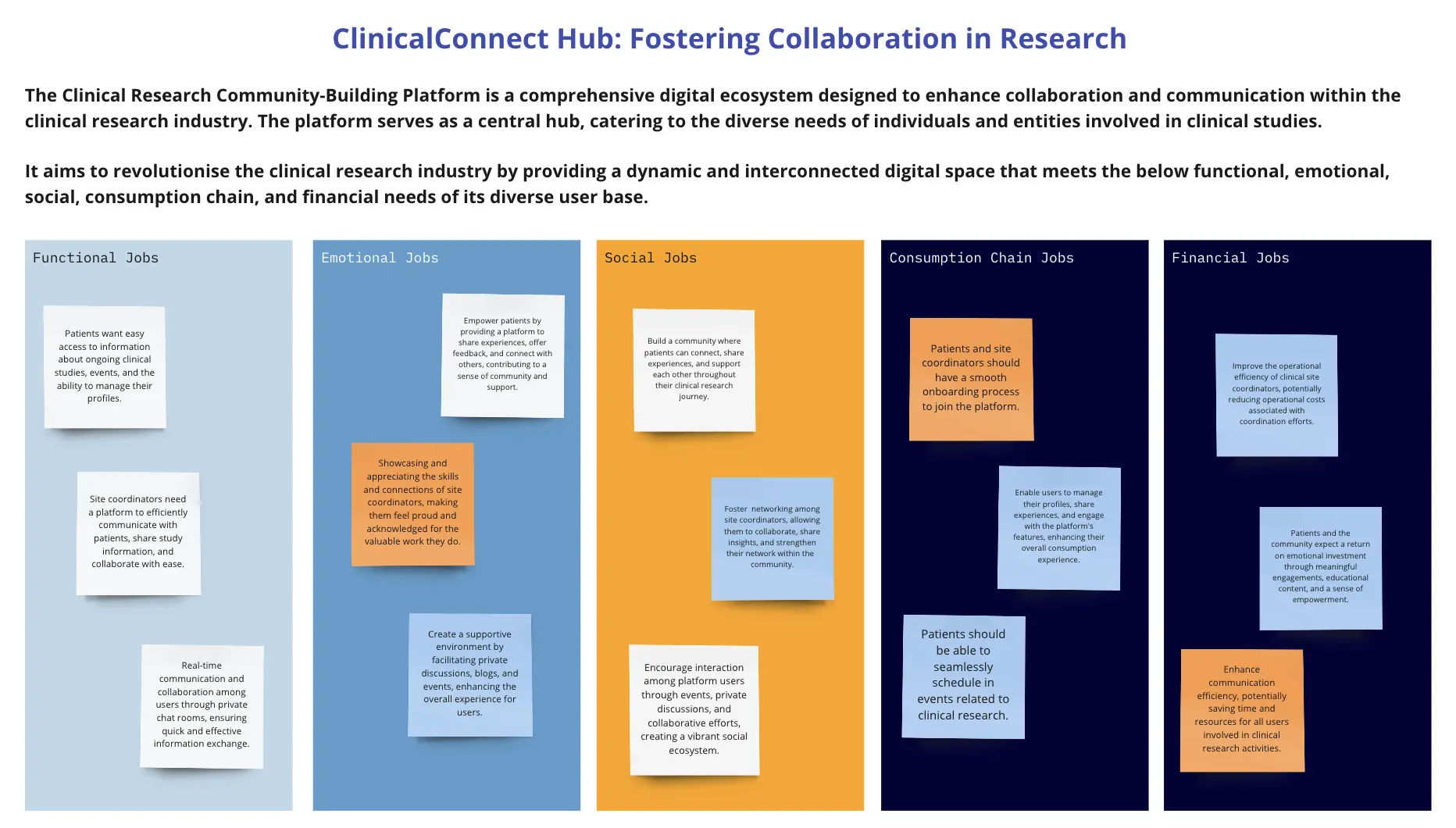
Scope the job: Define the job executor, target job, motivation, circumstances, related jobs, consumption-cycle jobs and wider job landscape.
Map the job: Set the boundaries of the complete job and break it into solution-agnostic steps using ODI's eight universal stages: Define, Locate, Prepare, Confirm, Execute, Monitor, Modify and Conclude.
Investigate the job: Plan and conduct ODI interviews, explore recent experiences, validate the job map and capture evidence of how people judge success. Use the built-in Miro Flow to turn interview transcripts into structured evidence and provisional outcome hypotheses.
Capture outcomes: Translate customer language into precise desired outcomes, organise them against the job map, build an outcomes library and identify the strongest opportunities.
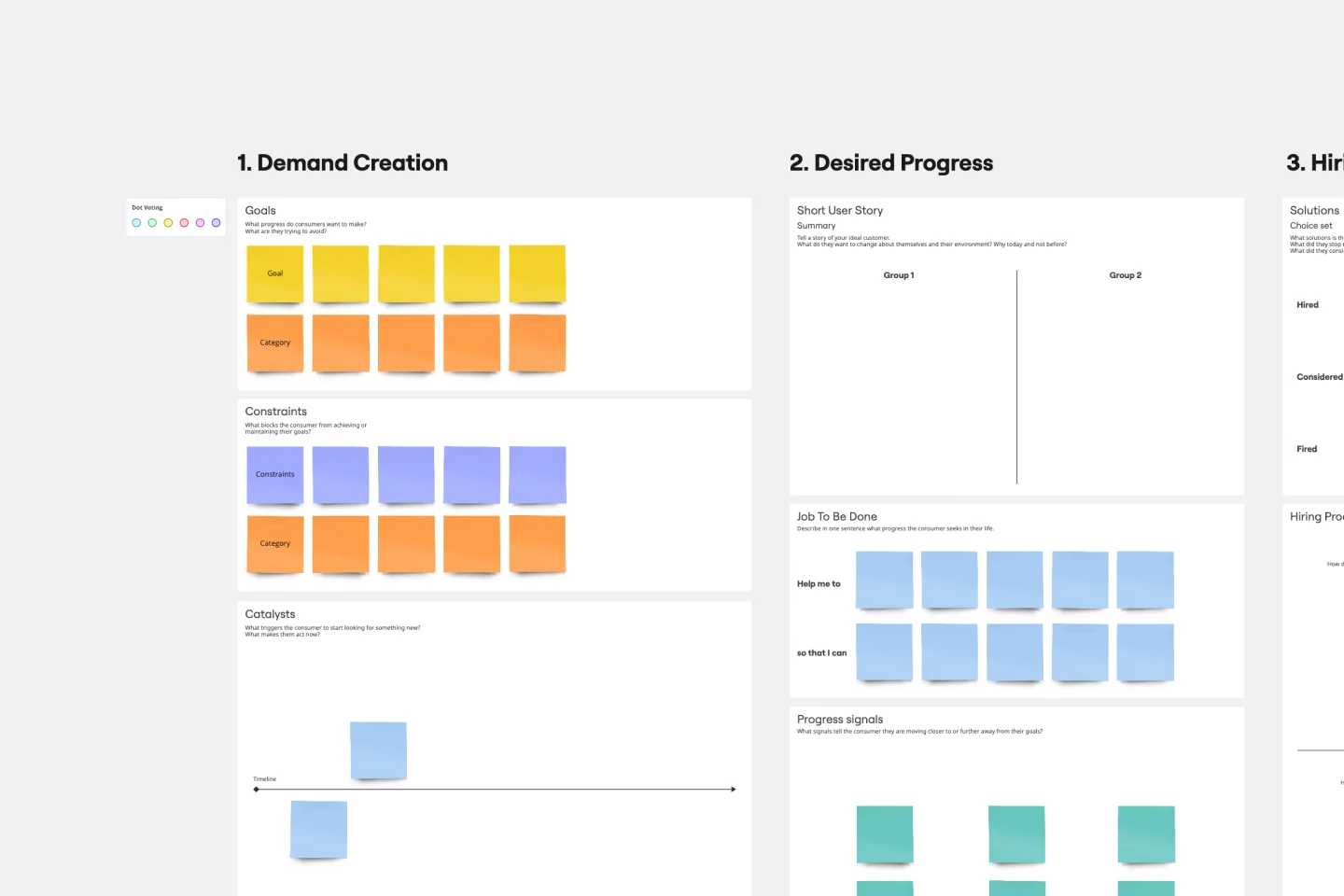
The board includes concise instructions, editable canvases, quality checks, facilitator prompts and a worked Uber example. Use it independently, with a team or as the basis for a facilitated workshop.
The board is the working environment. Mosaic Innovation's ODI Toolkit is the deeper guide behind it.
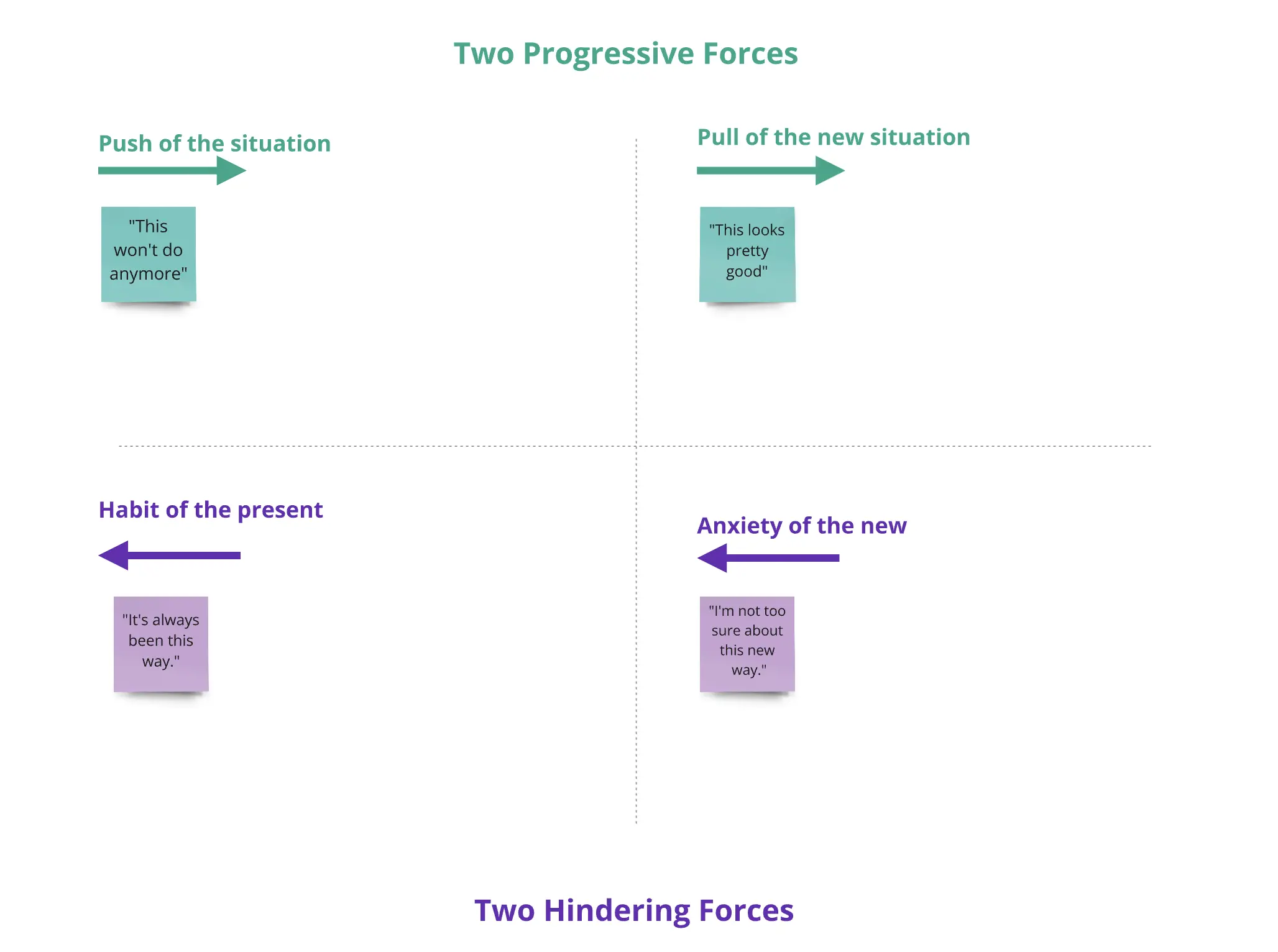
Jobs to Be Done has two distinct approaches. ODI focuses on desired outcomes and underserved needs. The Switch approach explores why customers change, stay or do nothing. If you are looking for Switch, or are unsure which approach to use, the download below covers both.
Download the full ODI Toolkit and wider JTBD Practitioner Series: www.mosaic-innovation.com/downloads