In many real-life design projects, designers need to carry out a systemic analysis to identify where change could have the greatest influence. This guide introduces a process for identifying leverage points: areas within a system where change may create wider effects.
The process draws on ideas from systems thinking and is loosely inspired by the Iceberg Model, which encourages us to look beyond visible issues and explore the deeper patterns, structures and conditions that shape them. Rather than focusing immediately on solutions, this process helps you develop a deeper understanding of a systemic issue by investigating four interconnected layers:
+ Patterns and trends →
What patterns and trends shape the systemic issue?
+ Potentials (possibilities) →
What actors, products, technologies, services, infrastructures, initiatives, or resources are present within the observed reality, including those that may be underused, overlooked, or not yet fully realised?
+Underlying conditions →
Why do these patterns persist, and why are certain possibilities not being realised? What social, economic, technological, political, cultural, or geographical conditions reinforce the current situation?
+ Leverage points →
Where might change have the greatest influence? Which parts of the system offer the greatest opportunity to shift patterns and create wider systemic effects?
The process involves four steps:
1. Unearth patterns and trends
Create a visual map to identify recurring patterns, relationships and feedback loops associated with the systemic issue.
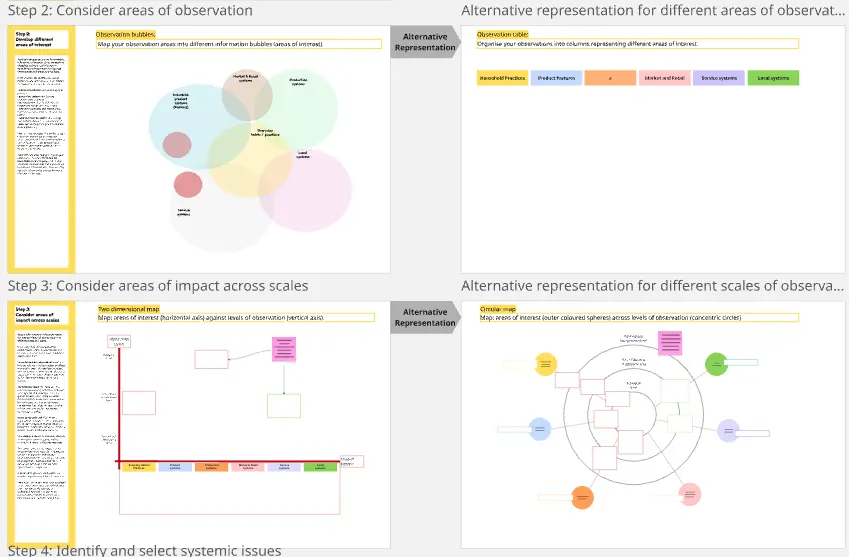
2. Map the landscape (what is possible)
Explore the wider system and identify what exists around the issue, including actors, products, services, organisations, infrastructures, resources and activities.
3. Conceptualise underlying conditions
Identify the deeper social, cultural, economic, technological, political or geographical conditions that help explain why the observed patterns exist and persist.
4. Identify leverage points
Use your understanding of patterns, system structures and underlying conditions to identify areas where change could have a significant influence on the way the system behaves.
By moving through these four steps, you will develop a richer understanding of a systemic issue and begin to identify opportunities for creating meaningful and longer-term systemic change.