Objective of the Tool
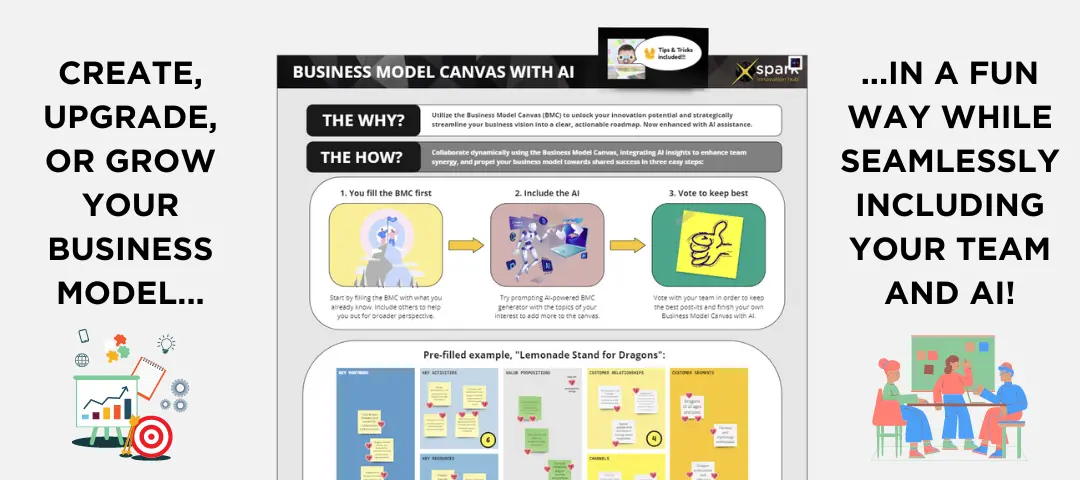
The Circular Business Model Canvas supports organisations in designing and structuring business models that integrate circular economy principles across the entire product lifecycle. The tool helps companies understand how value is created, delivered, and captured when products are designed for durability, reuse, repair, refurbishment, and material recovery. It enables organisations to align circular strategies with operational activities, ecosystem partners, and revenue mechanisms.
What the Tool Is
The Circular Business Model Canvas is a strategic design canvas used to structure how circular business models operate. It adapts the traditional Business Model Canvas to integrate circular strategies such as longevity, repair, reuse, refurbishment, product-as-a-service, and material recovery. It helps organisations visualise how circular value is created for customers, how products circulate across multiple lifecycle phases, and how economic value can be captured across these cycles.
When to Use the Tool
The Circular Business Model Canvas is particularly useful when organisations are developing or transforming business models to integrate circular economy principles. It can be used when companies are:
How to Use the Tool
Step 1 – Define the Circular Value Proposition: Identify how the offering delivers circular value through durability, repairability, reuse, or transparency.
Step 2 – Identify Customer Segments: Determine the different users or beneficiaries across the product lifecycle, including potential secondary markets.
Step 3 – Map Channels: Identify the channels used to deliver products and services as well as those enabling returns, repair, or refurbishment.
Step 4 – Define Customer Relationships: Clarify how relationships with customers evolve over time, particularly in service-based or long-term circular models.
Step 5 – Identify Revenue Streams: Determine how economic value is captured across multiple lifecycle phases.
Step 6 – Identify Key Resources: Map the physical, digital, and intellectual resources required to support circular operations.
Step 7 – Define Key Activities: Identify the operational activities required to operate the circular business model.
Step 8 – Identify Key Partnerships: Determine the ecosystem partners required to deliver and scale the circular model.
Step 9 – Analyse the Cost Structure: Identify how costs shift when circular strategies are implemented.
Step 10 – Define Circular Strategies: Identify the circular strategies that structure the business model.