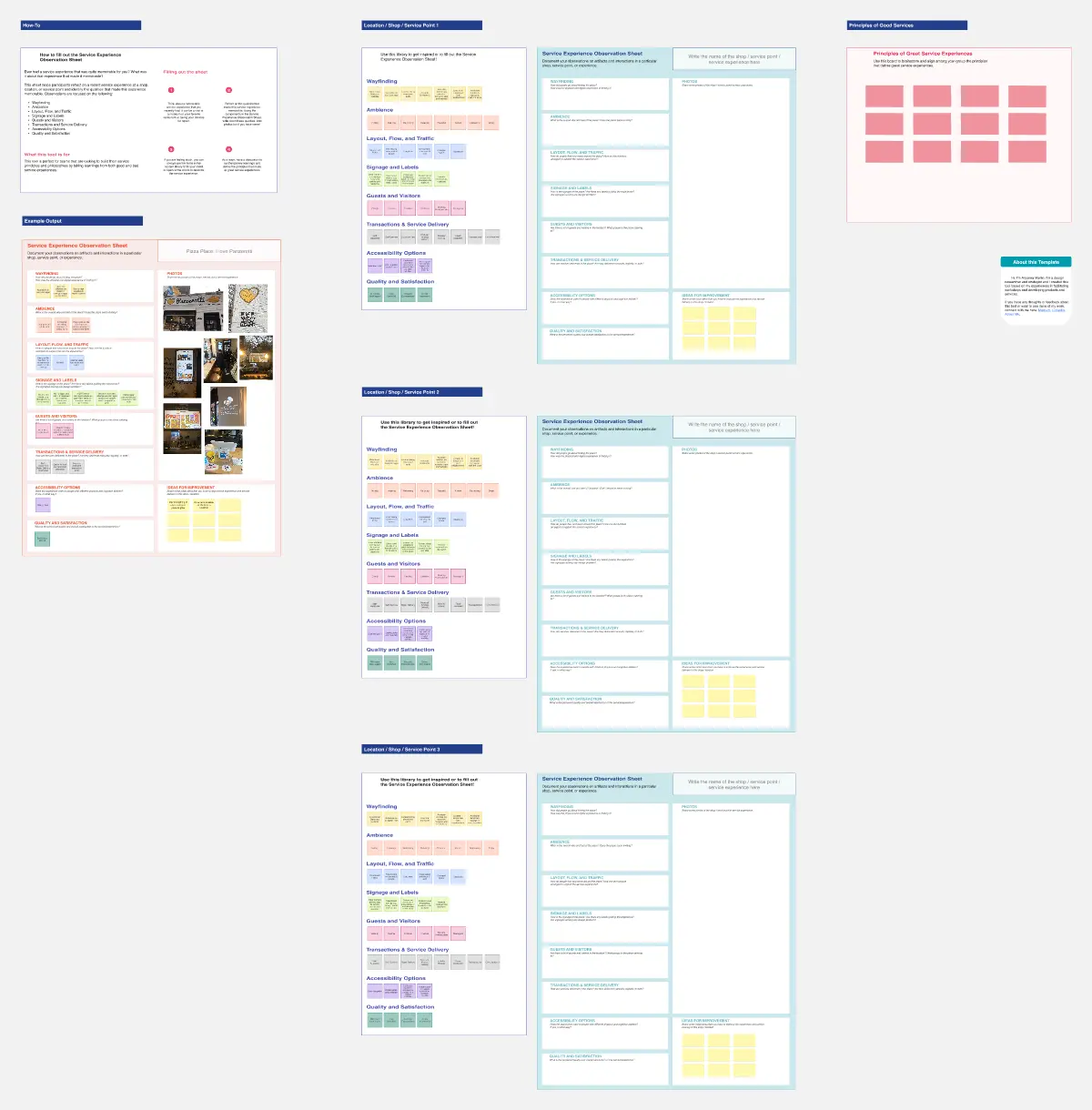
What it is for: Contextual observation is a research method in which you watch a person carry out a real task in the place where it normally happens, with their consent. You come away with observation sheets that describe each task, the setting it happens in, what people actually did and the obstacles your notes can prove.
Who it helps: Researchers, process owners and service teams who suspect the real way a task is done differs from the official version.
When to use it
When a process looks fine on paper but takes much longer in practice.
When people have done a task so often that they no longer notice the steps they take.
When interviews keep producing the official version and you suspect there is another one.
How to use it
Choose one real task and arrange to watch it where and when it actually happens.
Get consent from the person and their manager, and make clear you are studying the task, not them.
Sit out of the way and stay silent for the first ten minutes.
Record plain actions and context, ask short questions only at natural pauses.
Mark only the obstacles your notes can prove, and write up the same day.
Tip: Arrive early and leave late. What happens just before and after the task often explains the task.
Credits and sources: Original Tiremesù worksheet and wording. Further reading: 18F Methods https://github.com/18F/methods/tree/main/_methods
Full guide and film:https://www.tiremesu.com/guides/contextual-observation