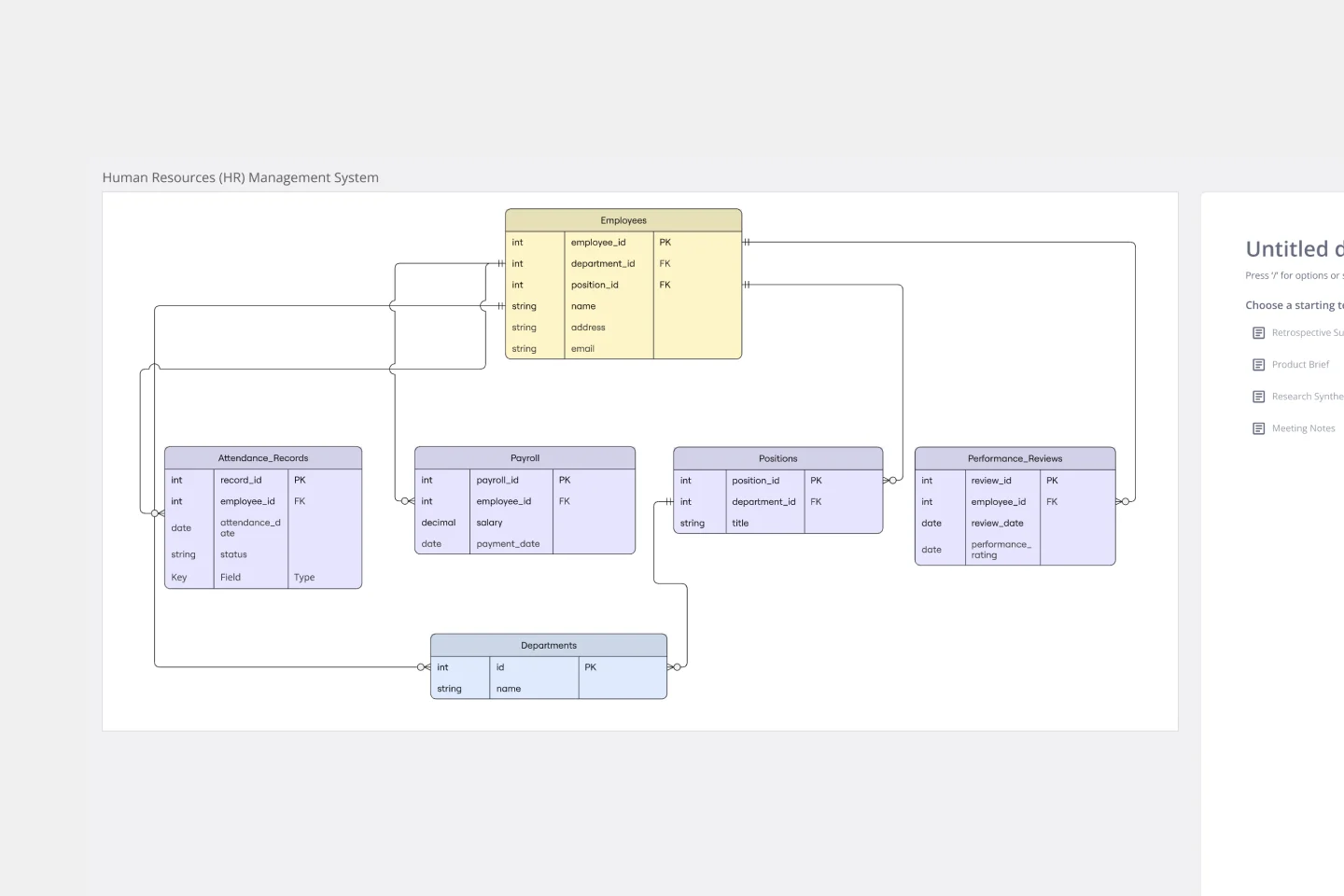
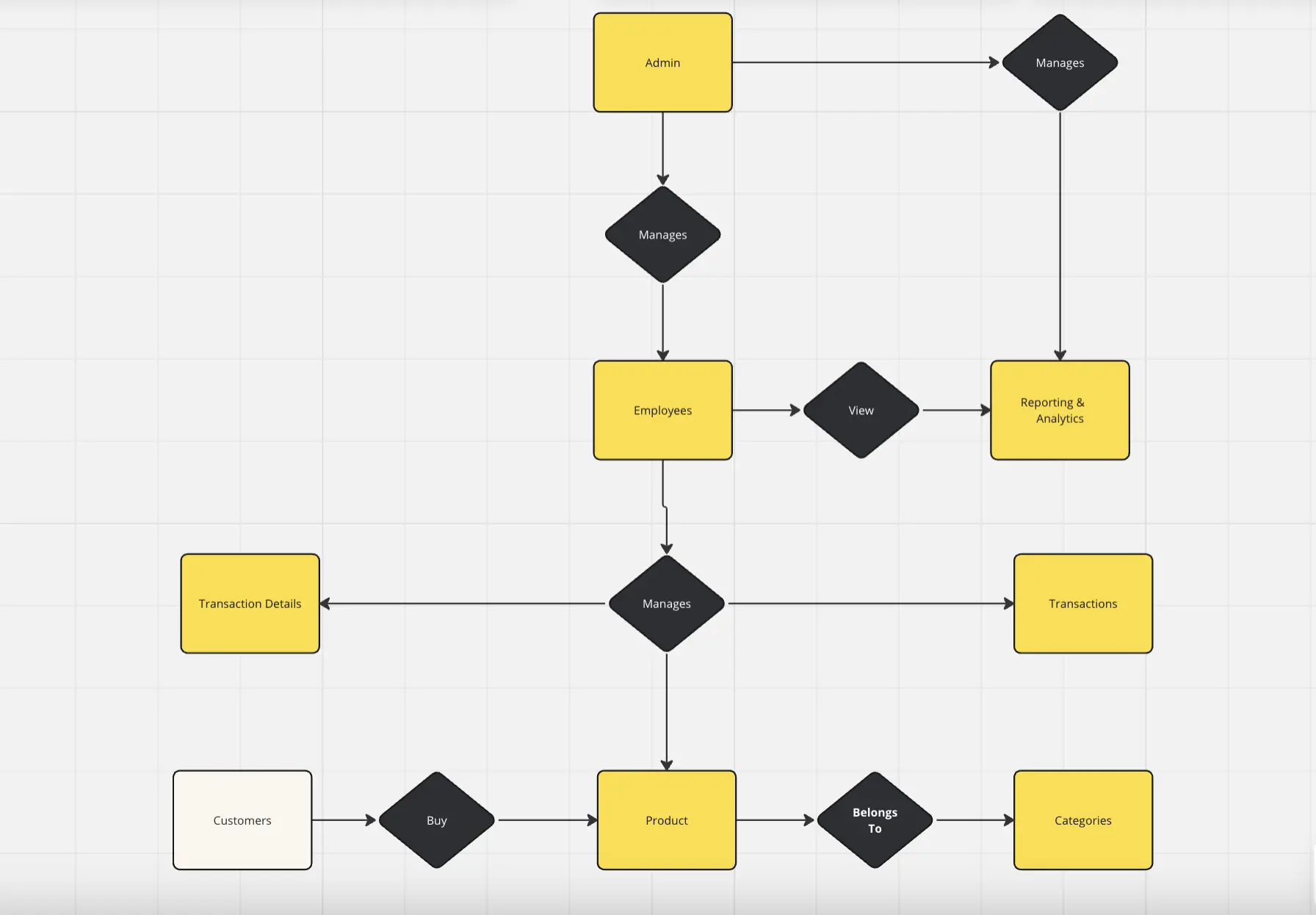
The Entity Relationship Diagram (ERD) template is a collaborative workshop designed to help teams explore, organize, and visualize how data is structured and connected within a system.
Whether you're designing a database from scratch, planning a new application, or improving an existing data model, this template guides your team through the essential steps of ERD creation.
From identifying business requirements and defining entities to mapping relationships and key attributes, the workshop helps transform scattered ideas into a shared understanding of your data structure.
By bringing technical and non-technical stakeholders together, the template makes database design more accessible, collaborative, and structured.
How to use this template
Follow six steps to collaboratively build your Entity Relationship Diagram:
Kick-off and ERD Basics: Align your team on the workshop objectives, introduce the fundamentals of entity relationship diagrams, and establish a shared understanding of the key concepts.
Scope and Use Cases: Define the system or process you want to model. Identify relevant business scenarios, clarify requirements, and establish what should be included or excluded from your data model.
Find and Define Entities: Brainstorm the main objects or concepts your system needs to store information about. Group related ideas, identify potential entities, and agree on clear definitions.
Relationships and Cardinality: Explore how entities connect to one another. Define relationships and their cardinality, including one-to-one, one-to-many, and many-to-many relationships.
Key Attributes: Identify the essential information each entity needs to contain. Define attributes, primary keys, and foreign keys to establish a logical and consistent data structure.
Draft ERD and Next Steps: Bring everything together into an initial Entity Relationship Diagram. Review the model, capture open questions, identify areas requiring further validation, and agree on next steps.
Use the Parking Lot throughout the workshop to capture additional questions, assumptions, or ideas that need attention but fall outside the current discussion.
Who is this template for?
This template is ideal for:
Software developers designing database structures for applications and digital products.
Data architects and database designers mapping entities, attributes, and relationships.
Product teams translating business requirements into structured data models.
Business analysts exploring data needs and documenting system requirements.
Technical leads and solution architects aligning teams on data structures and system design.
Workshop facilitators guiding collaborative data modeling sessions.
Why use this template?
A well-designed database starts with a clear understanding of the information a system needs and how that information is connected.
This template helps teams:
Translate business requirements into structured data concepts.
Establish a shared understanding between technical and non-technical stakeholders.
Identify entities, attributes, and relationships collaboratively.
Visualize complex data structures in an accessible format.
Uncover missing information, unclear relationships, and potential modeling issues early.
Create a foundation for further database design and development.
Instead of jumping straight into implementation, teams can explore requirements, challenge assumptions, and align on a logical data structure before making technical decisions.
By the end of the workshop, your team will have an initial ERD, documented modeling decisions, identified open questions, and clear next steps for refining the database design.