Design for longer life, ongoing value, and circular business
Explore how to move from selling products once to delivering lasting value through durable products, repair, reuse, and service-based business models.
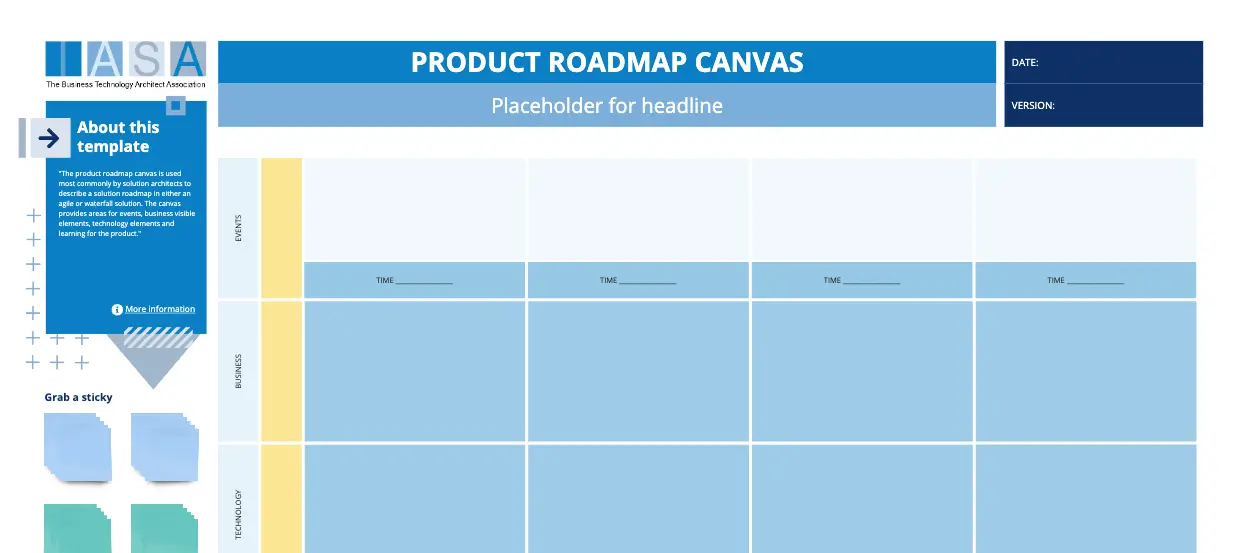
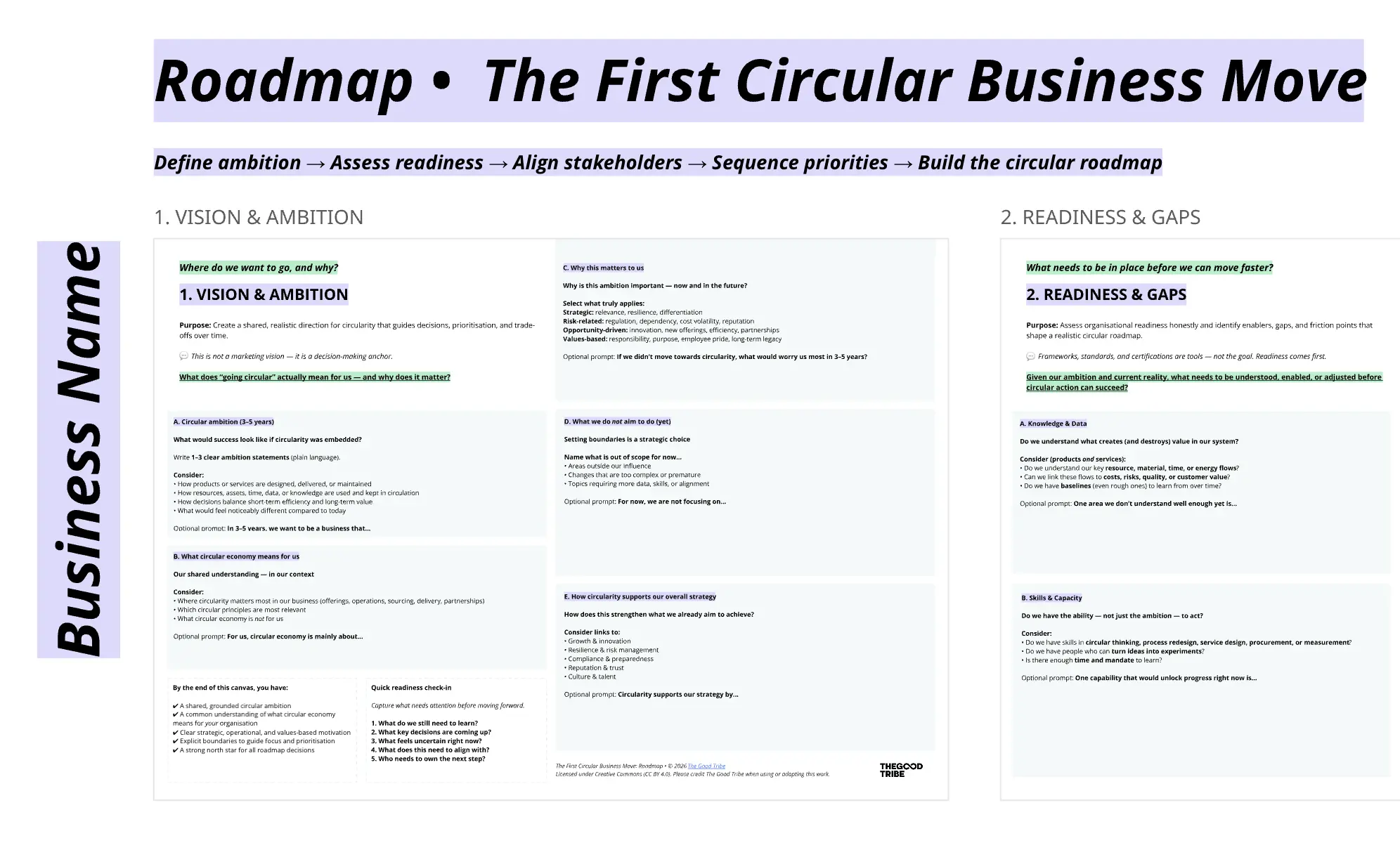
This template connects circular product design with the operations, partnerships, customer experience, and economics needed to make it work. Ten guided brainstorming areas and a roadmap table help teams see the whole system, uncover gaps, and turn opportunities into practical next steps.
Who is it for?
Product designers, entrepreneurs, innovation teams, sustainability practitioners, and professionals working across procurement, operations, customer service, logistics, and finance. It also supports consultants and facilitators helping organisations explore circular products and Product-as-a-Service models.
Use it to develop a new offer, rethink an existing product, or align partners around a circular pilot.
How to use it
Choose a product, product range, or service opportunity. Define the customer need and the scope of your discussion, then explore ten connected areas:
Circular and service ambition: Define the value you want to deliver and the circular outcomes you want to achieve.
Value and service chain: Map the journey from materials and manufacturing through use, maintenance, return, and recovery.
Access and outcomes: Explore rental, leasing, subscriptions, sharing, or other models that meet customer needs.
Durability, repair, and reuse: Identify design choices and support that enable longer life and repeated use.
Materials and sourcing: Examine opportunities to reduce virgin-material demand and choose suitable, traceable inputs.
Service delivery: Plan the capabilities, people, systems, and partnerships needed to support customers and products.
Packaging and logistics: Design delivery, collection, and return processes that support circulation.
Products and components in circulation: Explore inspection, repair, refurbishment, redeployment, and parts recovery.
Economics and risk: Test lifetime costs, revenue, financing needs, utilisation, and incentives.
Measurement and improvement: Choose indicators that help you assess circular outcomes, customer value, and impacts on people and the environment.
Start with individual sticky notes, then discuss and connect ideas across the board. Mark assumptions, evidence gaps, and dependencies clearly. Use the roadmap table to capture priorities, assign owners, and agree what to test first.
Treat each business model as a hypothesis: explore whether it reduces material demand, extends product life, and supports successful return and reuse.
What will you leave with?
A shared vision for your circular product or service, a clearer picture of the system needed to deliver it, and a prioritised roadmap. You’ll also identify the assumptions, partnerships, and evidence needed to develop a pilot and assess its results.