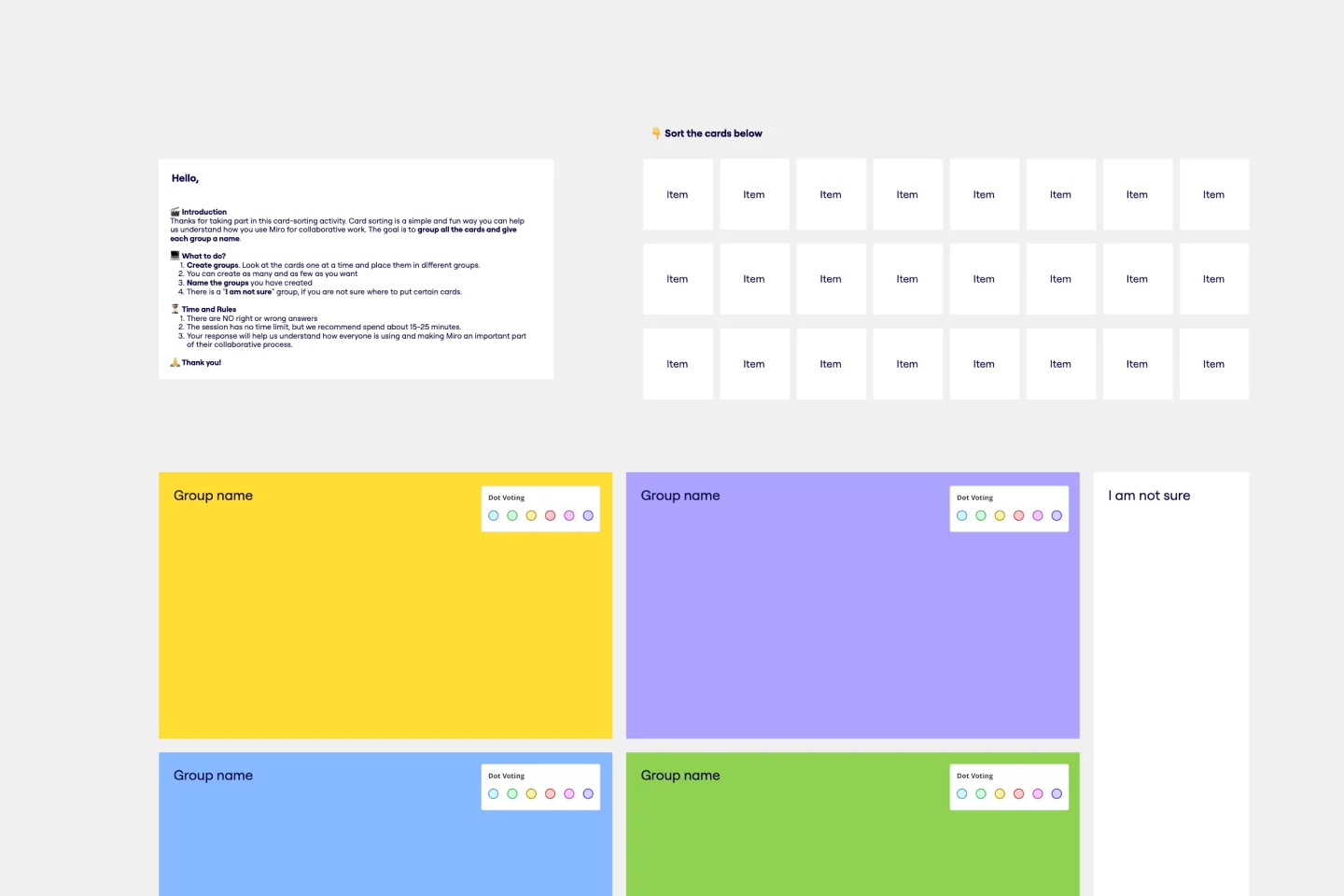
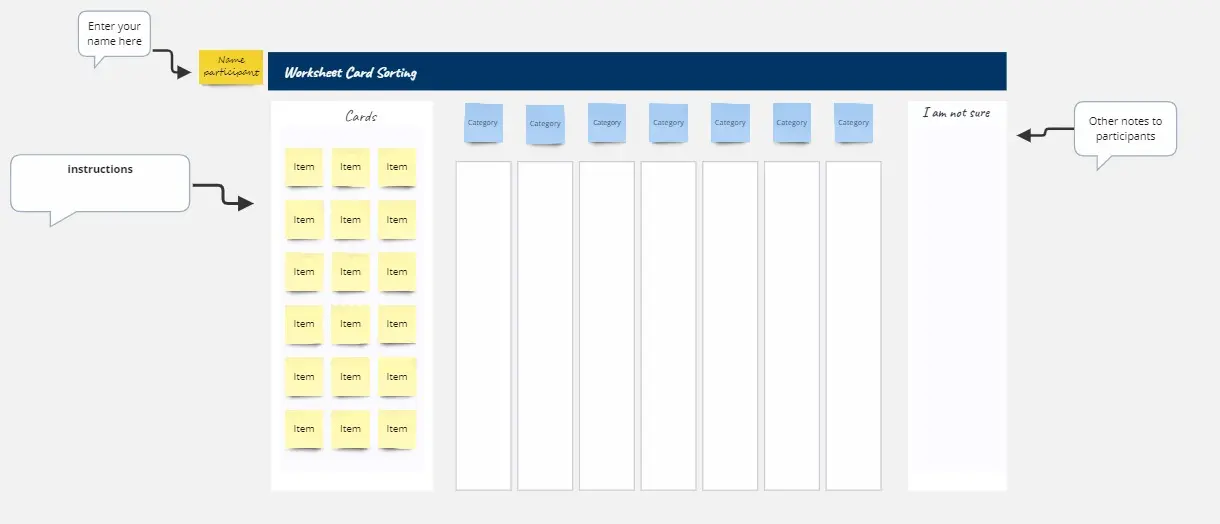
What it is for: Card sorting is a research method in which participants group a set of items, each written on its own card, into piles that make sense to them, and then name each pile. You end with a record of how real users group your items, the names they give those groups, their reasons, and a clear list of items that confused them.
Who it helps: Content designers, web teams and service owners organising a website menu, app navigation or service catalogue so users can find things.
When to use it
Before you design or redesign a website menu, service catalogue or app navigation.
When users complain they cannot find a service that does exist.
When internal teams argue about where something belongs.
How to use it
Write 30 to 60 items, one per card, in plain words users would recognise.
Choose an open sort (participants make the groups) or a closed sort (you name them).
Brief each participant without hints and ask them to think aloud as they sort.
Have them name each group in their own words, and set aside any card they find unclear.
Compare results across participants: shared groups, shared labels and items that wander.
Tip: Keep the number of cards manageable. Above 60, people tire and the last cards get sorted carelessly.
Credits and sources: Original Tiremesù worksheet and wording. Further reading: 18F Methods https://github.com/18F/methods/tree/main/_methods
Full guide and film:https://www.tiremesu.com/guides/card-sorting