AI Foundation Layer — The 10 Assumptions (P01–P10)
A complete operational framework for guiding consulting engagements in organizations adopting artificial intelligence.
Rather than a technology toolkit, it is an organizational design model built around 10 assumptions (P01–P10) that cover the full transformation cycle—from understanding the context to measuring outcomes.
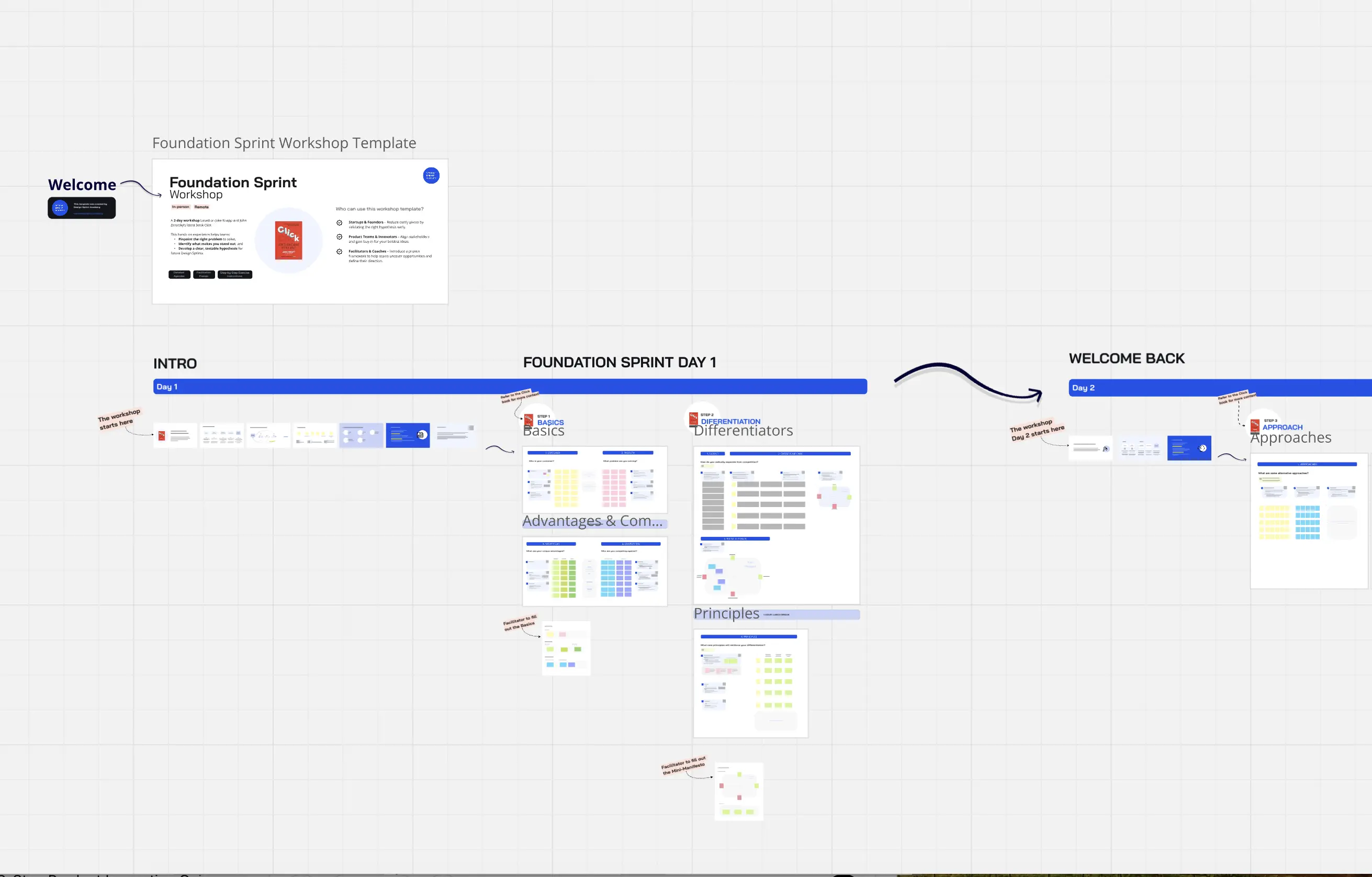
The board is structured into four sequential phases, to be completed from left to right:
Diagnosis (P01–P03) — Understand the system before intervening. Frame the real problem versus the stated one, diagnose organizational dynamics across four dimensions (culture, processes, capabilities, and technology), and map stakeholders by influence and interest.
Design (P04–P06) — Design sustainable, measurable interventions. Use a feasibility-by-impact decision matrix, an AI use-case portfolio with prioritization criteria, and a task inventory to identify what to augment or automate.
Adoption (P07–P09) — Nurture change over time. Establish rituals, nudges, and communities to support adoption; use a RACI matrix to clarify roles and responsibilities; and build a four-level knowledge architecture: capture, curation, distribution, and feedback.
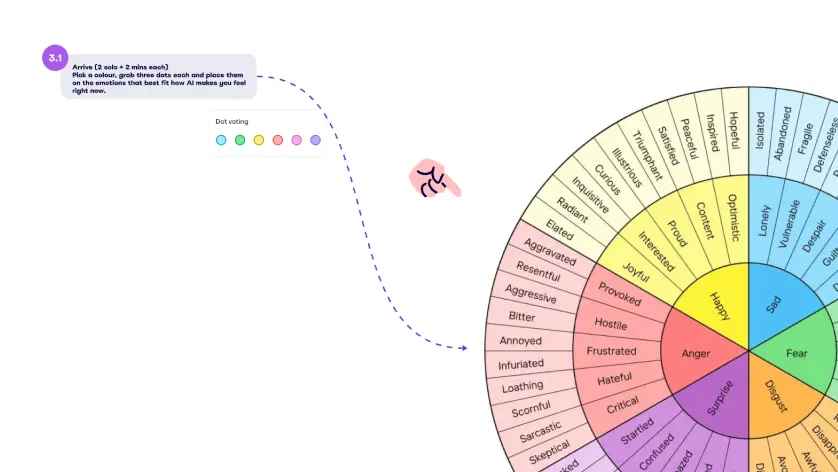
Outcomes (P10) and Synthesis — Measure what matters and turn insight into action. Define a four-quadrant metrics system (business, operational, organizational, and adoption), prioritize with dot voting, identify integration workstreams, and use an Owner & Timeline table to turn each assumption into an operational commitment.
Each assumption includes a guiding question, space for collaborative brainstorming, a dedicated operational template, and a design implication.
The board is accompanied by instruction documents for every frame, guiding participants step by step through workshops or working sessions.
Designed for consultants, facilitators, and transformation leaders who want to move beyond introducing AI tools and instead design the organizational conditions required for sustainable adoption.
Made with ❤️ by filippo scorza