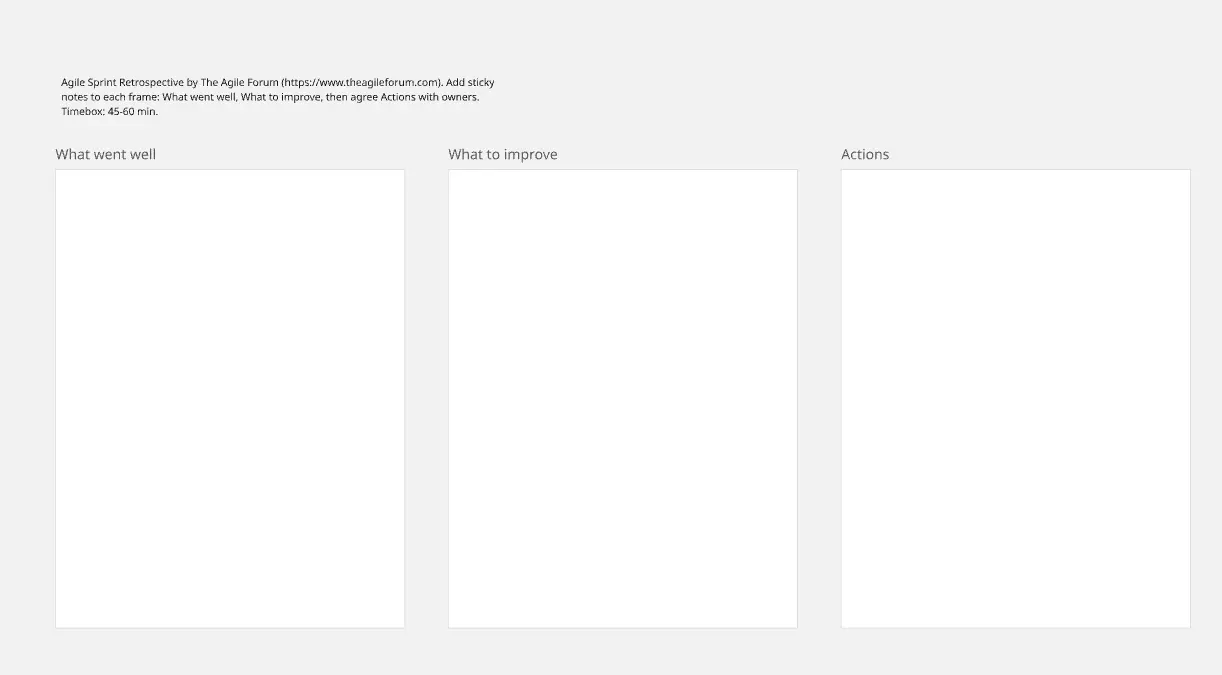
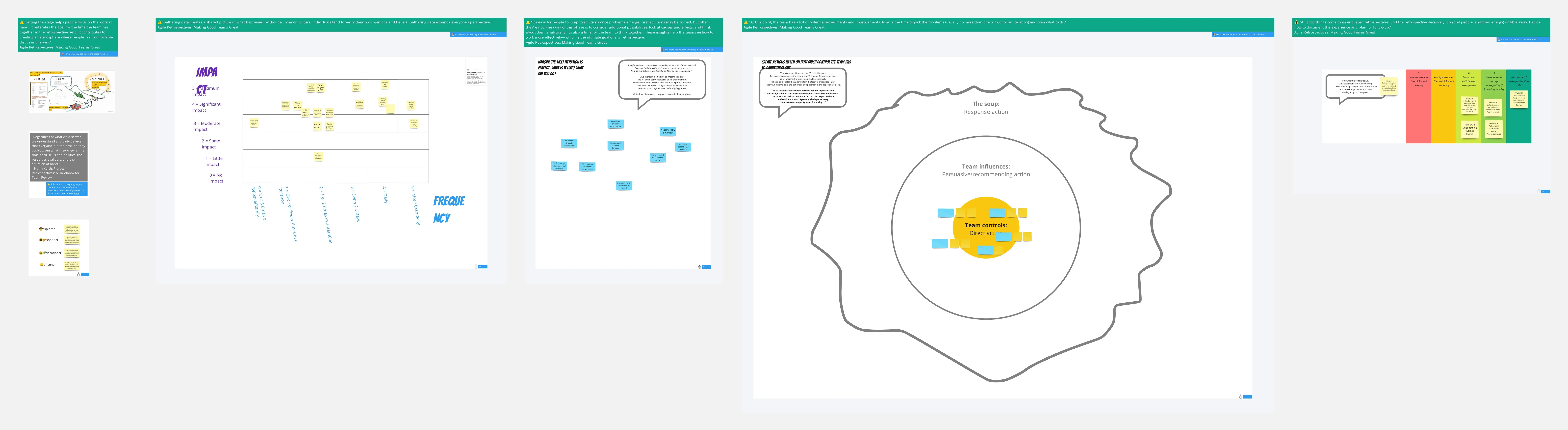
An agile retrospective template gives scrum masters, agile coaches, product managers and engineering managers a shared space to run sprint retrospectives, surface blockers and agree on action items. Use it to collect what went well, what didn't and what to change next sprint, then turn the discussion into owned next steps.
What is an agile retrospective template for scrum teams?
It is a ready-made board for the end-of-sprint retrospective meeting. Columns, prompts and sticky notes are already in place, so the team spends its time on reflection instead of setup.
What problem does an agile retrospective solve for agile coaches and engineering managers?
Vague feedback that never becomes action
Quiet voices crowded out by the loudest ones
Retro themes forgotten by the next sprint
No record of what the team already tried
How to use the agile retrospective template
Set the sprint scope and invite the team.
Give everyone five minutes of silent sticky-note writing.
Cluster related notes into themes.
Dot-vote on the themes worth discussing.
Write action items with one owner and a due date.
Review last sprint's actions before you close.
Agile retrospective formats to try
Start, Stop, Continue; Mad, Sad, Glad; 4Ls; and sailboat retrospectives all fit the same board.
Agile retrospective FAQs
How long should an agile retrospective take?
Plan 60 minutes for a two-week sprint, 30 for a one-week sprint.
Who facilitates the agile retrospective?
Usually the scrum master or agile coach. Rotating the facilitator keeps the format fresh.
How do you run a remote agile retrospective?
Use timed silent writing, anonymous notes and dot voting so distributed teams contribute evenly.