Table of contents
Table of contents
Iron Triangle in project management: A quick guide
Summary
In this guide, you will learn:
- The Iron Triangle: interdependent constraints of scope, time, and cost, balanced for project success.
- Adjusting one element requires recalibrating others to maintain project balance.
- The triangle helps set realistic expectations, manage risks, and make informed decisions.
- Each corner is defined: Scope (work), Time (schedule), Cost (budget).
- Quality depends on managing these constraints effectively; trade-offs are often necessary.
- The Iron Triangle is foundational in both traditional and agile project management.
Collaborative AI Workflows
Join thousands of teams using Miro to build the right thing, faster.
Ever felt like you're juggling too many balls in the air while managing a project? The Iron Triangle in project management might just be the framework you need to keep everything in balance.
What is the Iron Triangle in project management
The Iron Triangle, also known as the Triple Constraint, is a fundamental concept in project management. It helps project managers understand the trade-offs between three critical components: Scope, Time, and Cost. But what is an Iron Triangle exactly? Let’s break it down.
The three core components: scope, time, and cost
The Iron Triangle consists of three sides, each representing a crucial aspect of project management. These sides are interdependent, meaning a change in one will inevitably affect the others.
Scope
Scope defines the boundaries of your project. It includes all the tasks, deliverables, and goals that need to be achieved. Think of it as the blueprint of your project. A well-defined scope ensures everyone knows what needs to be done and helps prevent scope creep, which can derail your project.
Time
Time is all about deadlines and scheduling. It’s the timeline within which the project needs to be completed. Effective time management involves setting realistic deadlines, creating detailed schedules, and ensuring that tasks are completed on time. Missed deadlines can lead to increased costs and compromised scope.
Cost
Cost refers to the financial resources required to complete the project. This includes everything from labor and materials to overhead expenses. Budgeting accurately is crucial because overspending can lead to project failure. Keeping costs in check ensures that the project remains financially viable.
How does the Iron Triangle work
The Iron Triangle works by illustrating the interdependence of scope, time, and cost. If you change one component, the other two will be affected. For example, if you decide to expand the scope of your project, you’ll likely need more time and money to complete it. Conversely, if you need to cut costs, you might have to reduce the scope or extend the timeline.
Balancing the Iron Triangle
Maintaining equilibrium among scope, time, and cost is a delicate act. Here are some strategies to help you balance the Iron Triangle:
- Prioritize: Determine which component is most critical for your project and make decisions accordingly.
- Communicate: Keep all stakeholders informed about changes and their impacts.
- Be flexible: Be prepared to adjust your plans as needed to maintain balance.
Real-world examples
Let’s look at a couple of real-world examples to see the Iron Triangle in action:
- Software Development: A company wants to launch a new app. Initially, the scope includes several advanced features. However, as the deadline approaches, they realize they need more time. To meet the launch date, they decide to reduce the scope by cutting some features, thus balancing the time and cost.
- Construction Project: A construction firm is building a new office complex. Midway through the project, they face unexpected cost increases due to material shortages. To stay within budget, they extend the timeline and adjust the scope by using alternative materials.
Challenges and limitations
Managing the Iron Triangle isn’t without its challenges. Common issues include:
- Scope creep: Uncontrolled changes or continuous growth in a project’s scope.
- Unrealistic deadlines: Setting deadlines that are too tight can lead to rushed work and mistakes.
- Budget overruns: Underestimating costs can result in financial strain and project delays.
Use one of the 50+ prioritization templates from our library to start managing your priorities together with your team.
Modern adaptations
Contemporary project management methodologies have evolved to address the limitations of the Iron Triangle. Agile, for example, focuses on flexibility and iterative progress, allowing for adjustments in scope, time, and cost throughout the project lifecycle. Miro's Agile tools, with its AI-powered visual canvas, support real-time and asynchronous collaboration, making it easier to manage these constraints effectively.
You can use for example the Project Scope template to better plan visually your next big thing.
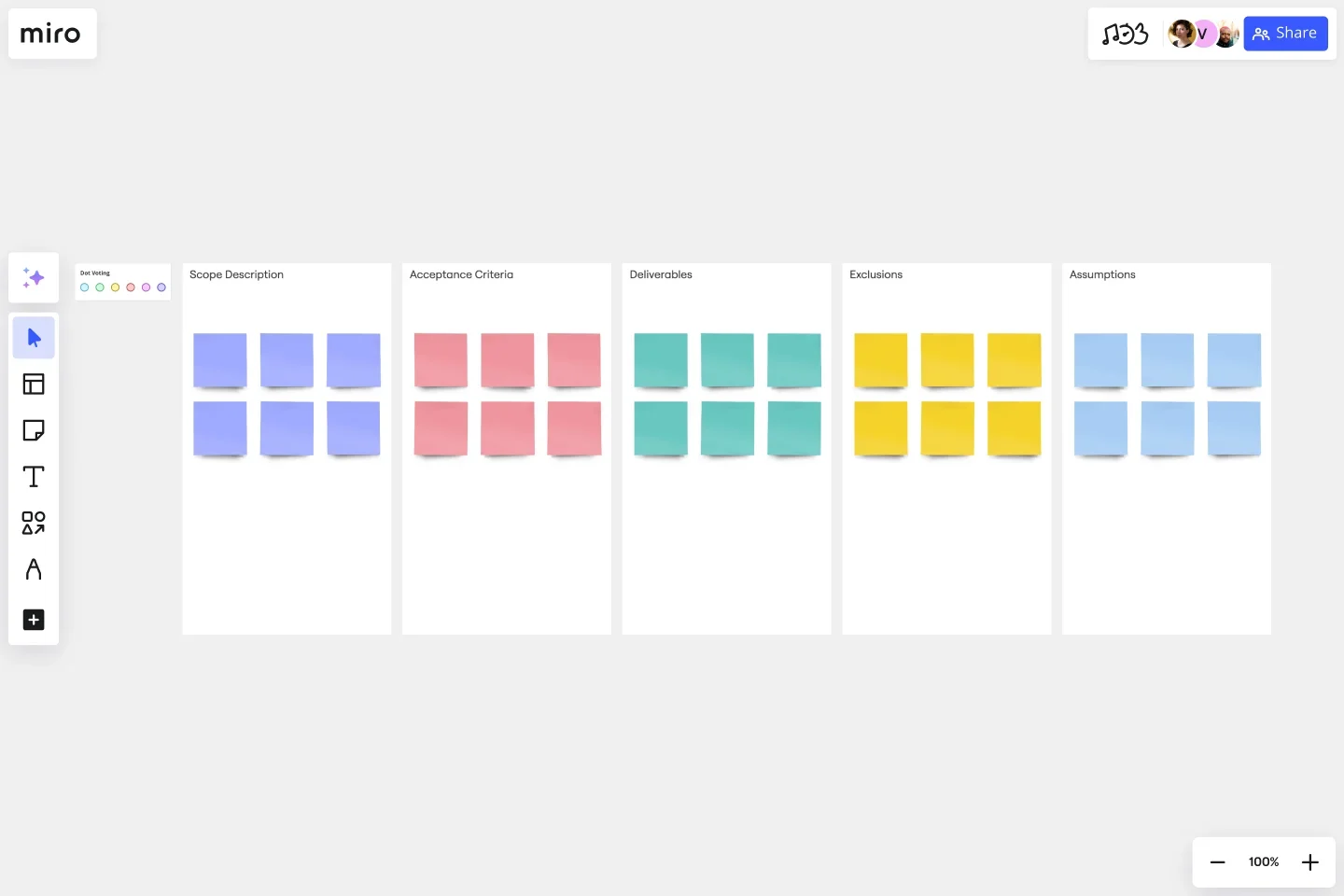
Ready to master the Iron Triangle in project management? Try Miro today and see how our innovation workspace can help you balance scope, time, and cost seamlessly.
Author: Miro Team
Last update: October 16, 2025
Read more
Join our 100M+ users today


