About the competitive analysis templates collection
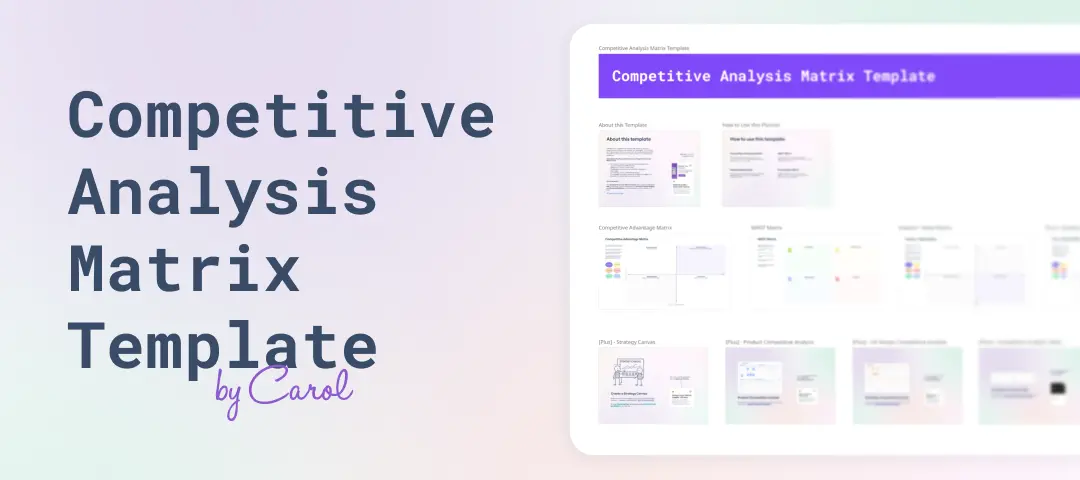
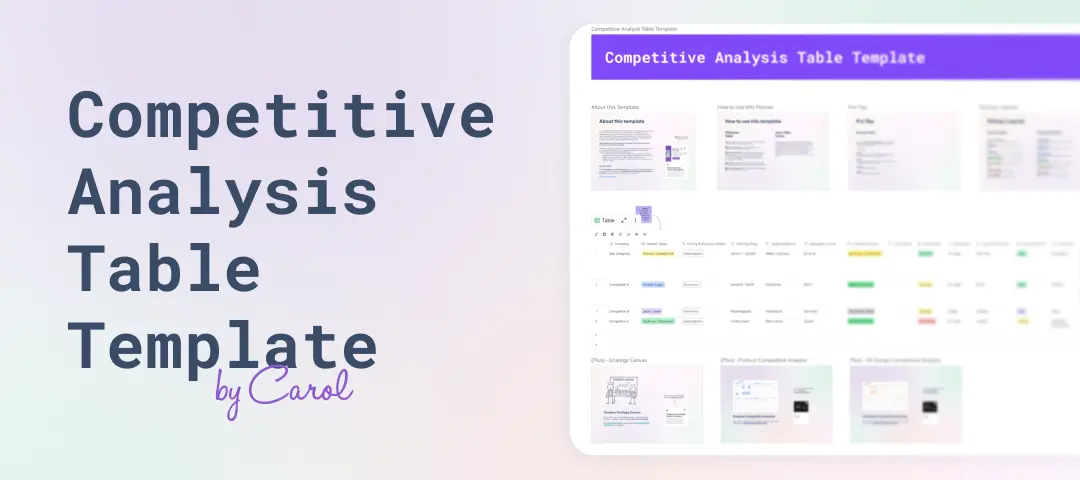
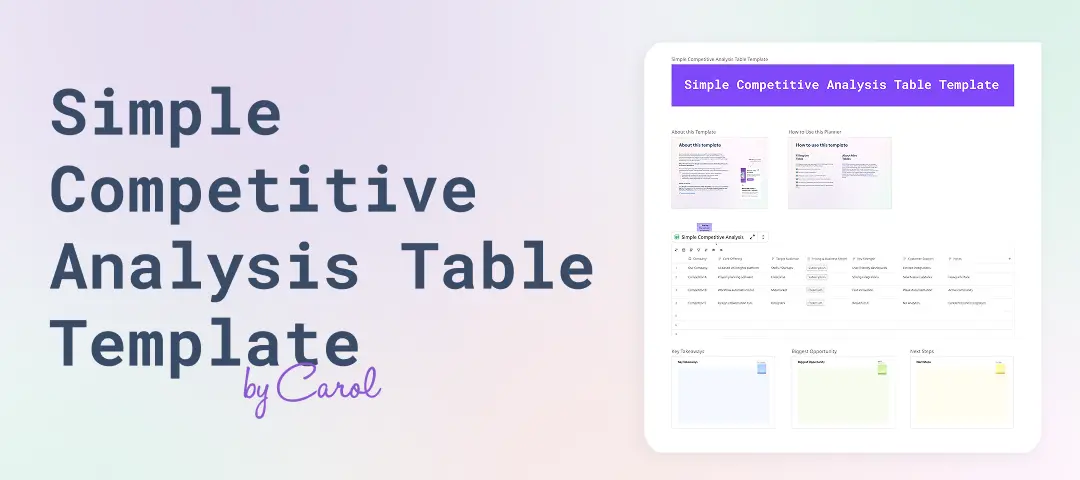
A competitive analysis template is a strategic research framework designed to identify your competitors' strengths, weaknesses, and market positioning. Rather than just listing who your rivals are, these templates provide a visual logic for decoding their business models, product offerings, and customer perceptions. It transforms raw data into "Competitive Intelligence," helping you find the "White Space" where your brand can win without a price war.
Key Components of a Competitive Analysis Template
A professional competitive analysis template acts as your "Market Radar." Every high-performance Miro board should include these five core elements:
Competitor Tiers: Grouping rivals into "Direct" (same product), "Indirect" (same problem, different product), and "Replacement" (different problem, same budget).
The Value Proposition Statement: A summary of how each competitor talks about themselves—and the reality of how customers perceive them.
Pricing & Business Model: A breakdown of how they make money (Subscription, Freemium, Enterprise), which reveals their "Low-Price" or "Premium" limitations.
Customer Friction Points: Using reviews or social listening to identify where their users are frustrated. Their pain is your opportunity.
The "Win/Loss" Ratio: If available, a section tracking why you beat them in sales cycles—or why they beat you.
Competitive Pro Tips: The "Hidden" Edge
Most templates focus on what competitors have. To build a truly advanced strategy, you must focus on what they cannot do.
1. The "Structural Rigidity" Audit (The Best Kept Secret)
Pro Tip: Look for "Organizational Debt" or "Legacy Constraints." The most powerful competitive insight isn't a feature; it's a competitor's inability to change. If a rival is a massive, publicly-traded incumbent, they cannot pivot to a low-margin, high-innovation model without tanking their stock. Map these Inertia Points on your Miro board. Your strategy shouldn't just be "better"—it should be something that, even if they wanted to copy you, their internal structure wouldn't allow it.
2. Map the "Non-Consumer" (The Blue Ocean Shift)
Pro Tip: Stop looking at who your competitors serve and look at who they ignore. Advanced analysis identifies the "Non-Consumer"—the person who finds the current category too expensive, too complex, or too boring. Use a Strategic Canvas to plot where every competitor is over-investing (e.g., "Feature Bloat") and where you can reduce costs to reach a massive, untapped audience.
3. Track "Ad Spend Sentiment" (Digital Intelligence)
Pro Tip: Don't just look at their ads; look at their Customer Acquisition Cost (CAC) Stress. Use your template to track which keywords your competitors are abandoning. If a rival stops bidding on a core category term, it’s a signal of a failing unit economic model or a shift in focus. This "Digital Footprint" analysis gives you a 3-month head start on their next strategic move.
Which Competitive Template Do You Need?
Choose the Miro template that matches your specific market "battlefield":
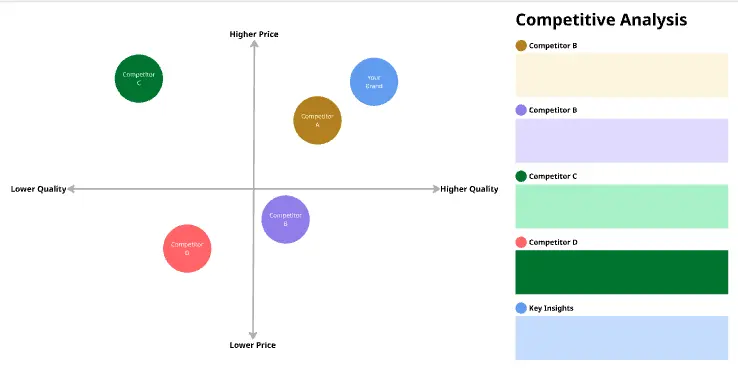
The Perceptual Map (Positioning-First):
Best For: Marketing and Brand Managers.
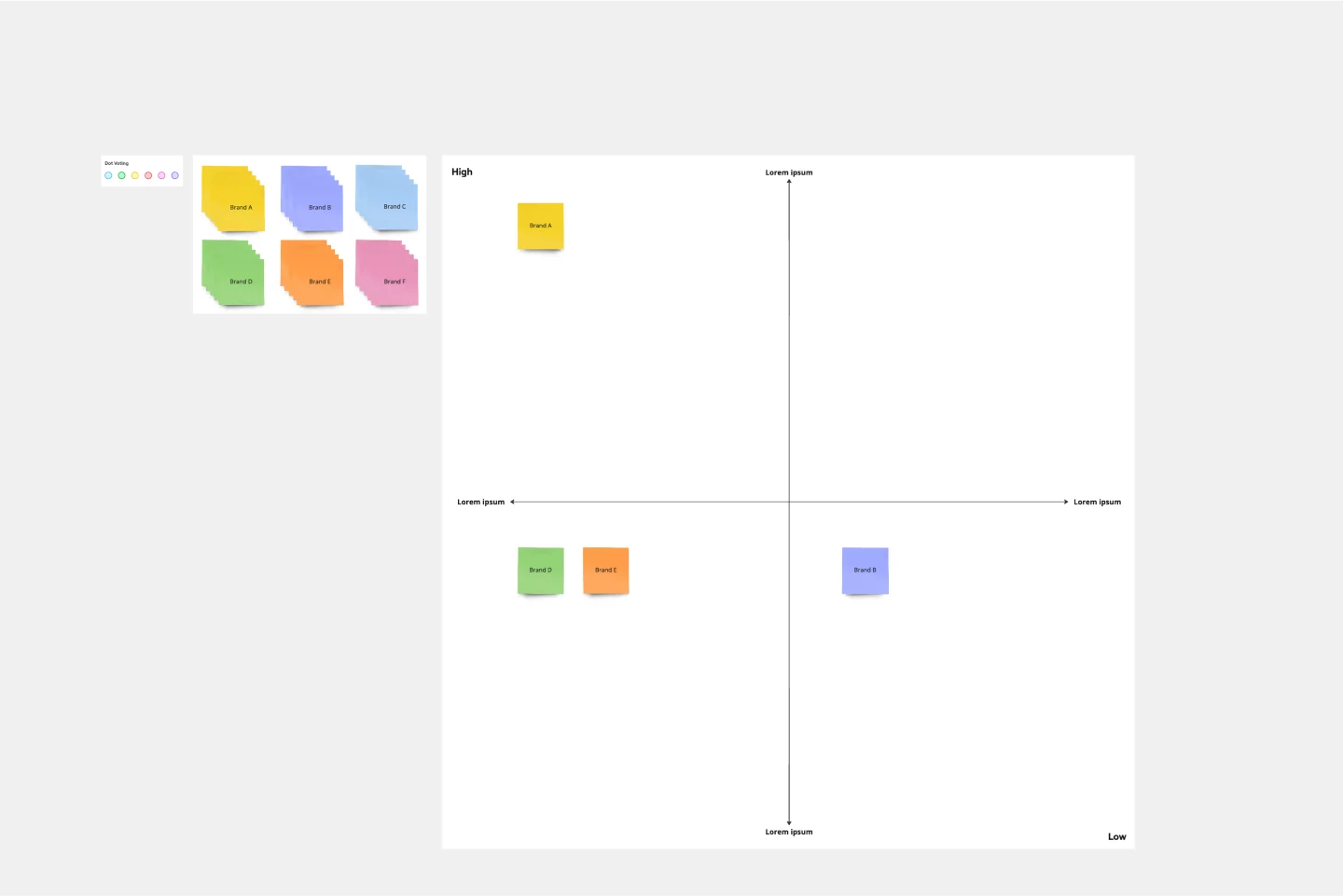
The Goal: To plot competitors on a 2x2 grid (e.g., Price vs. Quality or Innovation vs. Reliability) to find an empty quadrant you can own.
The SWOT/TOWS Matrix (Action-First):
Best For: Executive planning.
The Goal: To turn a standard SWOT into a TOWS Matrix, which forces you to ask: "How can we use our Strengths to exploit their Weaknesses?"
The Feature Comparison Matrix (Product-First):
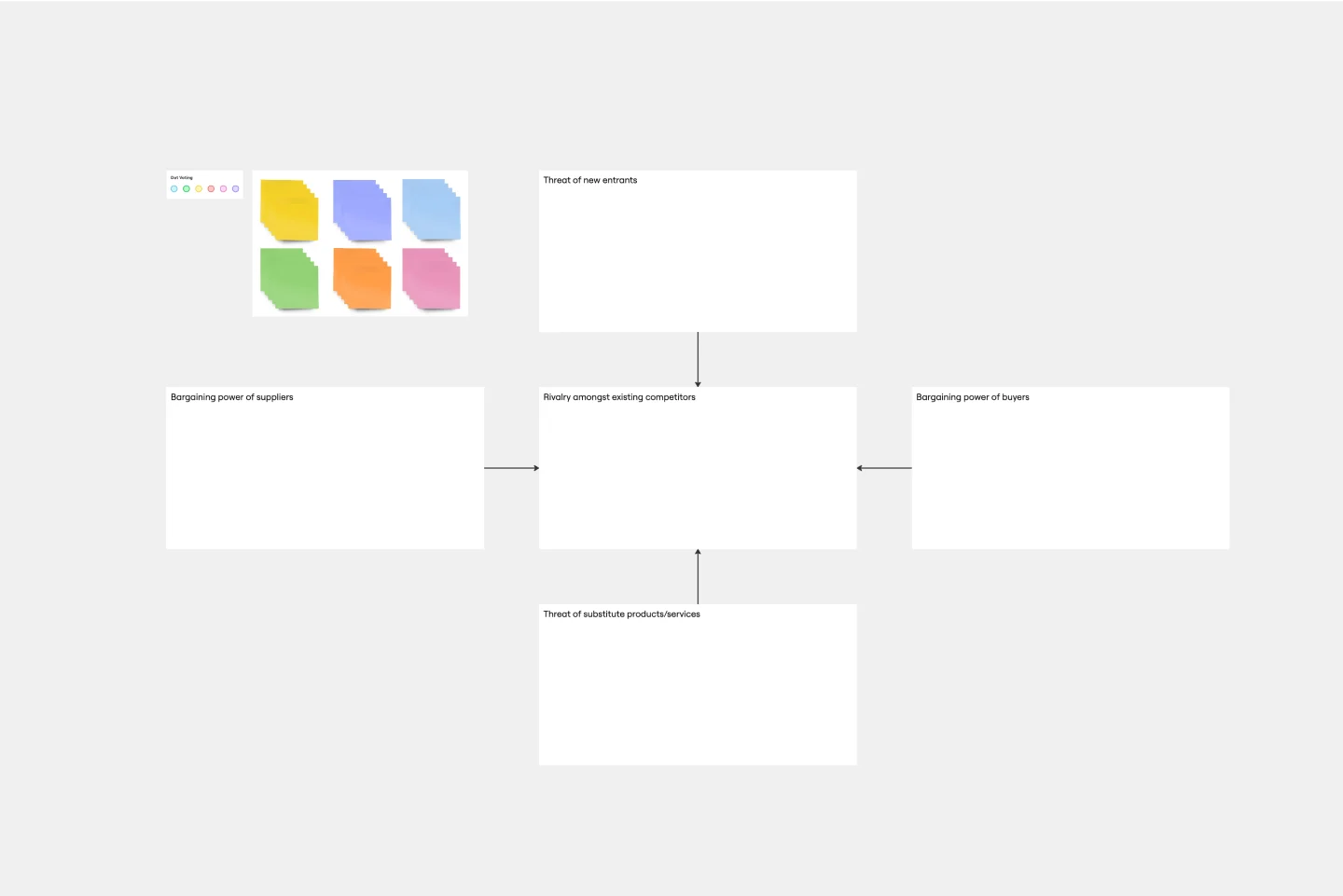
The Porter’s Five Forces (Industry-First):
Best For: Long-term business strategy.
The Goal: To analyze the structural attractiveness of the industry, including the threat of new entrants and the bargaining power of buyers.
How to use the competitive analysis templates in Miro
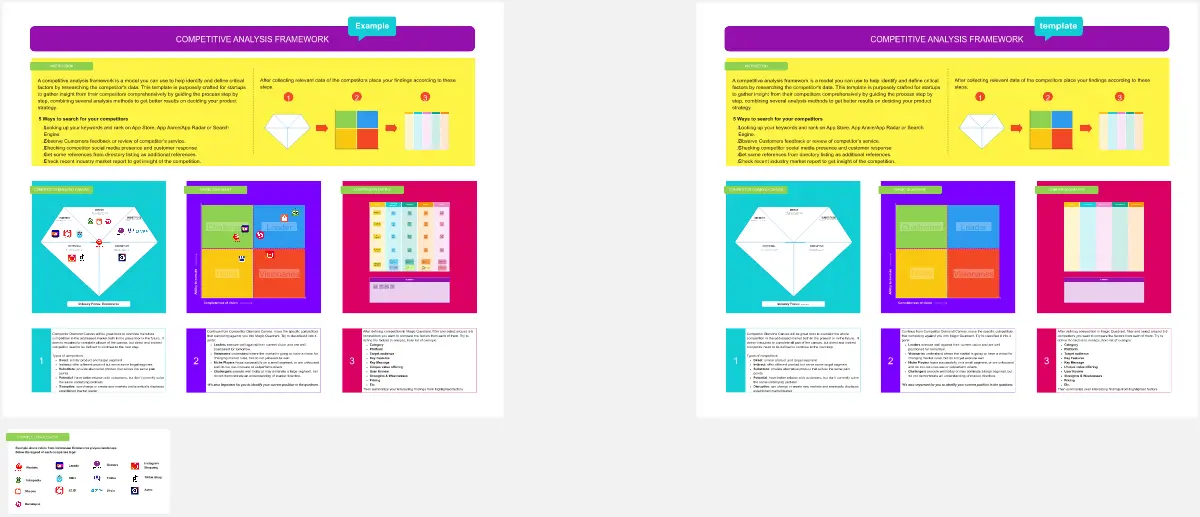
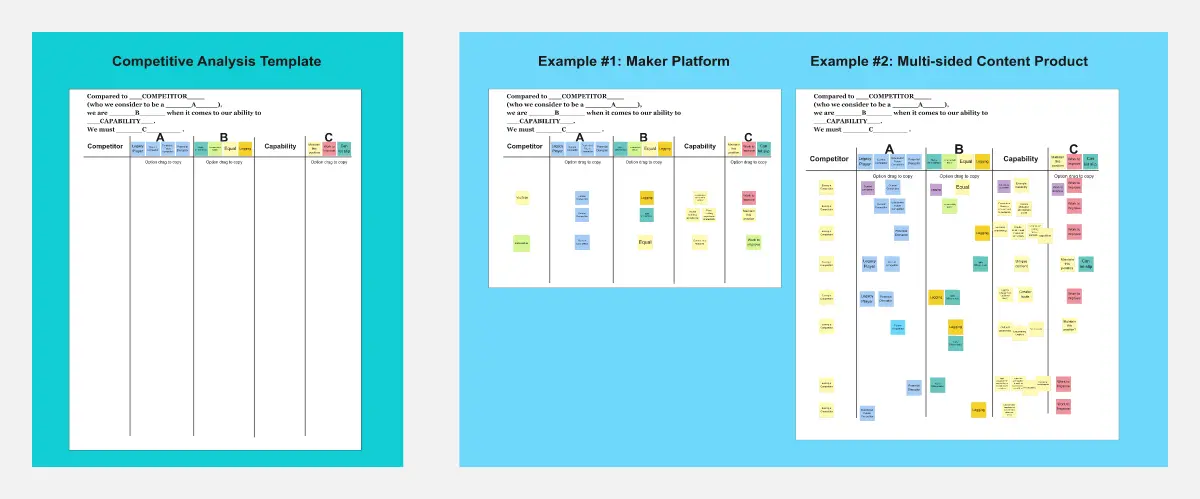
Select a template: Start by choosing a free competitive analysis template from Miro's extensive library. Each template is designed to be easily editable to fit your specific needs.
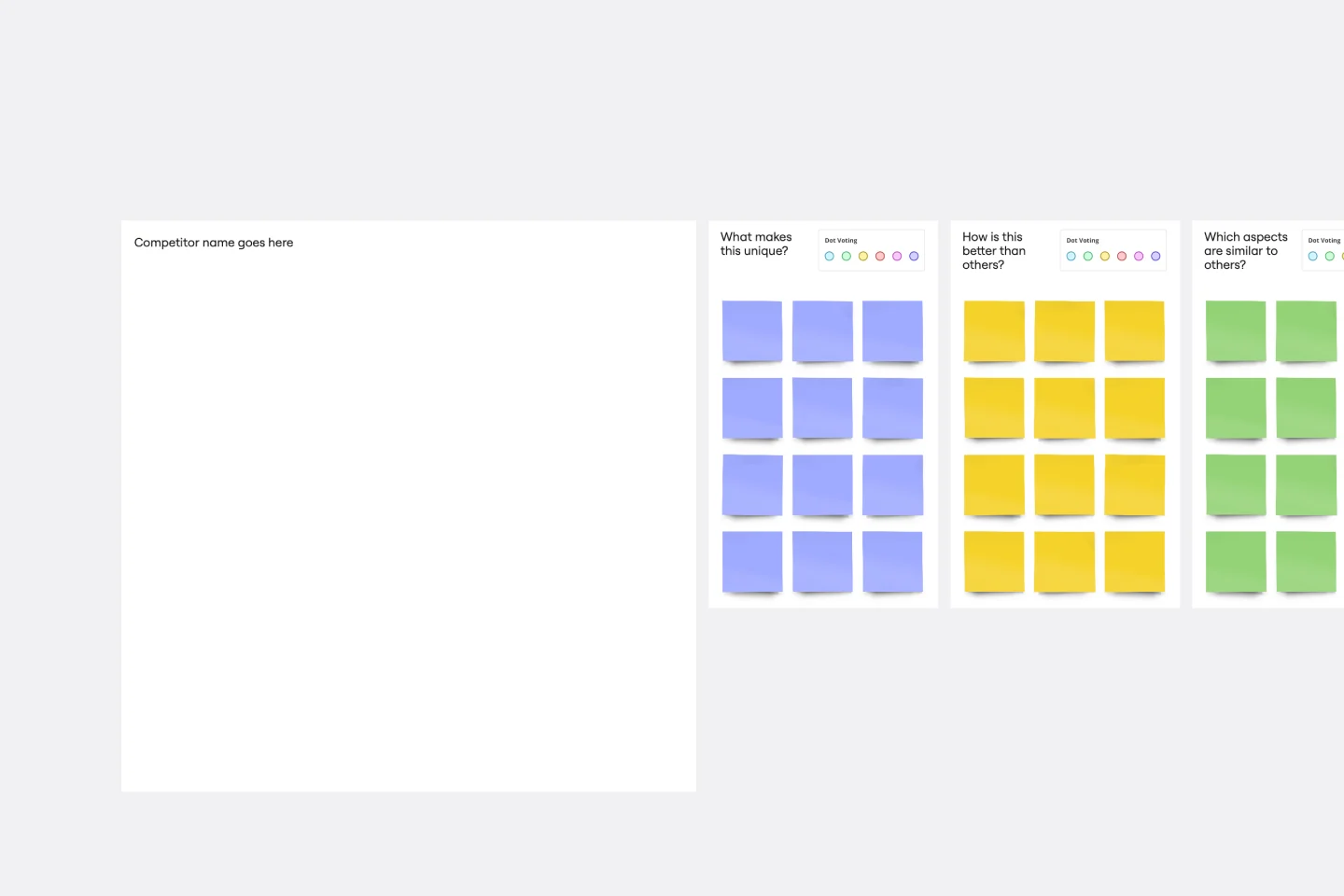
Identify competitors: List your main competitors. This could include direct competitors offering similar products or services, as well as indirect competitors that fulfill the same customer needs.
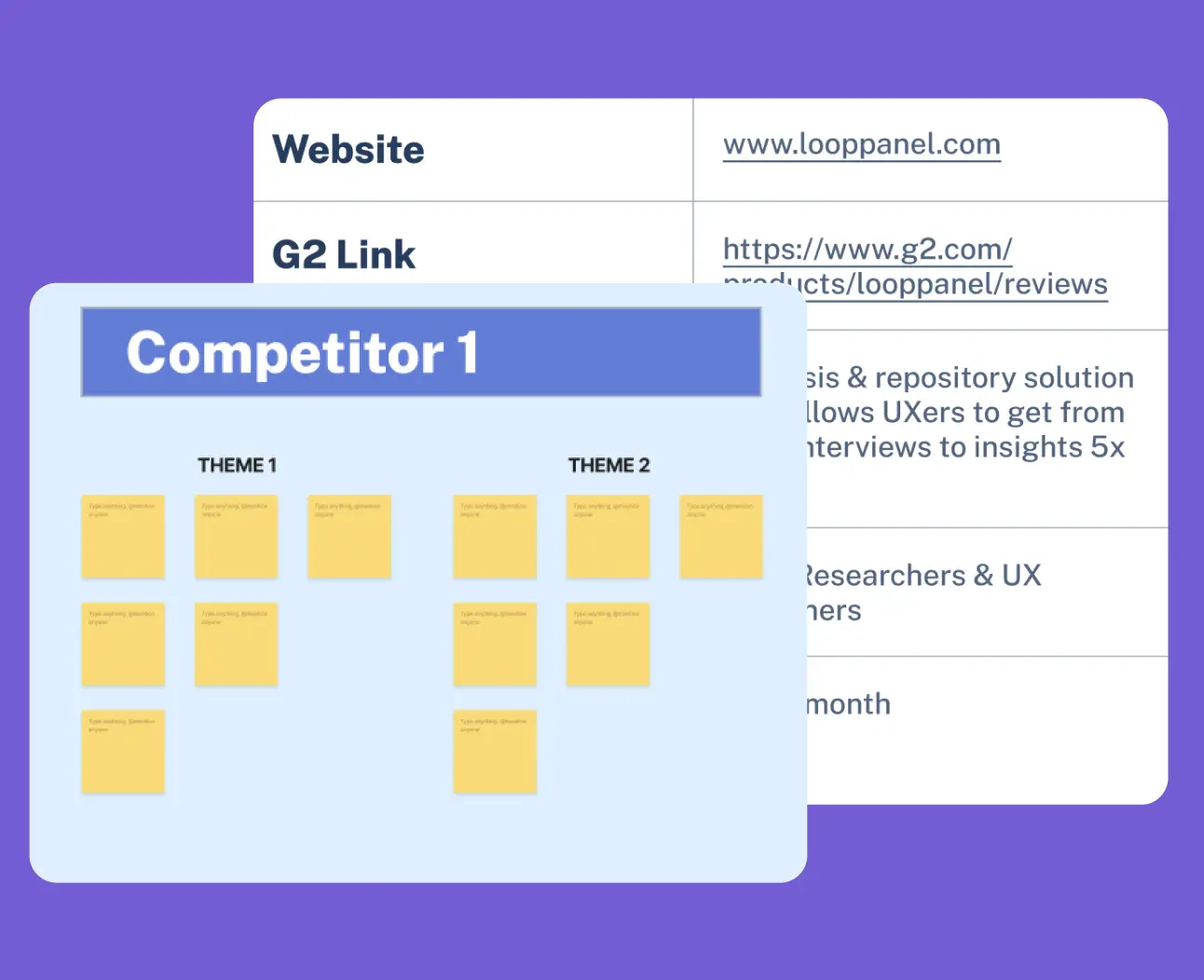
Gather data: Collect information on each competitor. This can include their market position, product features, pricing, marketing strategies, strengths, and weaknesses.
Analyze and compare: Use the template to organize and compare the data. Look for patterns and insights that can inform your strategy.
Visualize findings: Miro's templates allow you to create visual representations of your analysis, making it easier to communicate findings to your team.
Collaborate and iterate: Share the template with your team and collaborate in real time. Use feedback to refine your analysis and update the template as needed.


![Competitive Advantage [MOATs]](https://template-metadata-service-static.miro.com/images/templates/7yZFDlXAVHr9jCo02qr3Sm/preview-1722066429151.webp)