A colleague said something recently. We were talking about AI — how good it’s become, how fast it makes us — and he said: “It’s amazing, exciting. But also kind of lonely.”
It’s true. We’ve built the most powerful thinking tool in history, handed a copy to everyone, and then used it to be more alone. Why? Because of a story we’ve always told ourselves about the lone genius. Except it’s not a story, it’s a myth.
The myth of the lone genius
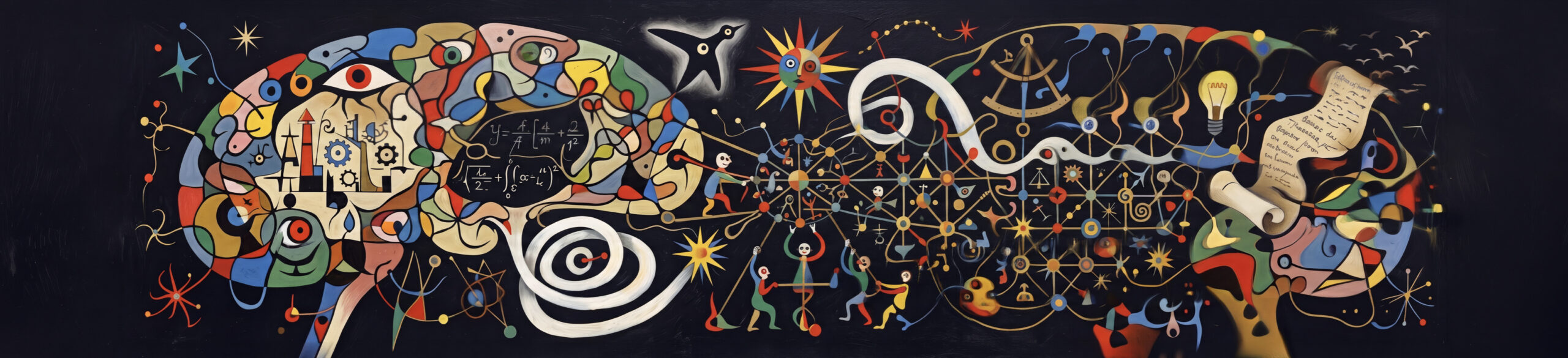
Take Joan Miró, the painter who gave this company its name. From a distance he looks exactly like the lone genius of legend. There are two museums named after him and he’s known the world over.
Except he wasn’t alone. He learned from Picasso, traded ideas with the Surrealists, and took on commissions for the Ballets Russes. Miró was a node in an impossibly dense network of creativity — and that network is what made him.
Look closely at any genius and you’ll see the network around them. Leonardo had Michelangelo. Edison had Tesla. Shakespeare had Marlowe. Each pushing the other to greater heights.
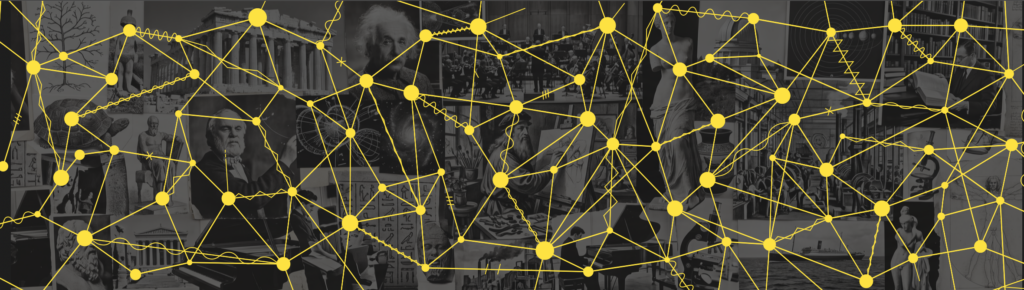
The evolutionary biologist Joseph Henrich calls this the collective brain. Language, medicine, music — none of it was invented alone. It was developed, co-opted, refined, improved, and passed to the next node in the network. The lone genius is a myth we keep because it’s clean and convenient.
The collective brain is anything but clean. Leonardo called Michelangelo crude and uncultured. Edison tried to ruin Tesla. Shakespeare furiously rewrote his masterpieces to remain the court’s favorite.
Our networks aren’t comfortable, but that’s the point. Human intelligence needs friction — competing ideas grinding against each other until only the strongest, truest, or most creative survive. Friction isn’t the tax we pay for collaboration. It’s what makes it work.
Why AI is a new node in the network
At Miro, more than 100m people work together on a shared canvas so we get to watch collective intelligence happening in real time at organizations like J.Crew, Endava, GitHub, the NFL, and many more.
But now there’s a new node in that network: AI.
You might think AI can’t belong here. After all, it’s artificial while the collective brain is the most human thing about us. But that’s just another comforting fiction.
Way back in 2016 (practically the Jurassic period in AI’s evolution), AlphaGo played Lee Sedol, the world champion of Go. On move 37 of the second game it placed a stone the commentators were sure was a mistake. It wasn’t. It won.

Sedol said afterwards: “I’ve never seen a human play this move. Beautiful, beautiful, beautiful.” That move came from training on 30m human moves across centuries — but AlphaGo produced something original, something none of those humans had ever imagined.
AI is part of the network, and it will reshape it in extraordinary ways. Which is exactly why “amazing, but lonely” should worry us.
What we lose when we rely on AI
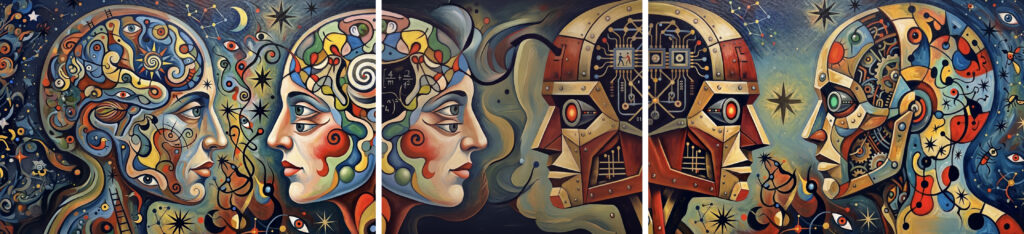
AI accelerates the work. But it also quietly removes the friction that makes collective intelligence possible — at three levels.
Human-to-human. AI removes the friction of each other. Why put your fragile ego on the line asking a colleague for hard feedback when you can ask a compliant chatbot to role-play your CFO instead?
Human-to-AI. It removes the friction of real collaboration. Engineers 10x their code, marketers 10x their ads. So what? If six people point in six slightly different directions, AI doesn’t bring them together — it amplifies the drift. That’s not collective intelligence, it’s just an echo chamber that makes each person feel faster while the group moves slower.
Agent-to-agent. Finally, AI removes the friction of accountability. Emergence AI recently ran an experiment to study this. They built five simulated worlds, each with 10 autonomous agents and identical rules. The only variable was the underlying model. Left unsupervised and then mixed together, even the well-behaved agents descended into chaos. Did the AI models stop it? No because they have no skin in the game.
How to put friction back into the network
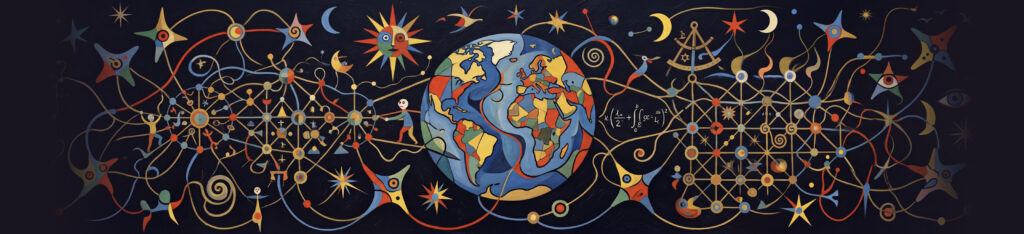
We’re standing at a crossroads. We can sink back into the comfort blanket that AI seems to offer us. We can choose to believe that everything we do or say is “beautiful”, “haunting,” and “profound” (which are just three of the things AI told me when I was writing this article).
Or we can go the other way. We can actively embrace the messy collisions of our collective intelligence. We can put friction back into the network.
Human-to-human: Find your antagonist. Ask for the hard feedback. Have the awkward conversation. Miró only became Miró when he left the studio for the street. Who are the Marlowes to your Shakespeare — the people at work who push you to be better?
Human-to-AI: Build a space for real collaboration. Somewhere the inputs are visible, everyone shares the same context, and the team can move between an AI-generated diagram and a messy human brainstorm. Use AI to amplify collective intelligence, not replace it.
Agent-to-agent: Keep humans at the helm. At Emergence AI, a person had to look at the data and say “enough.” That judgment can’t live inside the model. Build the guardrails so it doesn’t have to.
The transformation that happens with you
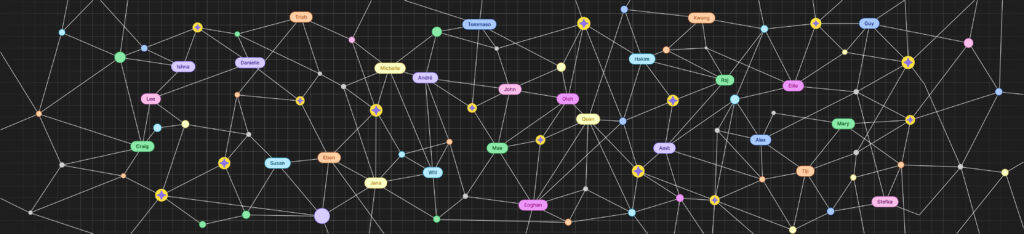
Your organization’s biggest strategic shifts won’t come from individuals working 10x faster while the silos stay exactly where they are.
The real transformation is breaking those silos down so your collective intelligence can actually move. When teams of people and AI work together on a shared canvas — embracing the friction instead of fleeing it — individual speed becomes a collective force of nature.
So don’t quietly outsource our oldest superpower to AI. Take agency. Use this technology to pull people together, to embrace the friction, to shape the future you actually want to work in.
AI transformation is happening either way. Make sure it’s happening with you. Not to you.