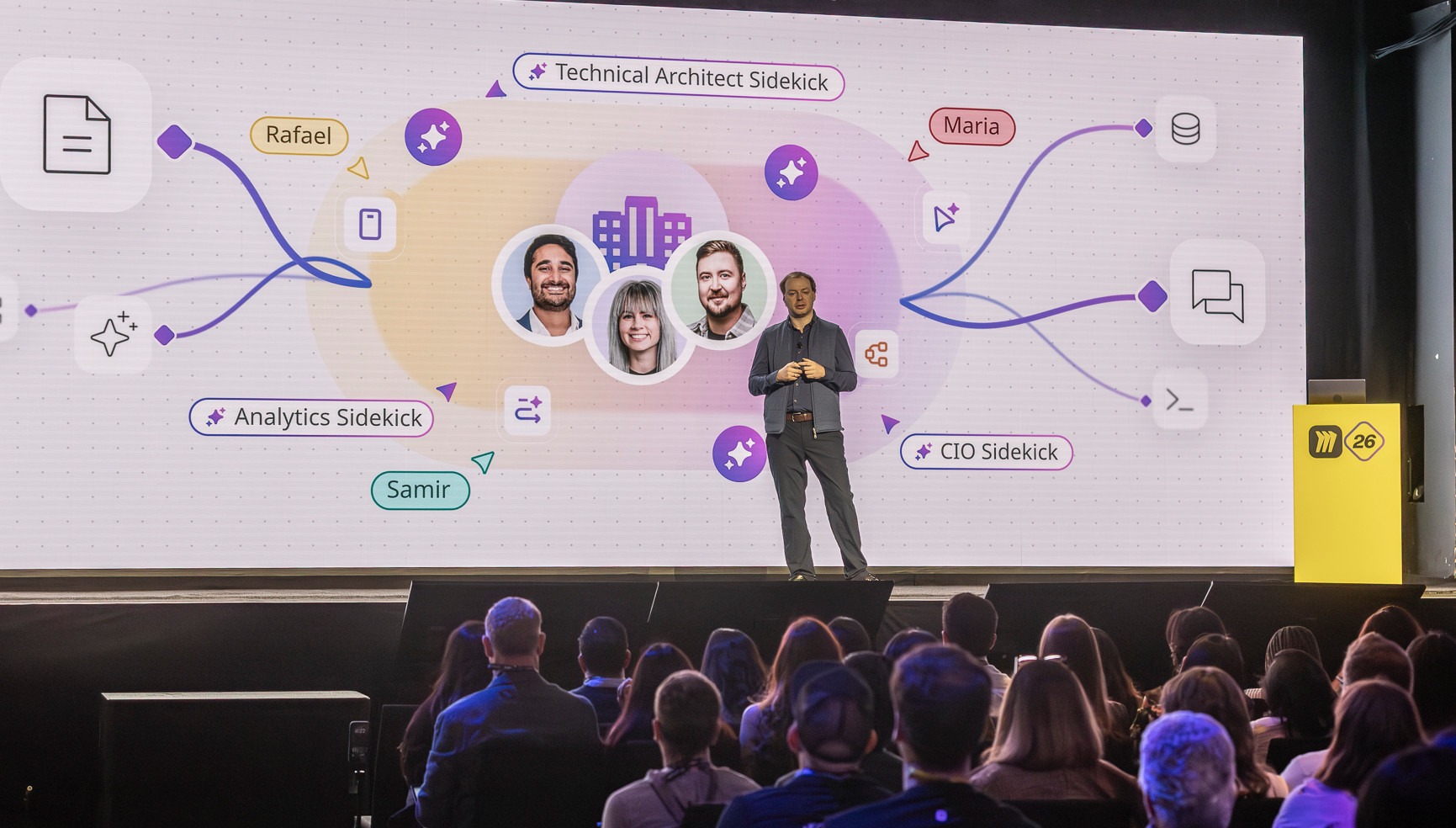
That’s a wrap on Canvas 26! Thousands of leaders, builders, and makers joined us in San Francisco and online to see what Miro’s shipping next.
Building on last year’s launch of our AI platform, our Canvas 26 announcements address a problem most organizations are actively working through: AI is making people dramatically faster, but that speed isn’t compounding into impact at scale. Why? The AI tools driving acceleration aren’t connected to where teams work, so individual wins don’t turn into organizational gains.
Seven in 10 leaders say switching between core work tools and AI tools causes friction and interrupts workflows.
The fix is a collaborative layer that most AI stacks are missing. The Miro canvas is now AI-readable and writeable by third-party agents, with expanded MCP support and new agent-friendly formats — making it the shared surface where AI output and team judgment meet. Let’s take a closer look at how our six biggest updates help teams solve hard problems, build the right thing, and move as one to get from 10x individuals to 10x organizations.
Solve problems together with Sidekicks and Connectors
Working through the multifaceted challenges that teams face every day requires a lot of back-and-forth before the real work even starts: getting information out of people’s heads, rebuilding resources that already exist, tracking down a decision that was discussed but never documented. Three of the updates we announced at Canvas 26 are designed to flip that ratio.
Miro Sidekicks are making the leap from assistant to agent. Sidekicks can now handle complex, open-ended work — understanding intent, pulling in context from third party tools, breaking problems into steps, asking clarifying questions, and generating full board content from a single prompt. And now, not only can you write to Sidekicks in your own words, you can talk to it about your goals and problems with Voice.
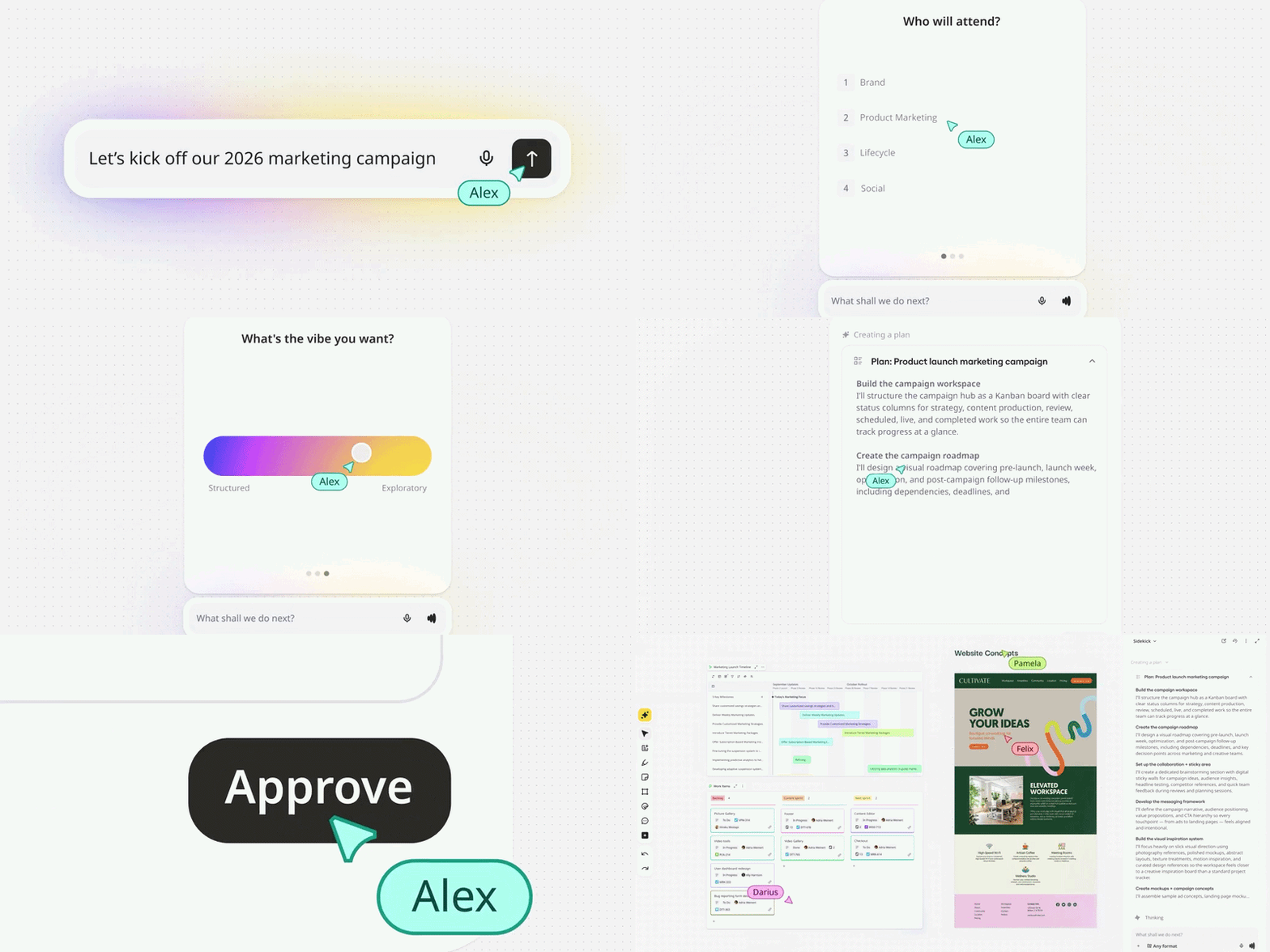
Connectors bring context from across your stack to the Miro canvas. Native connectors for tools like Slack, Atlassian, Granola, Notion, and GitHub, allow Miro AI to read and write across your stack, so that context isn’t trapped in tools only certain people or teams can see. The constraint buried in a Slack thread, the tradeoff captured in Jira, the HTML prototype built in a coding agent — it all lands on the canvas where the whole team can access it, weigh in, and act on it together. And it goes both ways: decisions you make in Miro flow right back into those tools; no copy-pasting, no one’s left out of the loop.
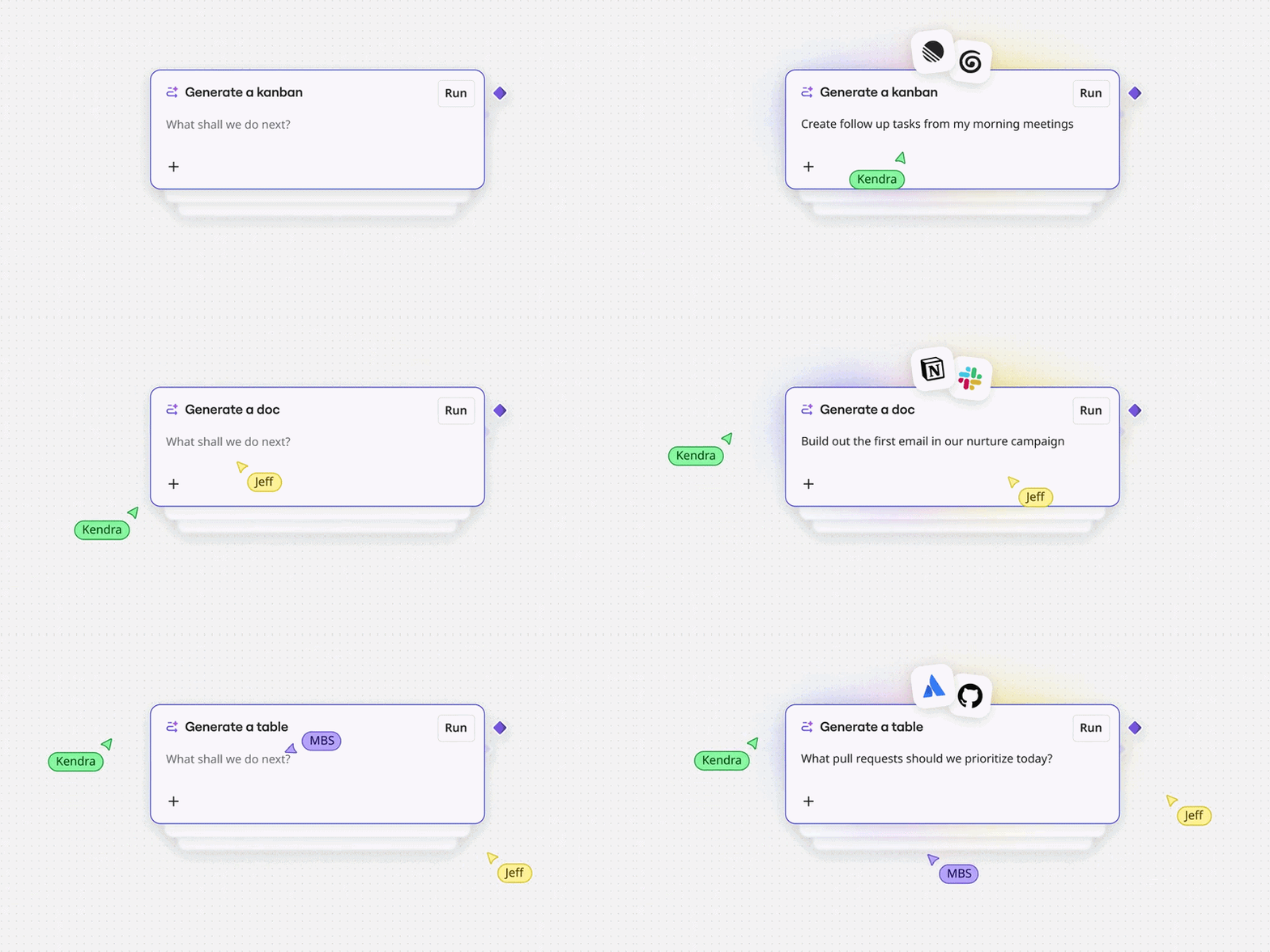
So much of the work teams do isn’t ad hoc, it’s repeatable. Miro Flows automates those everyday workflows on the canvas — and now extends beyond it, calling tools through your Connectors to read and write across your stack. For example, a Flow can automatically synthesize updates from Slack, pull the latest ticket status from Atlassian, update the team’s standup board, and post a recap back to Slack when the weekly meeting’s done. And because every Flow is visible and multiplayer, the whole team can collaborate on the workflow with full context.
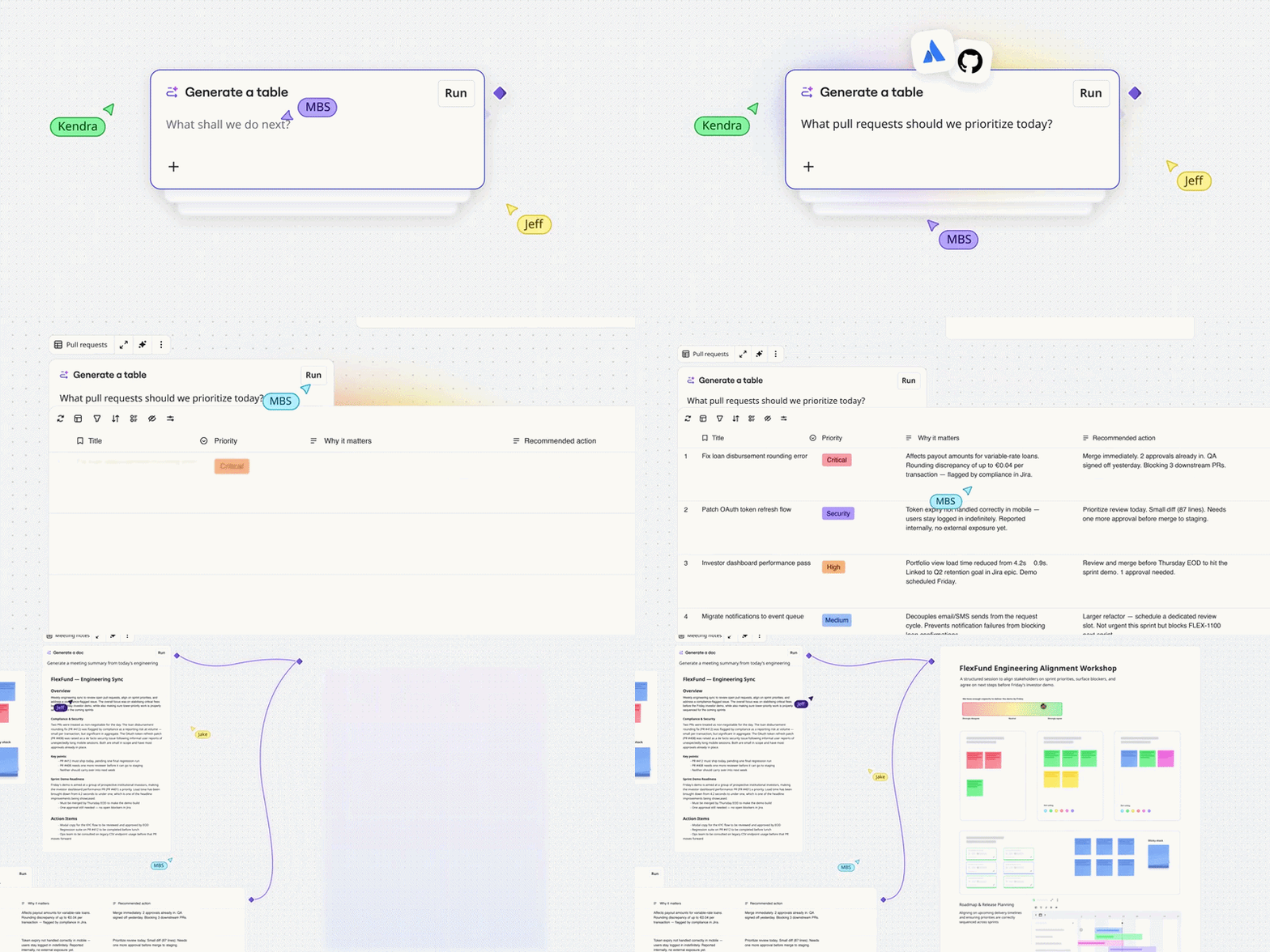
With Sidekicks, Flows, and Connectors working together, AI stops being an individual accelerator and starts being a shared, context-aware capability — one that helps teams not only surface answers but work through the problems that actually slow them down.
Build the right thing with Miro Prototypes
Solving harder problems faster only matters if you’re solving the right ones — something product, design, and engineering teams are particularly familiar with. For them, the bottleneck has shifted from “can we build it?” to “are we building the right thing, right now?”
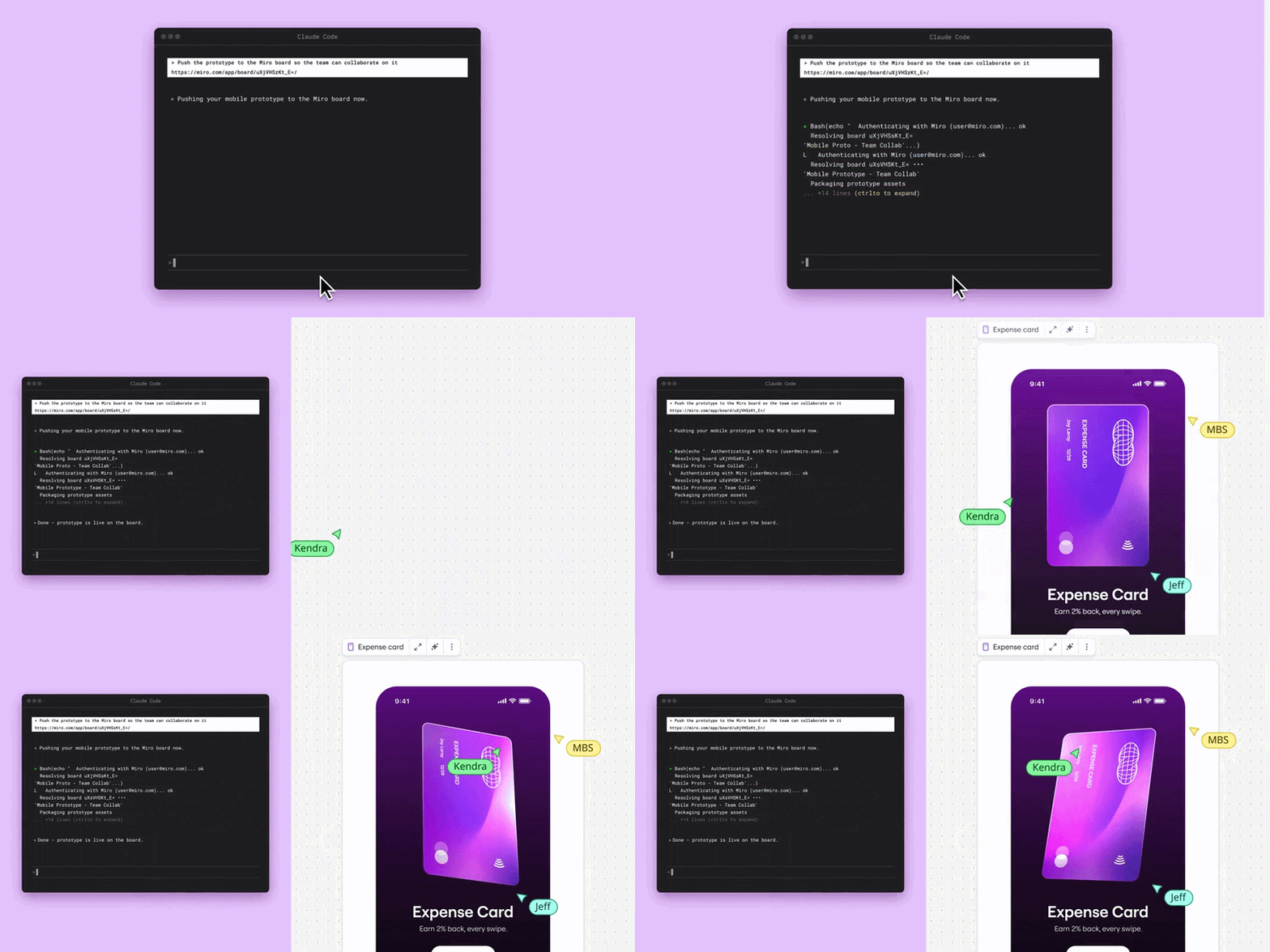
Teams need a shared space to compare, react to, and validate the ideas that are now coming from every corner of the org before deciding on the right way forward. Enter Miro Prototypes to close the loop from idea to build. Pull context from Claude Code, Copilot, Cursor, Replit, and other tools directly onto the canvas, generate variants, apply brand styling, and hand off to a coding agent in one flow.
Code to prototype means fewer review cycles, less rework, and a first pull request that’s a lot closer to the right answer, so that your team ships fewer surprises.
Move as one with Talktrack and Miro Engage
Solving hard problems and building the right thing both depend on the same foundation: staying connected from the first workshop to the moment you get the product into customers’ hands. Miro is doubling down on two capabilities that keep teams connected throughout that journey.
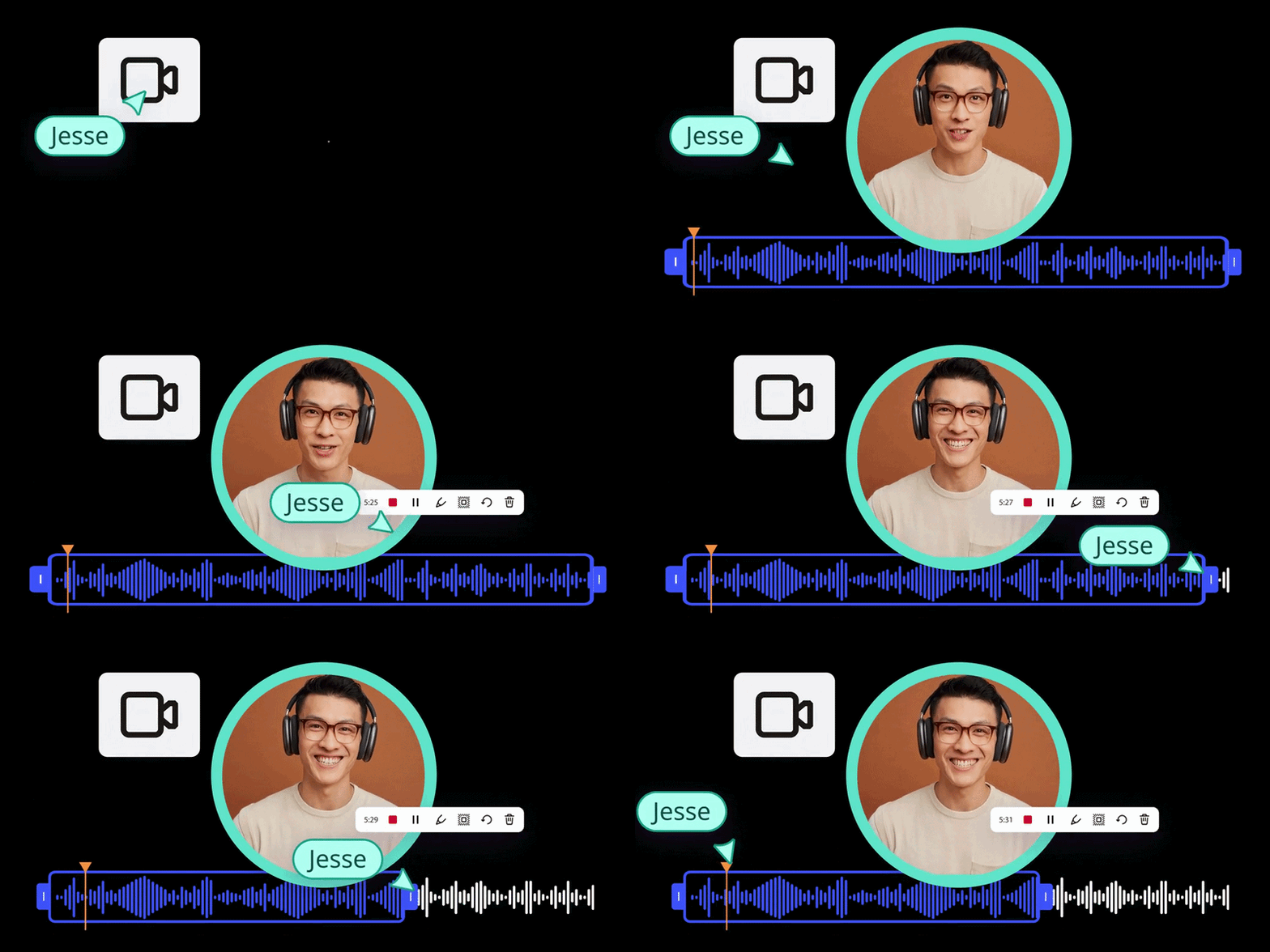
Talktrack, Miro’s interactive video recording feature, now lets multiple people record from any tab, app, or desktop and edit the video afterward. Recordings embed directly in Miro, so when someone joins a project mid-stream, they get the why behind decisions — not just the what.
Miro Engage offers lightweight activities that turn passive meeting attendees into active participants. When the entire room is empowered to participate, Sidekicks and Flows stop working off one person’s prompt and start working with what everyone in the room actually thinks.
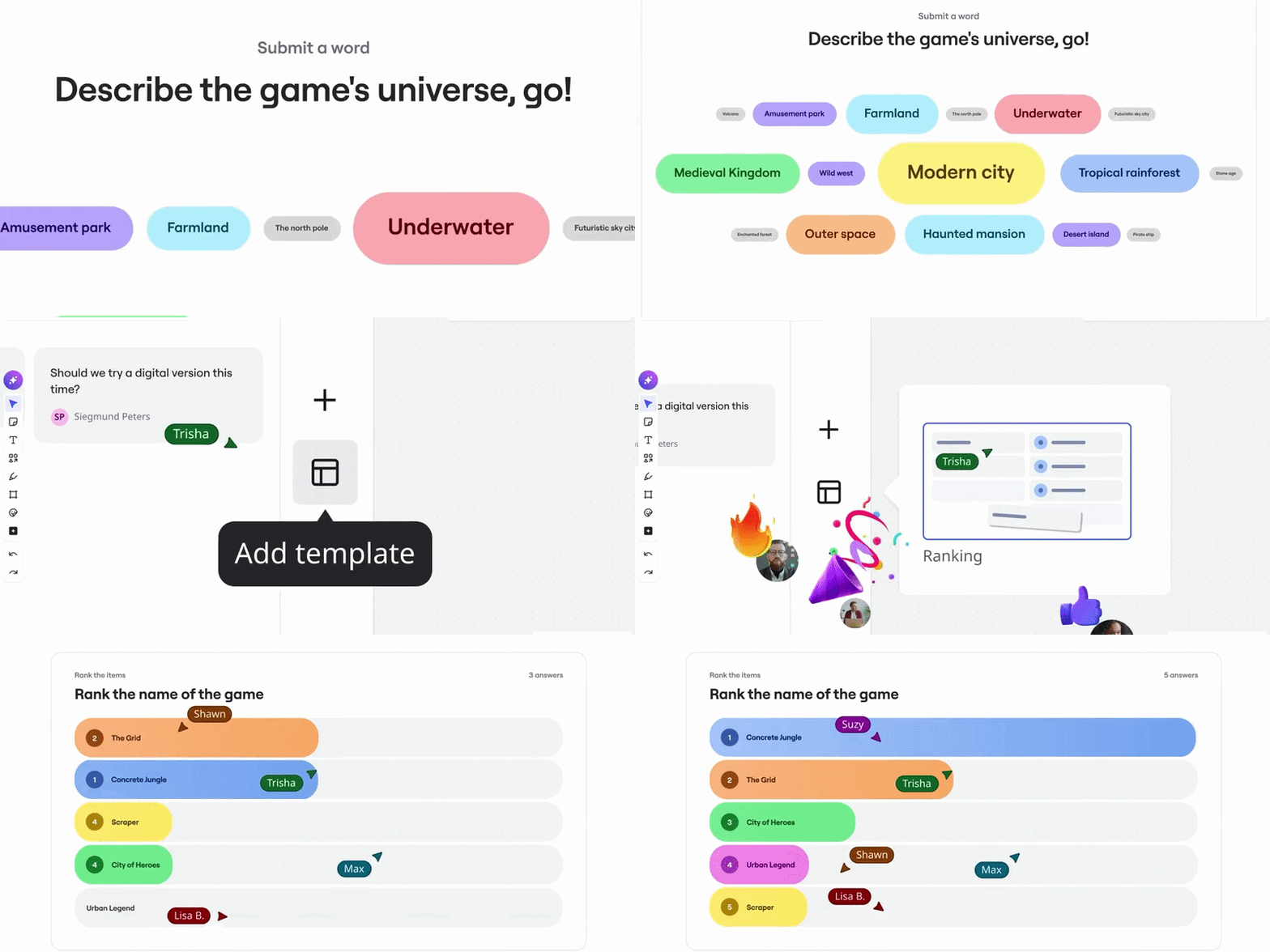
With Talktrack and Engage, the thinking travels with the work and every voice has a real stake in the result, so that teams get more than faster decisions — they get shared understanding at speed.
Scale the impact of your AI investments with Miro
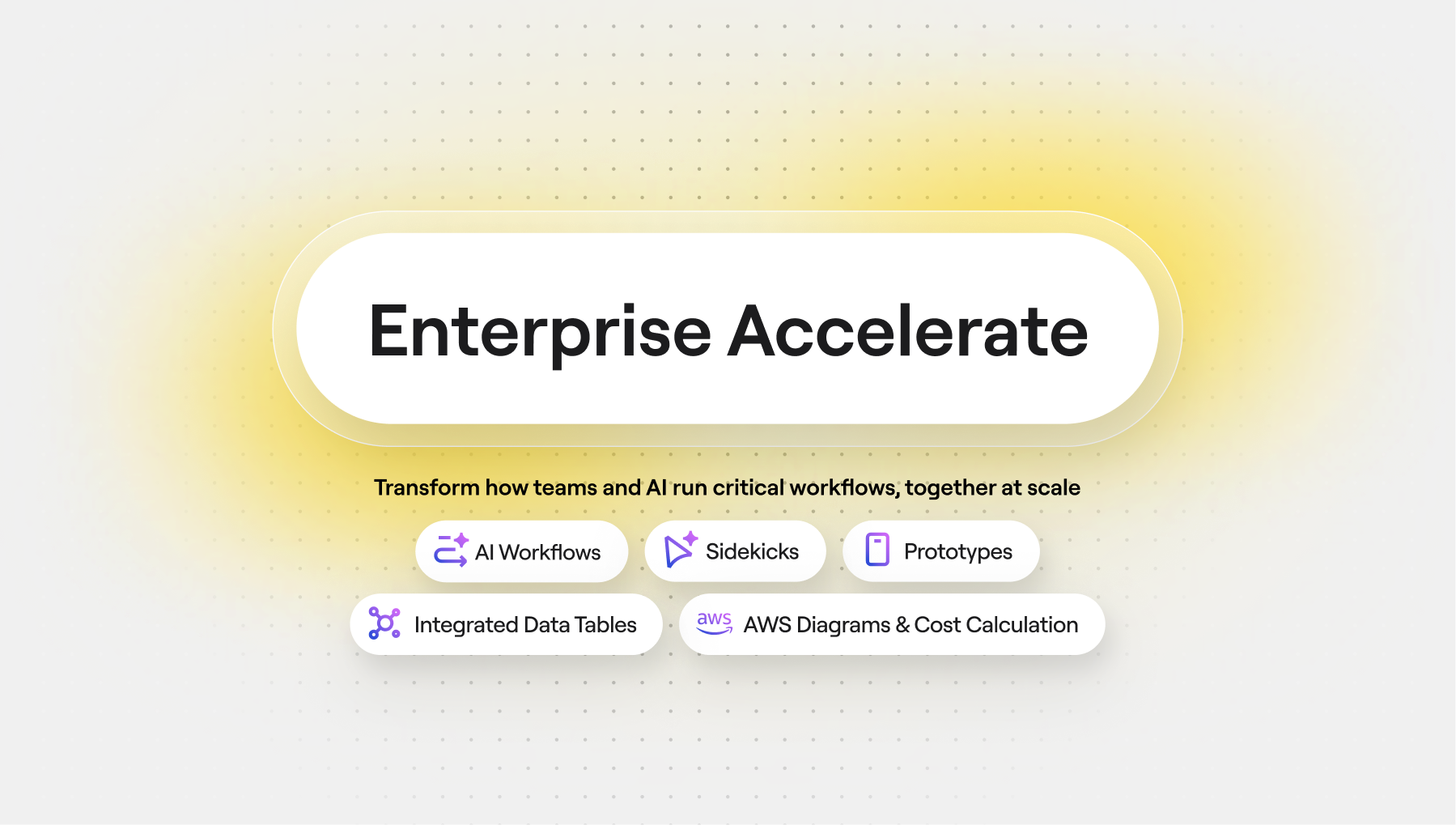
These six product updates don’t exist in isolation — they connect people to people, people to agents, and agents to agents through a shared canvas that turns individual ambition into organization-wide transformation. Closing this gap is the single biggest opportunity in business right now, and the organizations that do it will build the future.