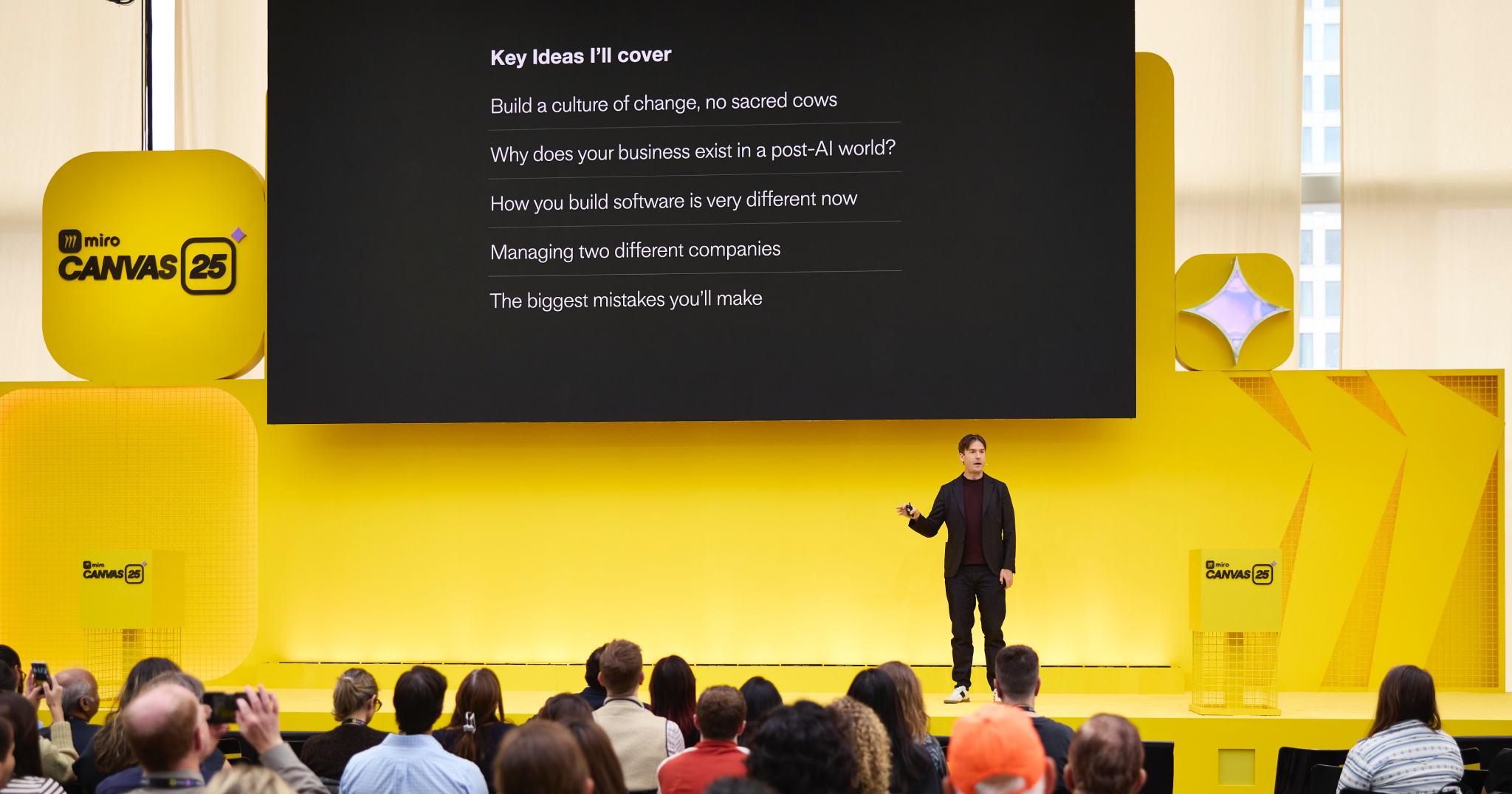
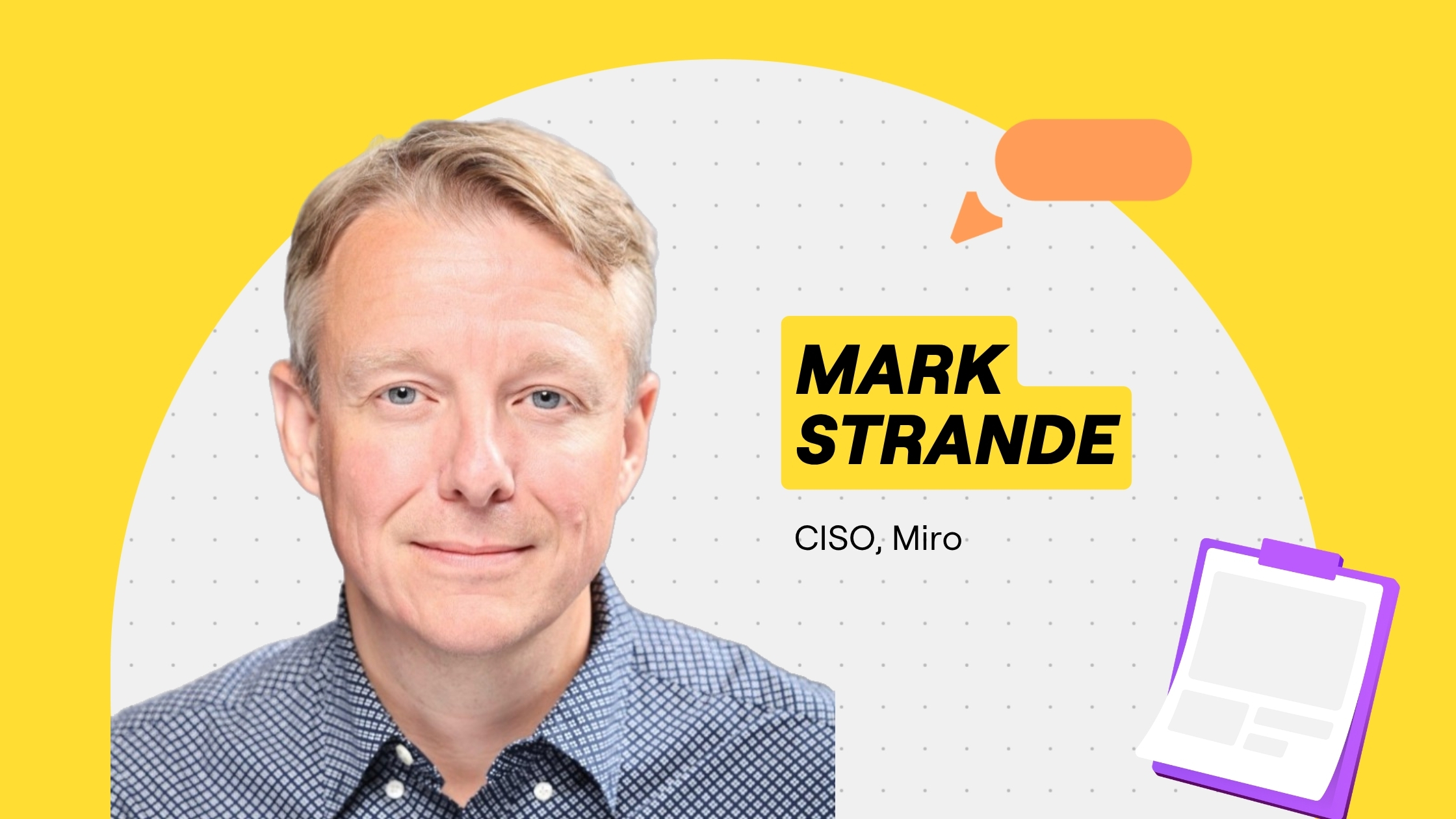
At the Gartner Digital Workplace Summit in London this April, I was fortunate enough to sit down with Ralf Gehrig, Global Chief Experience Officer at Wongdoody (part of Infosys), for a session on what it actually takes to drive business acceleration with AI.
Ralf’s background is in user experience design, which is the lens that shaped our conversation. we covered everything from SME buy-in and governance bottlenecks to vibe coding and what it means to measure AI adoption. This is an edited transcript.
Closing the gap between productivity and transformation
Mark Strande: When we look at where organizations are on the AI maturity curve, most are still in the early stages, using AI as a tool to get individual productivity. But that’s not the same as transformation. You’re getting individuals moving faster while the rest of the organization stays still. What does it actually take to close that gap?
Ralf Gehrig: The complexity of working in organizations has always been about the complexity of humans interacting with each other: The subtleties, the motivations, the reasons people adopt a process or find ways around it. That doesn’t change with AI. And you can’t capture the complexity of a process in an agent or a workflow with a quick prompt. You need the buy-in of the people who are currently the subject matter experts, the people who operate the process today, and the new roles that will be created by it. All of that takes real engagement.
MS: And that’s where the fear of replacement becomes a genuine obstacle. Those SMEs feel like they’re sitting there, stopwatch running, training the thing that’s going to eliminate their job.
RG: Exactly. Because we often come into transformations as an external consultancy, engaging the SMEs is central to the approach. We use Miro for that — creating a shared canvas where everyone can contribute and feel like they’re part of the solution, not the subject of it. The way we reframe it is that these people have the deepest understanding of how the AI works in their domain, and that knowledge makes them the most valuable people in its ongoing evolution. Nothing gets automated once and left. Everything improves iteratively. They’re not training their replacement, they’re becoming the stewards of it.
We use Miro to create a shared canvas where everyone can contribute and feel like they’re part of the solution, not the subject of it. — Ralf Gehrig, Global Chief Experience Officer at Wongdoody
MS: Does that carry through into organizational design? Because it seems like you’re describing something bigger than a process change.
RG: Yes. What comes out of this isn’t just a new process with an agent handling certain pieces. It’s a target operating model. What roles stay? What new roles need to be created to govern it, iterate on it, improve it? We did this recently with a marketing department at a major bank, looked at their current processes, tools, roles, what they outsource versus what they hold internally, then we built a roadmap showing how different AI tools and agents would reshape that into a target state. The organizational structure and the AI implementation happen together.
The magic middle ground for governance
MS: On the governance side, we’ve heard from Gartner® that 70% of leaders say compliance, security, and governance is the thing holding them up. I’ll admit that as a CISO, I recognize this apprehension. At Miro, we went through the ISO AI governance certification process, which required some thought to get smooth. What do you see in the organizations you work with?
RG: We’ve seen both extremes. Organizations that over-indexed on the guardrails effectively turned a powerful AI capability into something practically unusable. And I’ve had a CIO proudly tell me that his organization now has 10,000 different agents that people built themselves. I wasn’t sure whether to be impressed or alarmed. The right balance is iterative — you’re figuring it out as you go, because the recipe genuinely doesn’t exist yet.
Organizations that over-index on guardrails effectively turn a powerful AI capability into something practically unusable. — Ralf Gehrig, Global Chief Experience Officer at Wongdoody
MS: What we found at Miro was that the handovers between teams — legal, security, IT operations, analytics, and the business stakeholders — were creating the real delay. Tickets going back and forth, everyone contributing a comment and then retreating. So we changed the model: We bring everyone into one room with the intention of making a decision in thirty minutes. The engineer who can set the configuration is there. Legal is there. Security is there. And we leave with a documented outcome. It time-boxes the conversation, forces alignment, and means we’re iterating on something rather than waiting three months for approval.
RG: That’s a real unlock. And it matters especially because connectors, integrations, and the tools themselves evolve so fast. If your governance process takes three months and the tool has changed twice in that window, you’ve solved the wrong problem.
MS: I want to ask you about something you mentioned earlier — the idea that AI agents represent a fundamentally different starting point from buying and configuring software. Can you say more about that?
RG: With traditional enterprise software, you buy a product and configure it to your needs. With AI agents, you’re creating the right tool for your particular context from the ground up. Everyone used to have the person on their team who built a little Excel spreadsheet that solved a very specific problem. That’s the 1990s version of this. Now everyone can do that kind of thing without specialist skills. That’s genuinely exciting. But it also means governance matters more, not less, because the gap between what an individual builds and what the organization can actually support and sustain is growing.
Governance matters more, not less, because the gap between what an individual builds and what the organization can actually support and sustain is growing. — Ralf Gehrig, Global Chief Experience Officer at Wongdoody
MS: And you see that in vibe coding, too. The prototyping power is real, but without the structured design process underneath it, you end up with something that doesn’t hold together at scale.
RG Yes. I had a client come to us recently with a vibe-coded prototype and say, “Build me that.” There were no other documents, no backlog, no way to brief us beyond the prototype itself. And because it’s so easy to add features in that environment, the prototype had become overloaded. What should have been a simple, clean customer experience had turned into something unworkable. The way we solve this is to run the full human-centered design process first: User research, team alignment, priorities, insights, user journeys all mapped out, AI-assisted, on a Miro board, and then we feed that entire board into the coding environment. The output is far more structured and far more transparent because the context was shared before anyone wrote a line.
MS: That also creates traceability. Everyone from security to privacy to product can see that they were consulted, that their inputs shaped the outcome.
RG: Exactly. That’s actually what clients need when they’re working with a service provider like us. They need to be able to demonstrate that the process was sound.
MS: One last thing: Organizations are trying to measure AI adoption. A lot of them are tracking token consumption. Is that the right signal?
RG It’s one data point. Someone on your team who has never once used AI is probably a flag. Someone who spent a thousand dollars in tokens this month is also worth a conversation. But neither of those tells you whether value was generated. The metric that matters is whether people are moving to higher-level work, whether AI handled the ticket routing and the analyst is now solving actual customer problems. That’s the return you’re looking for, and tokens don’t measure it.