
Debbie Levitt, CXO of Delta CX, refused to bring AI into her work for a long time. Three years ago she tested the tools, found they couldn’t think critically or get basic facts right, and kept them out of her process.
A year later, despite her initial disappointment, she decided to run an experiment based on her real work, and was amazed by the results. She now uses Claude as a partner on the analysis side of her research, and a stage of work that used to take 2-3 weeks now takes half a day or a day. She says the quality hasn’t dropped.
In her Reframe session, Debbie walked through where she trusts AI, where she doesn’t, and why she thinks that once every consultancy is fast, the thing left to compete on is how good the work is.
The projects that changed her mind
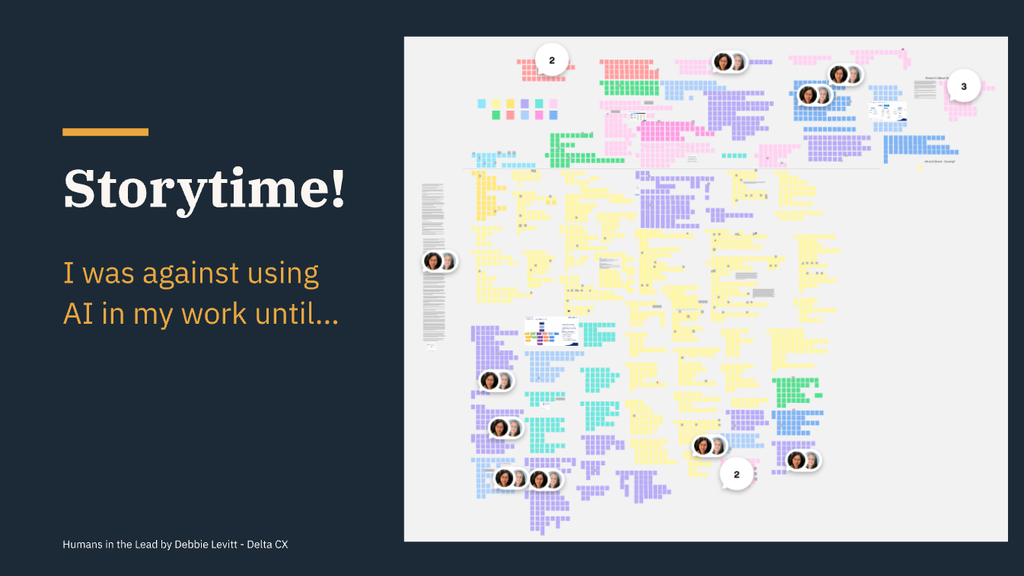
About 2 years ago, she ran a test. She gave Claude an anonymized Miro board from an internal change project: 3,100 notes from 71 interviews. She deliberately didn’t record the sessions, so people would speak more freely, and typed the notes live instead. She asked what it would have advised the client, and compared its list with the 125-slide deck she’d delivered. They roughly matched. That was enough to try it on live work.
The first real world engagement where she used AI was a client who had decided in advance that customers with claims-and-returns problems just needed a new portal. To kick off the project, Debbie got into her usual discovery and interview process, and ended up with a mountain of data.
When she prompted Claude loosely, it gave generic advice such as “people want more integrations.” When she pushed it toward the raw transcripts and toward root causes, it became more useful. Her finding was that customers didn’t want a better way to file a claim. They wanted the claim to never happen. It was a service design problem, not a portal project, and she told the client so. Claude helped to organize the supporting data, including finding quotes and discussing with Debbie how the client could address these failures, beyond what the new portal could offer.
That project pushed her to build a repeatable way of working with Claude.
What she keeps human, and what she hands to Claude
Debbie’s workflow splits research into six phases. Three of them are fully human: the research plan, recruiting, and the sessions themselves.
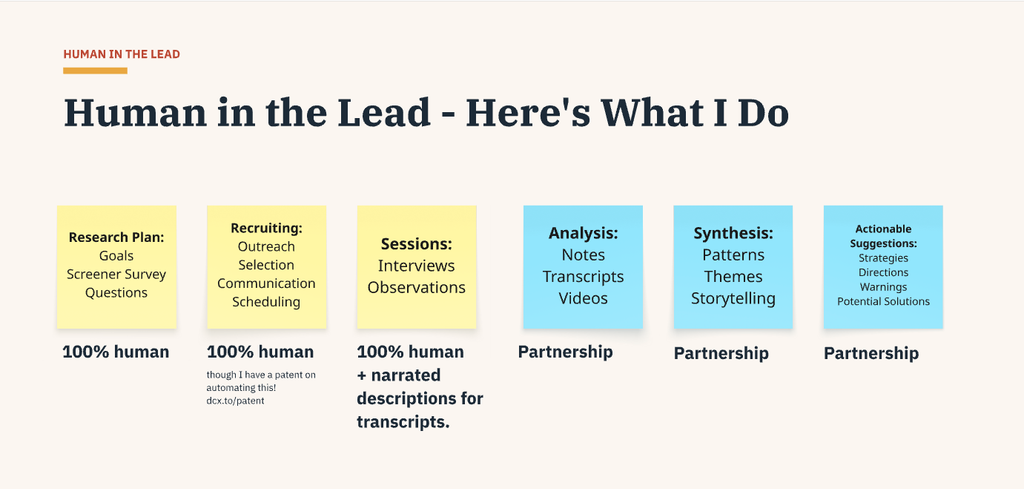
Her reasons are specific. She doesn’t think AI writes better research questions than she does, because much of what AI learned came from people who aren’t researchers. On sessions, she doesn’t want AI interviewing anyone, by chat or by voice, even if it scales: “I would rather have a smaller and more human data set that’s higher quality.”
There’s a more existential reason that she said out loud too: she doesn’t want to teach clients and executives that AI can do the foundational work without her.
The other three phases – analysis, synthesis, and actionable suggestions – are a partnership with Claude, which she calls her critical thinking partner. It works because she can judge what comes back. After decades in this field, she can tell when Claude is handing her garbage and when it’s handing her gold. She trusts the tool where she has the expertise to check it, and nowhere else.
Some of the time savings are small and practical. She can ask Claude who said a particular thing in a transcript and get the participant and the quote back, instead of rewatching videos to find it. Added up, that’s how analysis went from weeks to a day.
What disappears when you skip the people
The human phases are the ones that decide whether the analysis is worth anything. They also happen to be the ones most teams cut first when a client wants things faster.
Debbie offered a model for what gets lost, which she calls Atomic Product-Market Fit. Most teams track fit at the top level: do people want this category of product? Debbie argues it also exists at two more granular levels:
- Macro: the category. People want digital whiteboards, or slide software.
- Meso: the features and services. Does each one actually serve the people you’re building for?
- Micro: every touchpoint, from trust and pricing to flows, usability, and reliability.
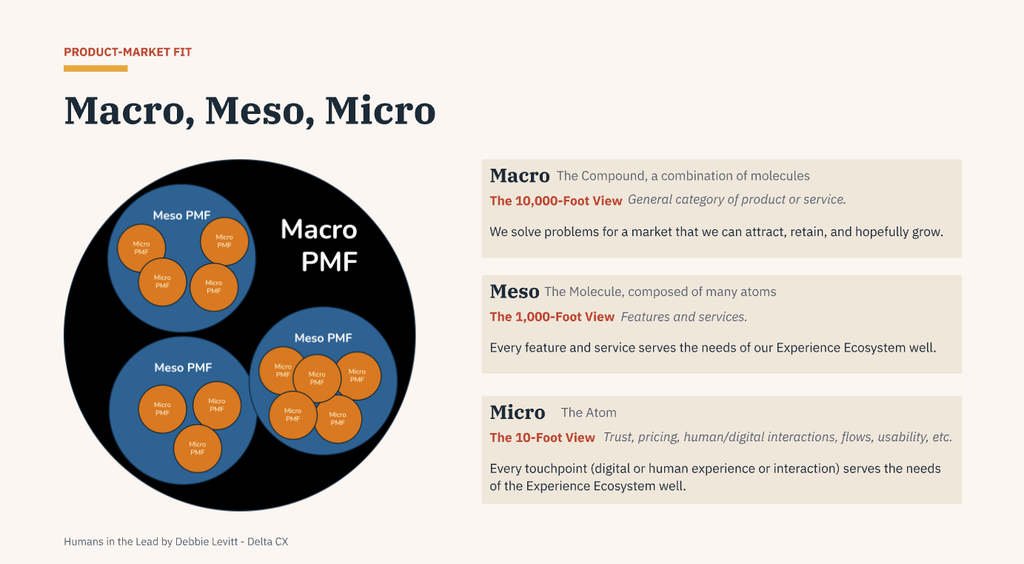
For example: PowerPoint is a safe bet at the macro level, since people need to make slides. Copilot inside it is a meso-level feature, and plenty of people switch it off. At the micro level, every interruption and wrong suggestion either earns trust or burns it. You can lose customers at any of these levels, while the macro numbers still look healthy.
Dashboards say people left, but only watching and talking to people tells you why. People’s reasons for leaving are often buried in the details of the experience. Claude can’t observe a customer’s day, so a team that skips discovery and hands the problem to a model is feeding it guesses.
Her point for consultants: the levels of Atomic PMF are the conversations to have with clients before anyone builds another feature.
Guardrails, not a robot Debbie
Debbie didn’t train the skill to think like her. “I already have a me,” she said; she wants Claude to be Claude, working inside a rigorous process.
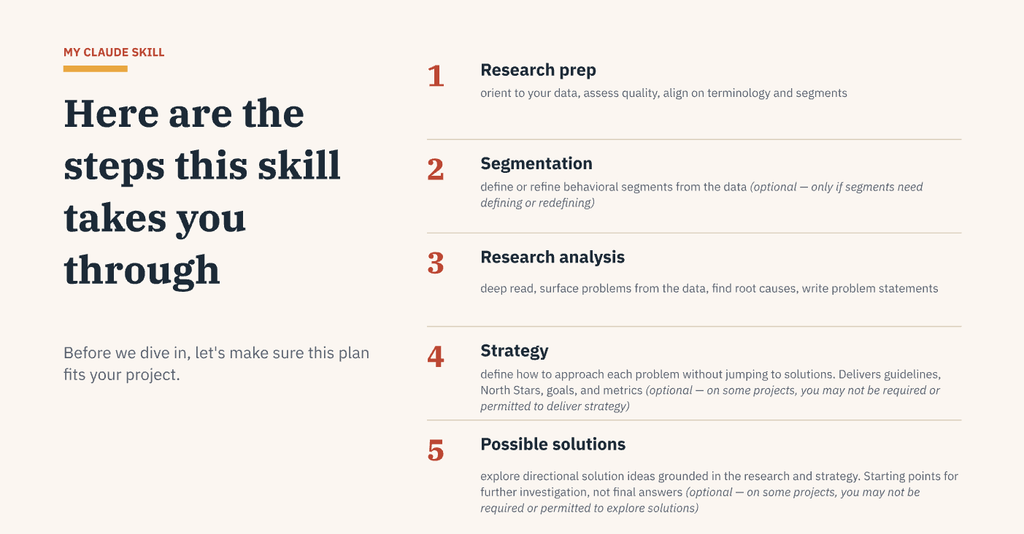
Most of the design is about slowing the AI down in the right places. The skill moves in sequence, so it can’t jump from transcripts to recommendations. It stops often to ask what the researcher remembers and whether a connection makes sense. It flags weak data like small samples and leading questions, which matters when a client has pushed for a shortcut. It separates what participants said from what they did, and it looks for workarounds, because people who’ve built a band-aid stop seeing the problem.
That last piece paid off on a project about people buying property abroad. Claude noticed that participants were handing people cash to get tasks done. Debbie had spotted the workarounds, but hadn’t named the bribes. It became one of the findings she took back to the client.
What’s left to sell
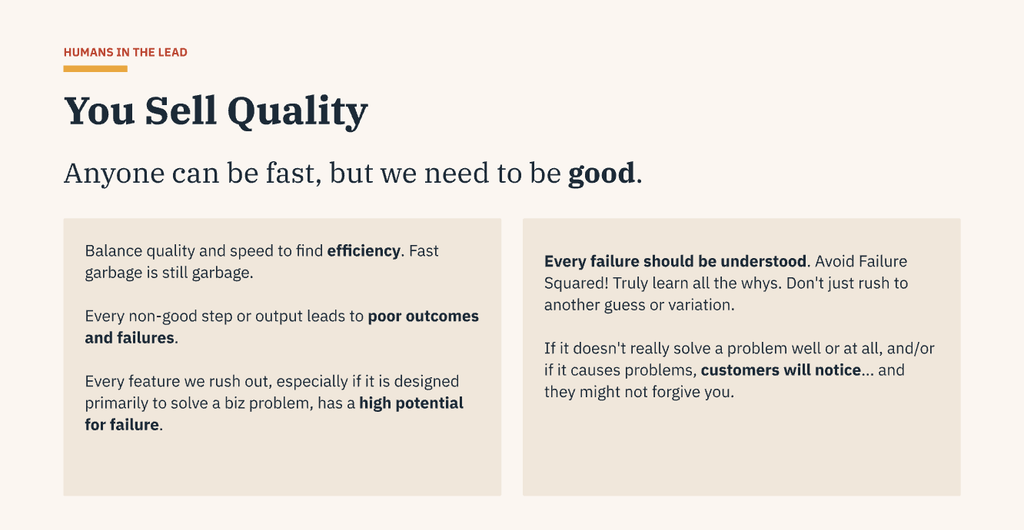
Her conclusion is a blunt one. When everyone is fast, speed is no longer something to sell. What’s left is value, trust, usability, and quality. If the work doesn’t solve a real problem, she says, customers will notice, and they might not forgive you.
Three things to take into your own practice
- Decide which phases stay human and hold the line. Debbie keeps planning, recruiting, and sessions for herself. Pick your own line before a deadline picks it for you.
- Prompt for evidence, then check it. Tell the model to stay inside the transcripts, ask for root causes, and read the output yourself. Debbie reads hers out loud, because she’s more likely to catch an error that way.
- Make the AI stop and ask. Debbie’s skill pauses for the researcher’s input at key points. Build those pauses into yours, and don’t just keep saying yes.
Reframe what great client delivery work looks like
Reframe is our webinar series for agencies and consultants rethinking how professional services operate in the age of AI. Catch up on previous sessions or join one of our upcoming live sessions below.