Most delivery teams will be familiar with this scenario… The client who seems surprised by something they could have redirected three months earlier. The gap between what was built and what was imagined – not because the work was poor, but because no one saw it until it was finished. The retrospective that traces the problem back through sprint after sprint to a misalignment that was always there, just never surfaced.
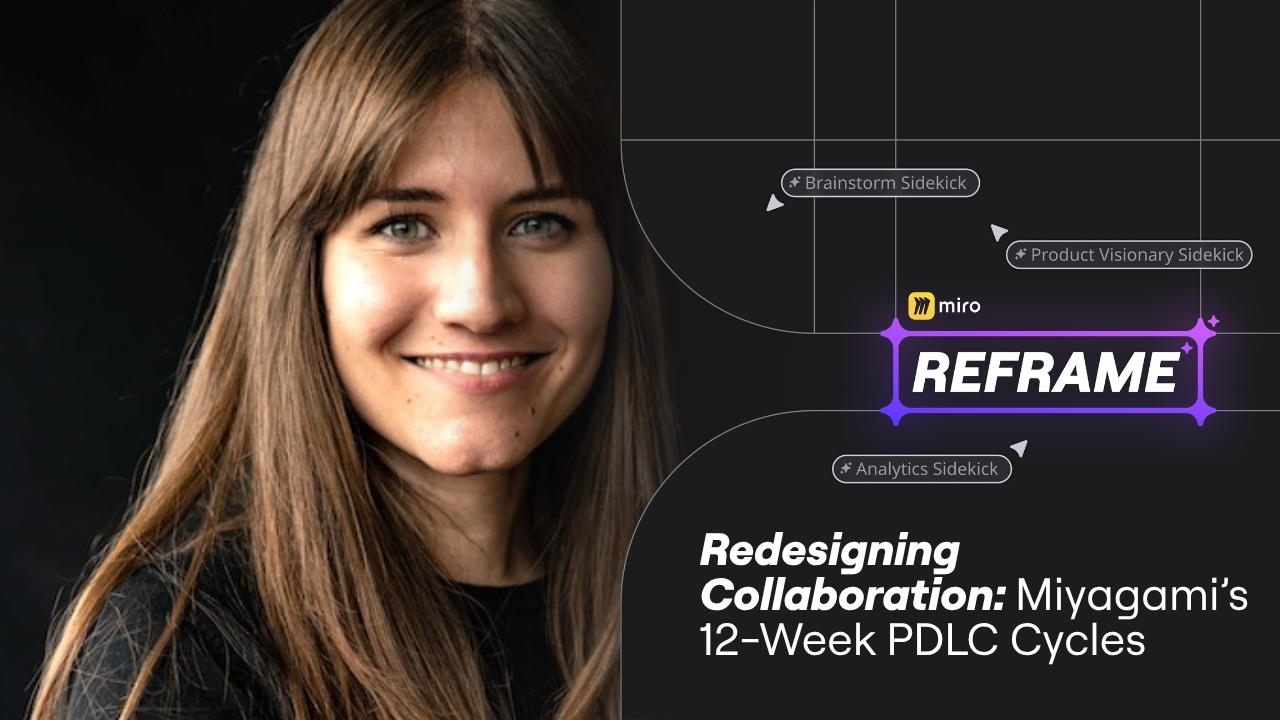
Alicia Calderón has run a lot of those retrospectives. As Design Strategy Lead at Miyagami, a digital product agency working across Amsterdam and Vietnam, she spent years watching the same pattern repeat across client projects.
Tighter briefs didn’t fix it. More rigorous handoffs didn’t fix it. Better sprint discipline helped at the margin – but the problem kept coming back.
Miyagami tracked it across projects, mapped the recurring failures, and eventually asked a different question: not how do we manage the process better, but how do we collaborate better?
What the old model keeps producing
Fixed scope projects with waterfall sequencing are a system. And like most systems, they reliably produce the same outputs.
Requirements written before the team fully understands what to build. Design and engineering running on separate tracks until a high-pressure handoff where everything must be right. Clients shown progress only at defined milestones – late enough that any meaningful course correction requires unpicking weeks of prior work.
Every stretch where a client isn’t seeing the work, creates an opportunity for the gap between their mental model and what is actually being built to widen even further.
What Miyagami built instead
Miyagami replaced fixed scope projects with 12-week product cycles built around a Minimum Scalable Product – the most useful thing the team can build in the time available. Viable enough for market, and architected to extend rather than rebuild.
Inside the 12-week cycle, the structure is a hybrid: the predictability of waterfall phases (discovery, design, development) with sprint-based communication and continuous client touchpoints.
What makes that possible is a specific AI pipeline Miyagami now runs inside Miro. Raw discovery notes, the kind every agency already takes and usually leaves in a document no one reopens, get fed into an AI flow that generates a first product brief.
A second flow turns that brief into an early PRD.
A third breaks the PRD into user stories and a functionality table, with each item turned into a card the team brings straight into the product roadmap session, so the client ends up prioritizing real, specific pieces of scope in the room rather than reacting to an abstract plan.
From there, another AI flow turns the same discovery material into a rough prototype, built in minutes rather than the days a first-pass design would normally take.
Calderón is careful about what that speed is for. Moving fast here means getting a rough version in front of the client sooner and making it cheap to be wrong, so the design hours that actually matter only get spent once everyone is already aligned on the direction. The prototype goes out with the same caveat every time: this is not the final design, it exists so the client and the team can confirm they are talking about the same thing before anyone commits real design time to it.
What actually changes
The shift Miyagami observed wasn’t primarily about efficiency. The point was ownership.
A client who has watched the roadmap evolve, given input on a design demo, and sat through a sprint review treats the product differently from a client seeing it for the first time at handoff. The product is theirs. They made decisions about it. They understand why it was built the way it was.
And the commercial logic is direct: Miyagami sells discovery as a standalone engagement. A clear product roadmap, a first prototype, a technical architecture assessment – concrete enough to stand alone, but almost always leading to the build, because by the end of discovery the client has built enough ownership to want to see it executed.
Agencies often discount discovery because charging full price for “just a conversation” feels uncomfortable. But priced and packaged properly, discovery buys something concrete and is in fact “really easy to sell” as Calderon states.
What to do this week
Start your next project with a shared workspace and invite the client in from day one. Not for a kickoff call – for the actual working space. Put the initial discovery notes, the open questions, the emerging product thinking on a board the client can see and contribute to. It surfaces misalignment at the moment when addressing it costs almost nothing.
Sell discovery as a standalone, with a concrete deliverable at the end. A product roadmap, strategy brief, or early prototype is valuable enough to price as its own engagement. It removes the activation barrier, builds the relationship at low risk, and positions you as the natural next step for execution. If you are currently giving discovery away inside a larger proposal, you are undervaluing where your judgment is most visible.
Build the feedback cadence into the delivery structure before the project starts. Design the moments when clients see the work before kick-off, not improvising them mid-project. Calderón’s design demos, sprint reviews, and roadmap alignment sessions are not additions to the process. They are the process. Every early touchpoint is one where late-stage surprises and scope creep do not accumulate.
The collaboration structure is not a layer on top of delivery. It is the delivery. Getting that right is what turns a single engagement into a long-term client relationship – which, in an environment where AI has made project outputs easy to commodify, is where the real competitive advantage sits.