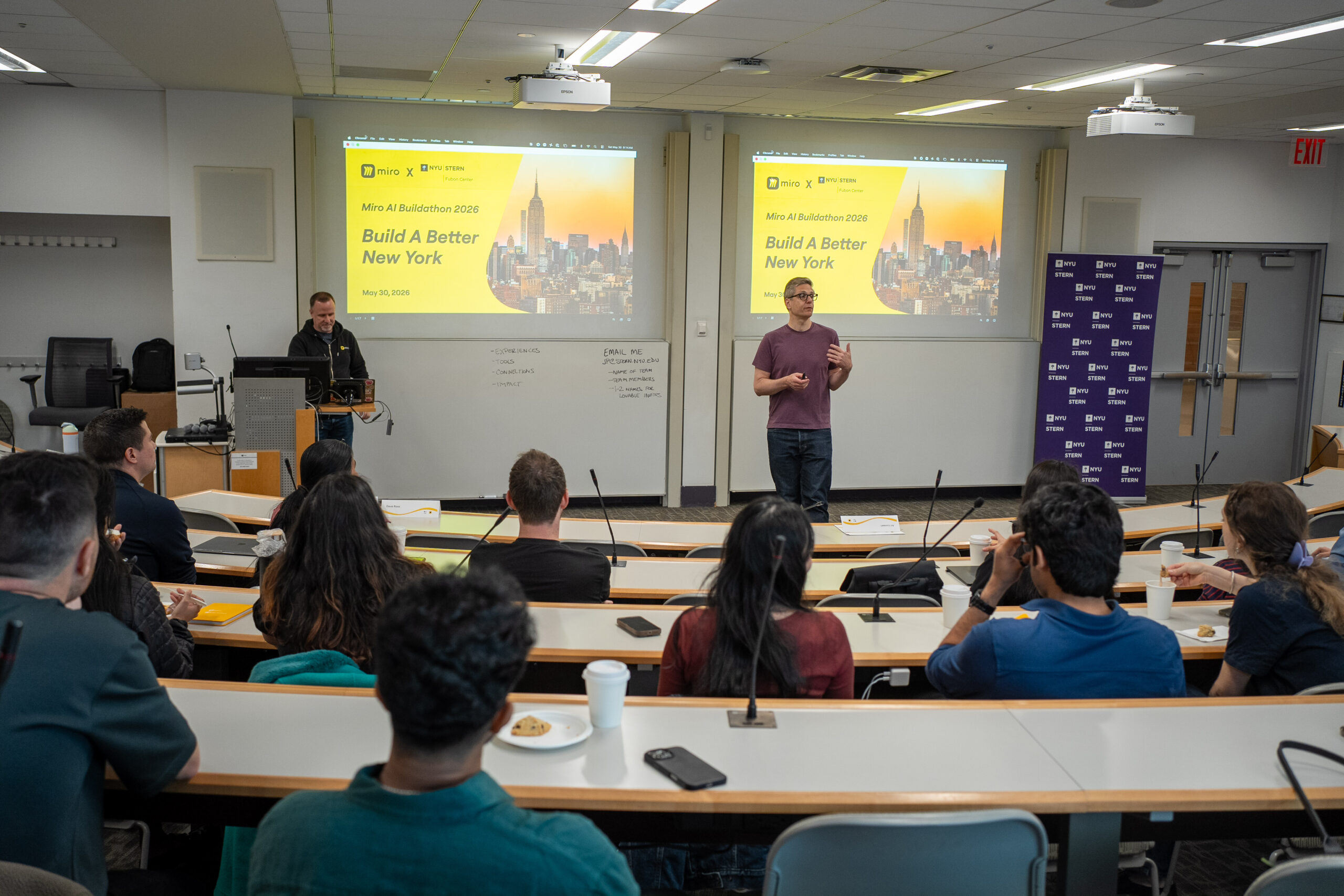
If you want to get a feel for the future of product development, one of the best places to look is NYU Stern’s Tech MBA program. This is where the next generation of PMs cut their teeth, so a few months ago we reached out to one of the program’s lead professors with a question: What if we pointed the students at some of the biggest problems in New York — from grocery prices and transit equity to bike lane safety and childcare — and gave them one day to build a solution that worked?
The hypothesis we wanted to test was whether mixed-skill teams can cut development time from months to hours with nothing more than a blank canvas, collaboration, and a little help from AI. We wanted to see user research, design explorations, working interfaces, and functional prototypes — all built in a single day on Miro, a platform most students had zero experience using.
As eight teams competed over the next six hours, I kept thinking the same thing: This is what the future of product work looks like.
Building with Miro AI, Prototypes, and MCP
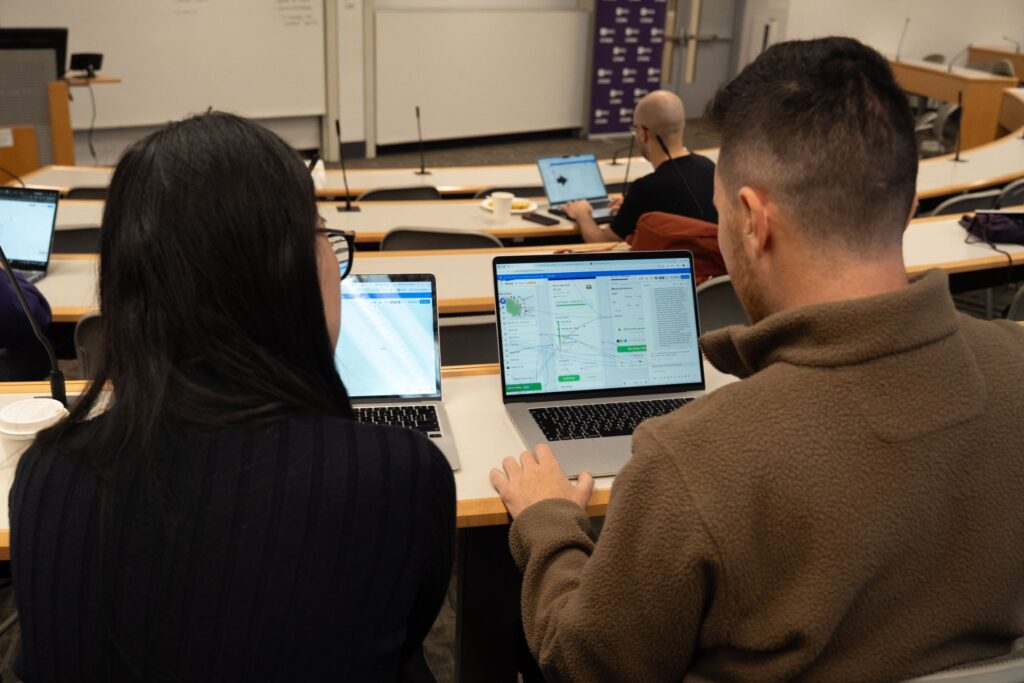
The format was deliberately simple. Teams used Miro Sidekicks and Flows to research the problem and define the users they were building for. They moved into Miro Prototypes to design the actual solution. Finally, they used Miro’s MCP, which connects to agentic coding tools like Lovable and Vercel, to demo their solution.
But it wasn’t just a race to the finish line. The judging panel was explicit that they’d prioritize problem definition and solution design over speed or technical proficiency of prototyping. This wasn’t a hackathon obsessed with shipping something. It was about shipping the right thing, fast.
Winning prototypes and the future of product development
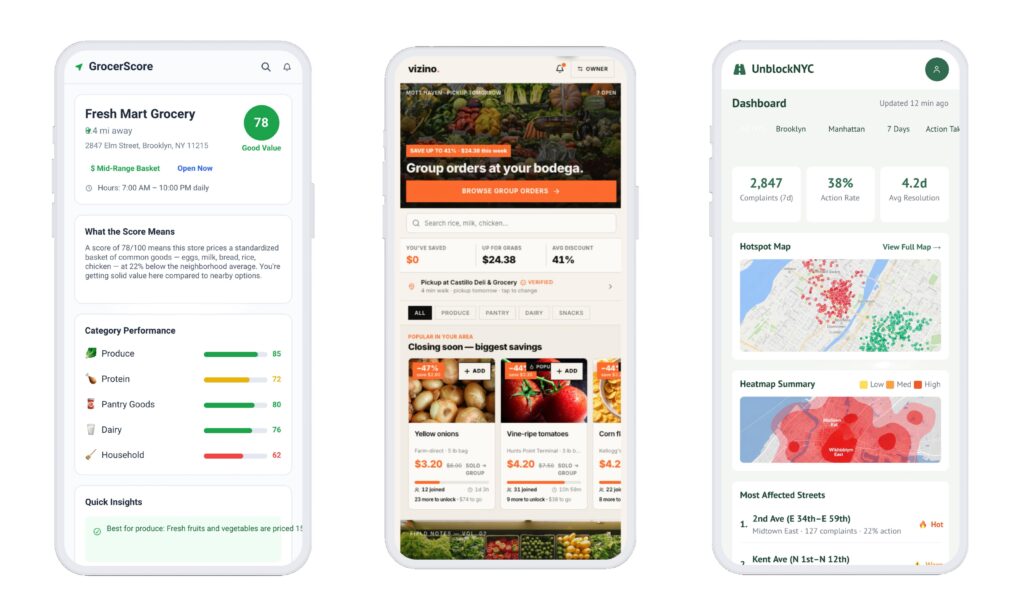
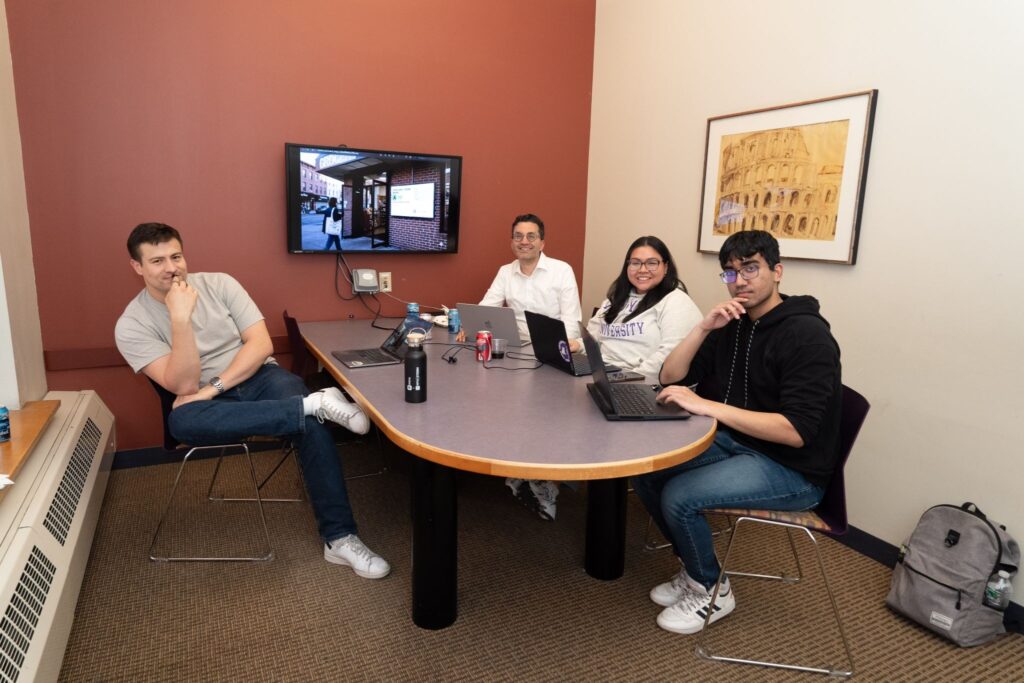
By the end of the day, three projects stood out.
NYC Grocery Price Index took home the grand prize. The team (calling themselves Hello Kitties) pulled pricing data from grocery stores across the city, scored each one for value, and built a consumer app and storefront-display concept to help shoppers find what fits their budget.
The functional app they built in six hours was impressive on its own. But what sticks with me is that the underlying insight — price transparency as a lever for food access — is sharp enough to hold its own outside the room.
Vizino picked up the High Impact prize. They turned New York’s 13,000 existing grocery stores into community wholesale hubs that gave neighborhoods bulk pricing access to fresh food. The clever move was solving an access problem without asking anyone to build anything new.
Unblock NYC won the Prototype prize. They took a public complaints database and turned it into a community-powered map of where the city’s bike lanes are failing. The tool flags accessibility issues and gives residents a way to push for fixes. It’s the kind of thing you’d expect a small civic tech outfit to ship after six months.
What they all had in common was creativity, thoughtfulness, and the motivation to figure out a tough problem in real time.
“Using AI often feels like a siloed, individual task. What I like about Miro is that you are completely collaborative at all stages of the process. It is so easy to see what others are working on, offer your support and input, and tie AI into wider summaries and synthesis of data and information.”
NYU Stern MBA student
Three lessons for engineering, product, and design leaders
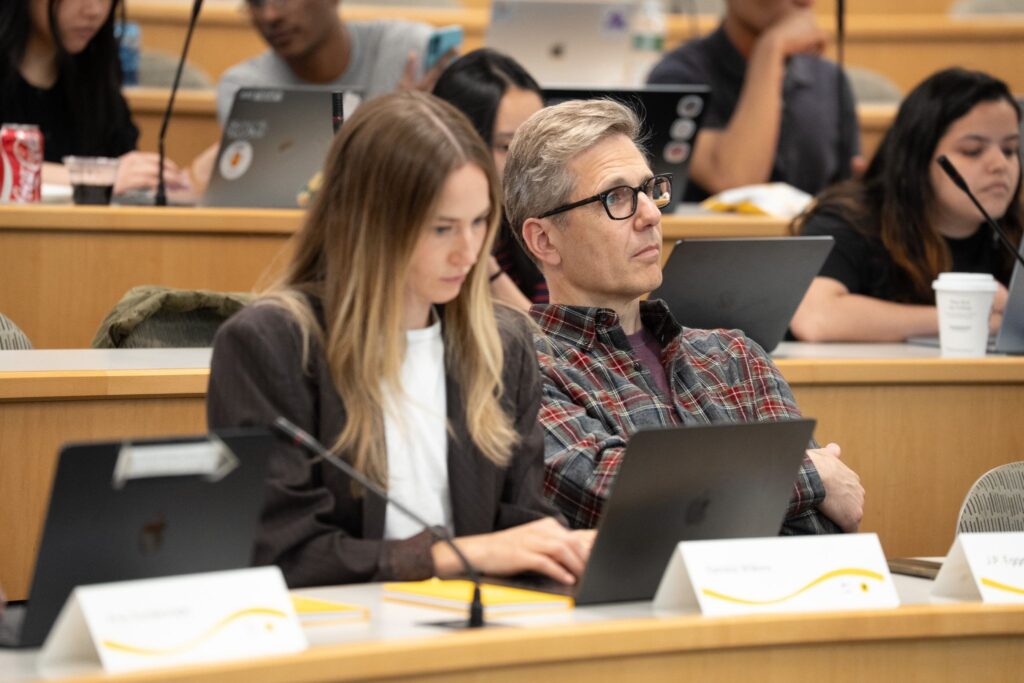
As a researcher, I’m always cautious about drawing broad conclusions from a small sample size. But I think there were a few lessons emerging in that room that are relevant for all cross-functional product teams.
Problem definition is the hardest part now
Our New York buildathon is more evidence that generating a prototype is no longer the hard part. When anyone can stand up a working app in an afternoon, the hardest — and most valuable — work shifts upstream: Defining the right problem and understanding the user.
The MBA students felt it, too. “Defining the problem is the most important part,” one of them told us. “Jumping to solutions will just make you go back and redo everything.”
You can see it in the winning teams. Hello Kitties treated grocery affordability as a transparency problem. Vizino treated grocery access as an infrastructure problem whose solution already existed. Unblock NYC treated bike lane safety as an accountability problem, using a public dataset that was already sitting in plain view. None of the winning teams got to the top based on engineering sophistication. They stood out by framing the problem in a way no one else had.
Prototypes are just the start
The core purpose of prototypes is changing. It’s no longer the end state you hand off — instead, it’s the start of a conversation about what users really need. A working prototype on the canvas gives the whole team something concrete to react to, so the real debate about direction happens early, while it’s still cheap to change course.
Mixed-skill teams are the new default
Most students at the buildathon had no engineering background and no experience with Miro, but they all produced functional, defensible prototypes in six hours. As one participant put it: “You don’t need to be a coder to build an amazing prototype!” Another added:
“Having everyone in the team be ‘in the same place with AI’ — the Miro board — made me realize our capacity to use the AI was greater as we could all collaborate with it.”
NYU Stern MBA student
If product orgs are still staffing every project as if only specialists can contribute, they’re prioritizing people’s job titles over the work that actually matters — solving the right problem for the user. The best teams in the room weren’t necessarily the most technical. They were the ones who argued hardest on behalf of their users.
When building gets this easy, the teams that pull ahead are the ones that get the thinking right — together.
Last but by no means least…
Congratulations to the winning teams:
- NYC Grocery Price Index: Aryan Sharma, Carolyn Seminario, Juan Pablo Jaramillo, Thomas Catino
- Vizino: Genny Capper, Khushali Dave, Michaela Vergara Ascenzo, Weiye Li
- Unblock NYC: Garima Yadav, Jessie (Ching-Tung) Yu, Kieran LaMee, Nitin Sharma
All photos ©Myaskovsky: Courtesy of NYU Photo Bureau