Your legacy productivity tools are dead: “AI Workhubs” are the $58B future

For over 30 years, productivity tools from legacy vendors have been the cornerstone of the enterprise tech stack. But a massive structural shift is occurring right now.

AI agents are coming for the dinosaurs.

According to a new Gartner® report1, “How AI Workhubs Will Disrupt the Dominance of Productivity Suites,” AI agents are creating the first true challenge to these mainstream legacy tools in decades. In fact, Gartner predicts a massive $58 billion market shake-up by 2027 as organizations move toward a modular, “agent-focused” model.

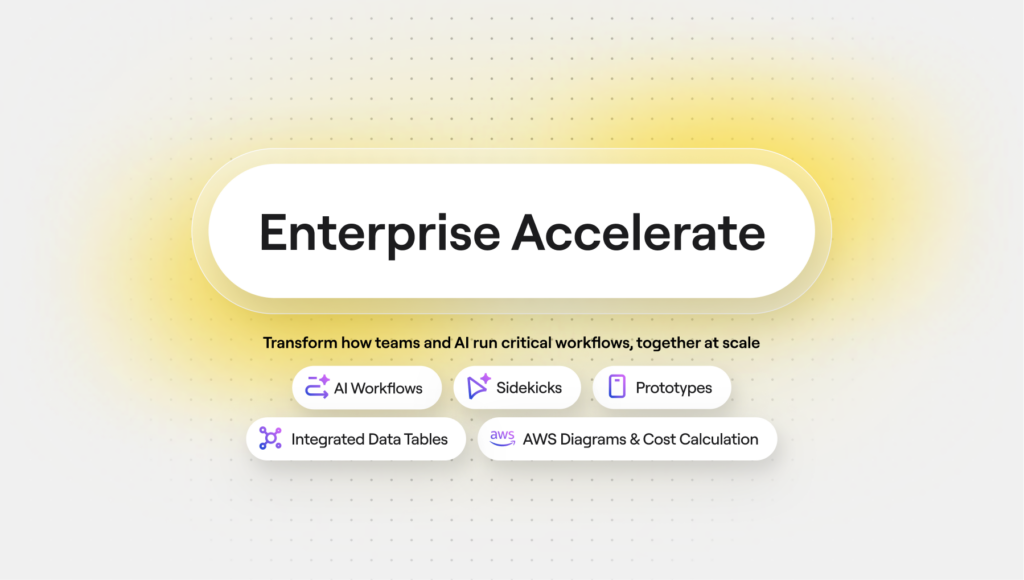
As enterprise leaders look toward the future, the focus is increasingly shifting to delivering a modern, engaging, and AI-first employee experience. The secret sauce to that experience? Expanding your tech stack to include a new orchestration layer where AI agents and people can actually work together on the workflows that drive business value.

Gartner names several companies in the report. We’re delighted to say that Miro is among them.

What exactly is an AI workhub?

Gartner defines AI workhubs as the “the use of artificial intelligence to enhance content creation and automate workplace tasks, decision making and collaboration, increasing efficiency and effectiveness for employees.”

And if you’re thinking, “Please! Why do we need a new hub for that? Why can’t we just use a basic chat service?” The answer is: Because CONTEXT!

Unlike basic chat tools, these hubs provide industry-specific context and role-based support tailored to how your employees actually collaborate. They represent a complete decoupling of the enterprise stack into two main pieces:

  • The Data Layer (The Anchor): Established suites like Microsoft 365 or Google Workspace remain the foundation for identity, security, and foundational data.
  • The Orchestration Layer (The New Interface): This is where specialized platforms intake, triage, and route work through agents and automated workflows.

Brace for impact (and check your wallet)

This change won’t happen overnight, but it will happen — not least because current licensing costs will absolutely demand it. As Gartner puts it: “Relying solely on a monolithic ecosystem risks prioritizing vendor-driven continuity over innovation, creating a document-centric workflow trap that fails to deliver value commensurate with rising prices.”

We think the work to get there needs to start today. Why? Because right now, only 18% of employees feel their organization provides support to integrate GenAI tools into their daily work. Furthermore, only a staggering 14% of IT leaders actually trust that their content and data can provide value for AI and human interactions.

If you don’t have a strategy for culture change, upskilling, and governance, stop reading this blog post and go talk to your IT leaders NOW! Or better yet, let Miro simplify this shift for you.

Implementing an agentic orchestration layer

At Miro, we believe AI shouldn’t just be bolted onto a traditional stack. Shifting to AI-native work requires a totally new collaboration layer where humans and agents work side-by-side.

Switching between tools causes immense friction, so Miro unifies your teams, your tools, and your AI in one shared space to accelerate output. With context-aware AI embedded right into the canvas, Miro’s AI agents understand your content and data, working in tandem with products like Portfolios, Goals, and Roadmaps. The result? Faster decisions and smoother execution.

Most importantly: Miro is LLM-agnostic. We connect your AI-powered workflows with your preferred LLMs and company knowledge so the AI actually gets smarter and more accurate over time.

Don’t just take our word for it (Data!)

Organizations are already seeing incredible impact:

  • Endava: This leading tech services provider encountered a human-agent bottleneck and risked accelerating misalignment rather than value. They turned to Miro as an agentic orchestration layer to build the right things. According to their Global CTO, Matt Cloke, leveraging Miro is “accelerating decision-making and improving alignment across teams.”
  • FREITAG & SSG: When iconic bag designer FREITAG needed to update its ERP system, Smart System Guild (SSG) used Miro’s AI Workflows to move from planning to final delivery at twice the speed and half the cost of original estimates.

Why this matters for your business

Organizations that succeed with AI focus on integrating it into core workflows, not just isolated tasks. By using Miro as your orchestration layer, you can:

  1. Reduce tool switching. Bring AI into the environment where work already happens.
  2. Unlock full ROI. Connect Miro to your preferred LLMs (like Gemini, Amazon Q, or Microsoft Copilot) to power your agents with integrated company knowledge.
  3. Bridge strategy and execution: Use tools like Portfolios and Roadmaps to connect high-level goals to day-to-day work, while AI automatically surfaces risks and dependencies.

As Gartner notes, the “window of opportunity” is open for organizations to rethink their relationship with legacy suites. It’s time to move beyond the static document and embrace a workspace built for the age of agents.

  1. Gartner, How AI Workhubs Will Disrupt Microsoft’s Productivity Suite, By Joe Mariano, Nikos Drakos et al., 24 February 2026. GARTNER is a trademark of Gartner, Inc. and/or its affiliates. Gartner does not endorse any company, vendor, product or service depicted in its publications, and does not advise technology users to select only those vendors with the highest ratings or other designation. Gartner publications consist of the opinions of Gartner’s business and technology insights organization and should not be construed as statements of fact. Gartner disclaims all warranties, expressed or implied, with respect to this publication, including any warranties of merchantability or fitness for a particular purpose. ↩︎

The AI platform for teamwork

Take AI usage out of siloed tools and bring it to the canvas. Discover the new orchestration layer where your team's existing work becomes rich context for better outcomes.

Learn more