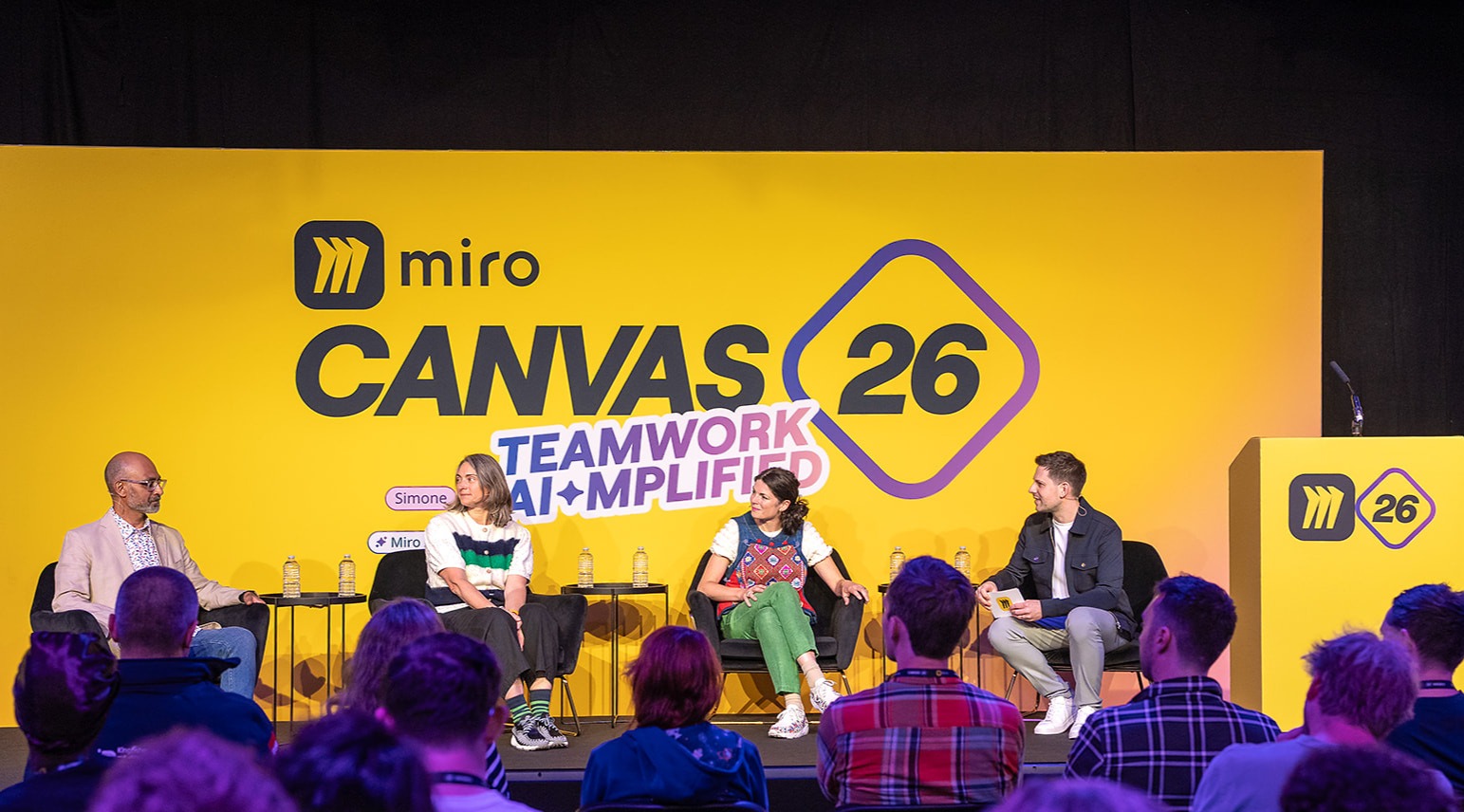
Earlier this month, Miro hosted Canvas 26 at London’s Tobacco Dock. During the event, I hosted a design leadership panel, bringing together leading voices from the industry to share their thoughts on how the advent of AI is changing the face of design.
Earlier in the day, Miro’s CEO Andrey Khusid shared his thoughts on the Great Inversion — the shift from work being 80% doing to 80% thinking. I wanted to understand how our panel’s teams were leveraging AI to unlock that opportunity. Cat Drew (Chief Design Officer, Design Council), Anna Burrell (Head of Product Design, Research, and Service Design, Kingfisher), and Pundarik (PK) Ranchhod (Experience Design Director, VML) joined me on stage to give their honest take on the emerging opportunities and challenges their teams are encountering.
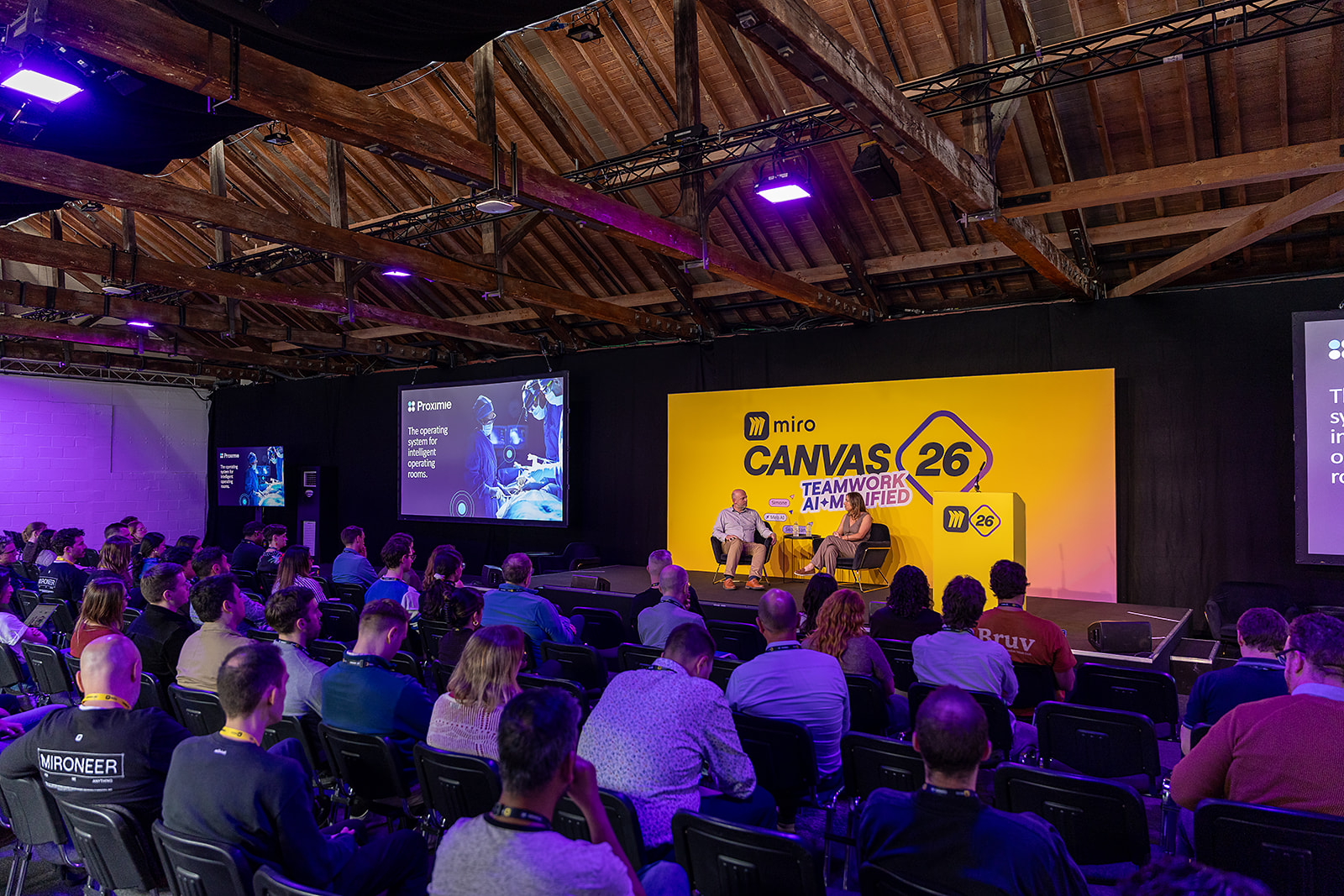
The room was packed with a diverse range of product builders, designers, engineers, even an architect or two. All of them grappling with the same set of challenges, namely: how do we unlock the opportunity of AI and what does this mean for how we work and where we focus our attention?
We began by answering the audience’s questions with a question of our own, asking them where AI is having the biggest impact on their design work. Nearly half of the attendees pointed to research and synthesis, not prototyping, not ideation; nearly one in five said their teams were just getting started with AI.
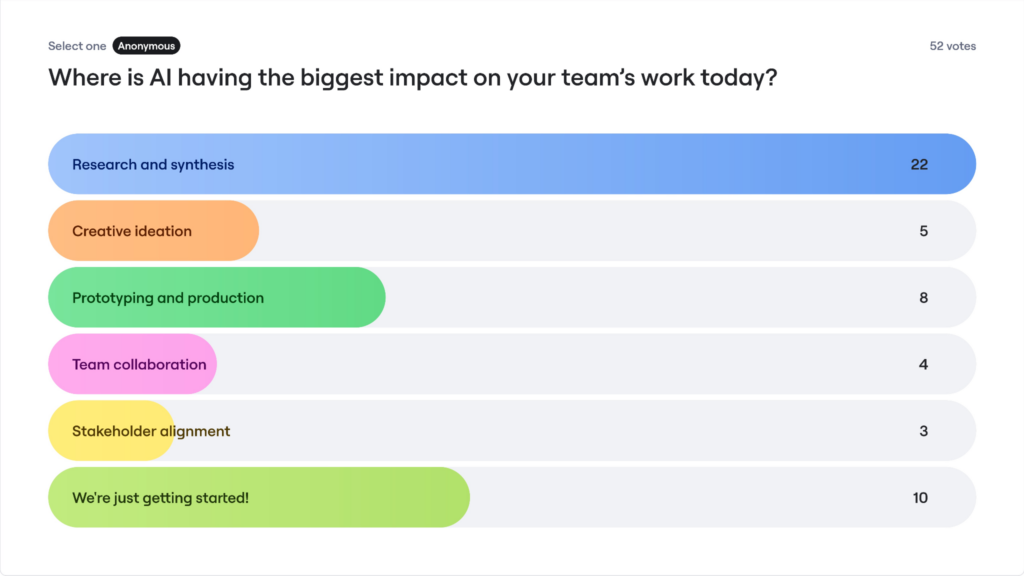
It’s a distribution that perfectly illustrates the bell curve of AI maturity we see today. The majority of teams are finding value in the consolidation of work through simple AI tooling. Those to the left of that curve are those just getting started, and to the right are those organizations where agentic workflows have taken hold and are making inroads into more complex and strategic activities.
The conversation that followed unpacked how teams are moving from left to right on the curve, first by establishing skills, then by shifting working practices, and finally by adjusting the altitude of their focus to more strategic activities.
The speed paradox
Having already polled the room on AI’s biggest impact via Miro Engage, we kicked off the conversation with the same question. PK named it first, and named it honestly:
“Speed for sure. We’re definitely able to produce things faster. Whether we’re producing them better, I’m not quite sure yet.”
Pundarik Ranchhod, Experience Design Director at VML
Part of why speed isn’t translating to better output is that work is largely happening in silos. “The challenge we’re finding is how do we get people to share the context they’ve had with their own AI tools and bring that to team level,” PK added.
The symptom he described: AI has pulled collaboration back toward text, with walls of prompts and outputs passing between individuals, and away from the shared visual surfaces where thinking actually happens together. “We’ve gone back to what I call the tyranny of text.” Only once insights get out of one person’s chat window and onto a shared surface where teams can react to it, challenge it, and build on it, do individual AI wins turn into team-wide impact.
Anna was likewise candid in her challenge to the assumption that AI acceleration is the goal: “Just because you can go really fast doesn’t mean you have to.” Now that everyone has access to powerful AI tools, more people are creating more things, but more output doesn’t automatically mean better judgment about what to build.
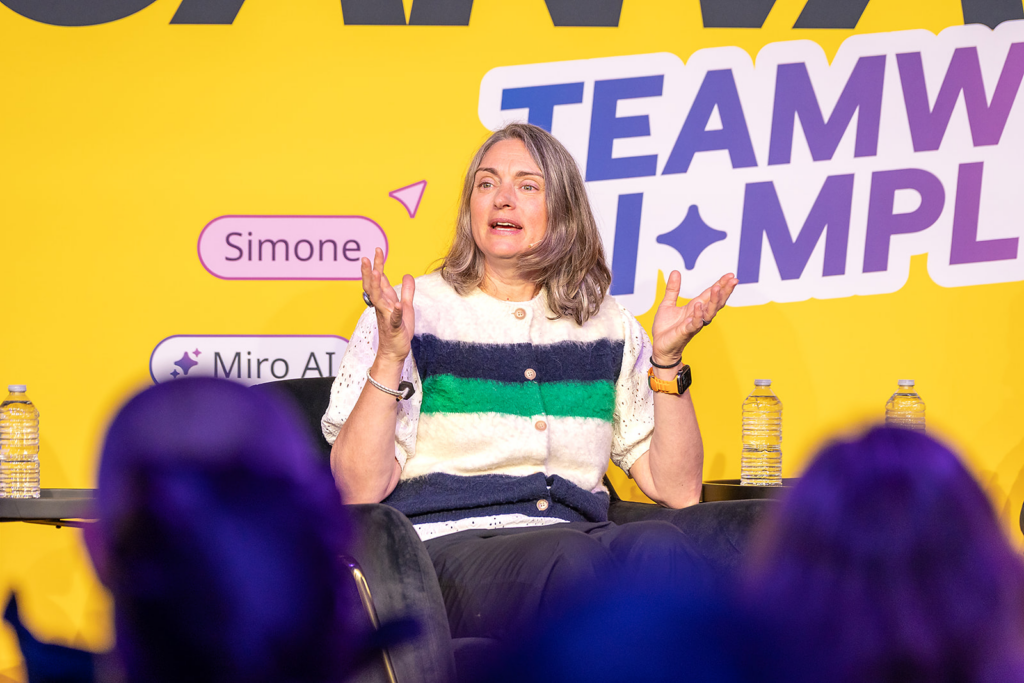
“There are a lot of wannabe designers out there. So it’s really important that the designer can be the voice of reason, the person who understands what good design is out of multiple designs, rather than just one.”
Anna Burrell, Head of Product Design, Research, and Service Design at Kingfisher
The teams getting the most from AI, PK and Anna suggested, aren’t necessarily the ones going fastest. They’re the ones being intentional about when to slow down.
Redesigning the Double Diamond
AI hasn’t just changed how fast product and design teams work — it’s changed how they work, full stop. This change in process has been quieter, but in some ways more significant.
Cat Drew, who joined the Design Council in part to reshape the Double Diamond framework that it helped introduce, mapped its recent evolution: “There are triple diamonds, diamonds inside diamonds. Whatever you need.” The diverge and converge principles grounding this foundational design process are still valid; what’s changed are the economics of iteration.
To make this change tangible, PK shared the example of a recent project with EY: an eight-week engagement where the classic two-diamond shape gave way to many tighter loops. “There are now lots of little diamonds you can go through. You can run these experiments quite cheaply and get the answers back much faster.” A wrong hypothesis used to cost two weeks of design work. Now it costs a few hours, which means teams can afford to be wrong more often, and learn faster.
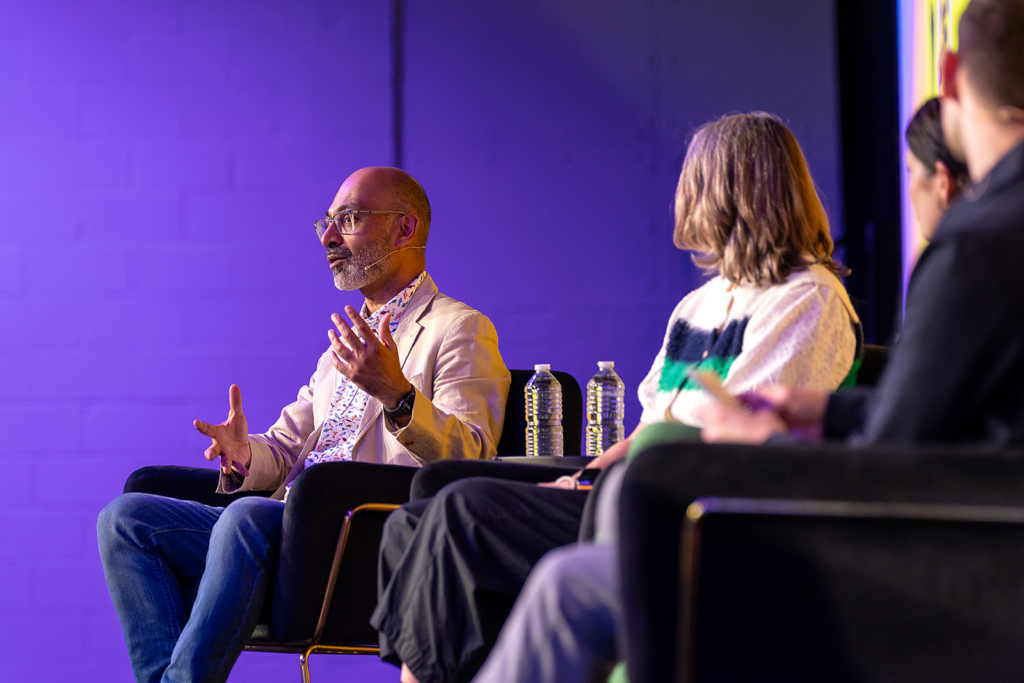
And teams aren’t just learning faster — they’re learning by doing as the boundary between discovery and prototyping dissolves. Cat described this as a real change in how the diamonds fit together, not just how fast you move through them.
“Sometimes the prototyping is the research. You start with prototyping as part of the discovery, rather than having a linear process where it comes at the end.”
Cat Drew, Chief Design Officer at the Design Council
Cat was equally direct about what AI still can’t compress. She echoed Anna’s earlier point about judgment, adding empathy to the list of critical skills AI can’t replace. “I don’t think there’s anything that will ever take away from going out and spending time with someone who has a particular need and really experiencing that.”
The shift from maker to steward
“The next question is: what do the designers do now?”
Cat asked this of herself and her fellow panelists. After all, the only natural follow-on after exploring how AI has changed the way designers work is asking who they are in this AI-accelerated world. Their answers, taken together, sketched a role that’s expanding more than it’s contracting.
Researchers: Anna shared how her research team has been teaching product owners and managers basic research skills, sharing expertise across teams so designers can grow their skills and researchers can reinvest their focus in other complex work. “Everyone being involved feels like a win-win. This way, we all know what problem we’re trying to solve.”
Experience designers: For PK, the scope of design is expanding outward. “Design is no longer just visual design. It’s the design of the entire experience and increasingly, the design of the agents themselves.”
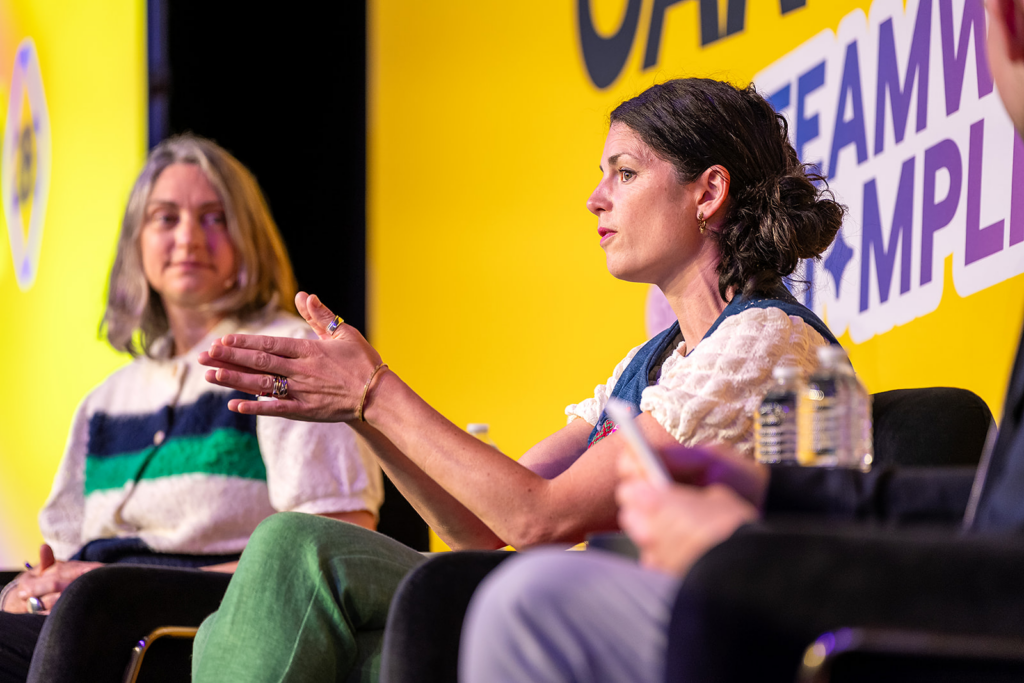
Stewards: As these agents take on more of the execution, the surface area designers are responsible for grows and so does the accountability that comes with it.
“What does good design look like, and how can we bake that in when we’re designing through others, whether that’s an AI agent or a non-designer using design methods?”
Cat Drew, Chief Design Officer at the Design Council
Anna’s practical answer: the design system. “Whether it’s a designer using the design system or an agent using it, they need to be pulling from that one place. Having the governance of your design system is really important and having the buy-in that people use it across the business. It’s quite hard. But keep plugging away.”
What comes next
When I asked the panel to future-cast what the next year has in store for product and design teams, they continued pulling at these threads.
Anna’s prediction centered on governance, the theme she’d returned to throughout:
“If your design practice isn’t well maintained, well governed, well structured, AI is going to show the cracks more than anything. But if you are well governed and well structured, AI is going to accelerate your practice beyond your wildest dreams.”
Anna Burrell, Head of Product Design, Research, and Service Design at Kingfisher
PK’s answer was characteristically direct: as AI becomes embedded in how teams work, the economics of that work will shift too. “I think tokens are going to be the new Bitcoin,” he said, a shorthand for a real change coming to how teams budget for, price, and govern AI-assisted work.
Cat turned the question into a provocation for every design leader in the room: as AI takes on more of the making, who holds the thinking that determines whether it was the right thing to make?
Cat’s provocation echoes Andrey’s Great Inversion concept. The leaders on the panel and in the audience spent 30 minutes mapping what that concept looks like in practice, together.